Lethbridge child sex offender charged again within hours of his release

Police in Lethbridge have charged a 47-year-old man with four counts of failing to comply with a prohibition order within hours of his release from custody.

The man was convicted of sexually assaulting and exploiting two young girls in 2021 and 2022 and sentenced to four years on charges of sexual interference, child luring, possession of child pornography, sexual exploitation and uttering threats.
He also has a lifetime prohibition against attending any community centre, using the internet or other digital network unless permitted by the court, and using any social media application designed to connect with strangers.
Lethbridge police said he was released from custody at 7 a.m. on May 1.
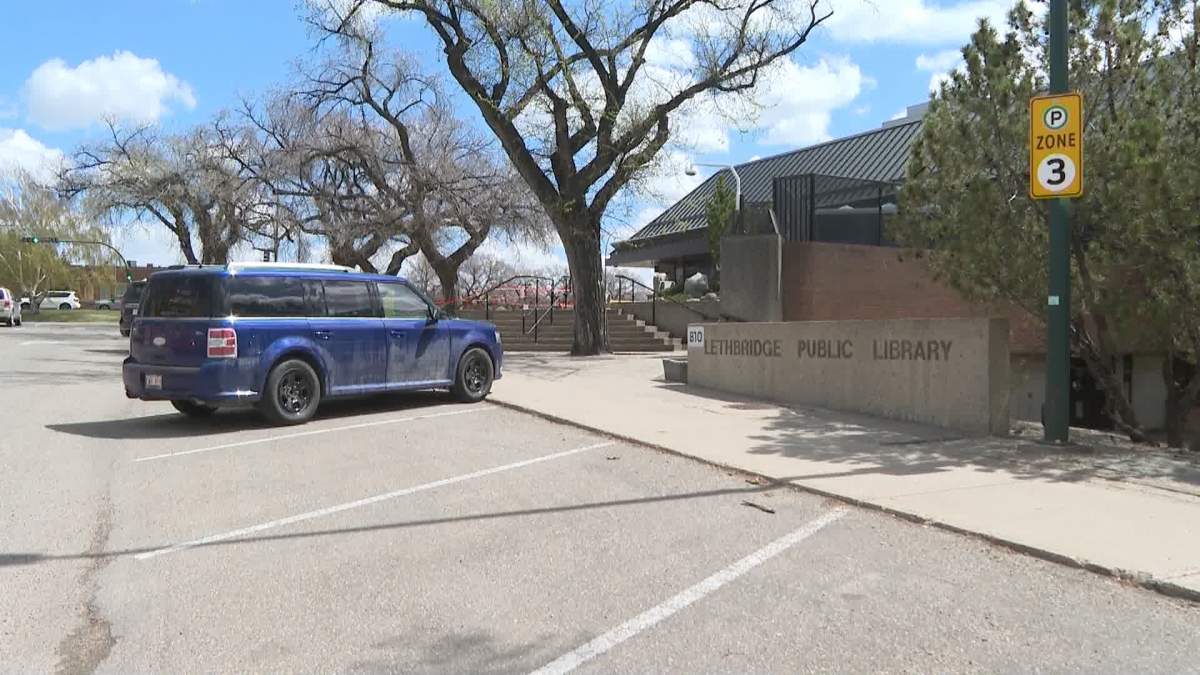
However, just hours later, at approximately 11:45 a.m., he was observed by officers at the Lethbridge public library using an online social media account to view images of children contrary to his lifetime prohibition order.
A judge has remanded him in custody on the four new charges, and he is expected to appear in court on Wednesday.


Former P.E.I. substitute teacher Craswell apologizes to victims ahead of sentencing
Judge to make decision on sentence at later date


WARNING: This story contains disturbing descriptions of child sex abuse. Resources and supports for anyone who has experienced sexual violence can be found at the bottom of this story.
The Crown is asking a P.E.I. judge to sentence Matthew Craswell — a substitute teacher who used his position in the classroom to sexually abuse children — to just shy of a decade in prison for his crimes, while the defence said the 41-year-old should spend closer to four years incarcerated.
Craswell’s sentencing hearing happened in Charlottetown Wednesday morning. Craswell appeared by video from the provincial jail, where he’s been in custody since late 2024.
The former P.E.I. substitute teacher pleaded guilty to two charges of sexually touching a person under 16 years old at Glen Stewart Primary School in 2024 and West Kent Elementary School in 2023, as well as to charges of possessing, distributing, and creating child sexual abuse and exploitation material — formerly called child pornography.
“Mr. Craswell owed a duty to these children to provide care to them,” Crown attorney Christopher White told the court, noting that Craswell instead abused his position of trust for his own sexual gain.
White asked the court to sentence Craswell to a total of 119 months across his five charges, while the defence argued that 51 months would be more fitting.
For more on this story, please read on CBC News at:
Court hears evaluator's comments

Online child sexual exploitation:
A statistical profile of police-reported incidents in Canada, 2024
by Laura Savage
Highlights
- Online child sexual exploitation (OCSE) is addressed by a wide range of Criminal Code offences that are grouped into two distinct categories: online sexual offences against children (e.g., luring, the non-consensual distribution of intimate images involving a victim aged 17 years or younger, and invitation to sexual touching offences) and online child sexual abuse and exploitation material (OCSAEM) offences (i.e., possessing, accessing, making, and distributing such material). OCSE incidents involve child and youth victims aged 17 years or younger on the first known date of the incident.
- The Royal Canadian Mounted Police’s National Child Exploitation Crime Centre (NCECC) serves as the primary point of contact in Canada for investigations related to the sexual exploitation of children on the Internet. Working in partnership with specialized provincial Internet child exploitation policing units, police services across Canada and internationally, the NCECC forwards suspected cases of OCSE to the appropriate police of jurisdiction for investigation. Due to a substantial increase in the volume and complexity of these cases (many of which involve Generative Artificial Intelligence), many police services do not have the resources to investigate all cases forwarded by the NCECC. As a result, the numbers presented in this Juristat article reflect the number of police-reported investigations for the year, accounting for only a subset of suspected OCSE cases within Canada.
- Police services across Canada reported 16,905 OCSE incidents in 2024, most (77%) of which were for OCSAEM offences.
- The rate of police-reported OCSE decreased by 16% between 2023 and 2024, driven by a large decrease in the number of OCSAEM incidents reported in 2024.
- Despite the decline in 2024, the rate of OCSE was almost three times higher than in 2018 (223 versus 77 incidents per 100,000 population aged 17 years and younger) and more than four times higher than in 2014 (223 versus 50 incidents).
- There was a 43% increase in the rate of online sexual offences against children from 2023 to 2024 (+1,230 incidents), driven by a sharp increase (+65%) in the rate of luring.
- Reflective of the challenges involved in investigating cybercrime, 94% of OCSAEM incidents and 76% of online sexual offences against children incidents were not cleared by police in 2024, meaning that an accused had not been identified in connection to the incident or there was not enough evidence to proceed with laying or recommending charges.
In the Western world, roughly 6% of sexual assaults of any kind are reported to police. If such is true for OCSE (CSE) or OCSAEM (CSAM), then the numbers would actually be about 300,000 and 230,000. For a country with a child population of about 3.8 million, those numbers are startling but not unrealistic.
That 94% of OCSAEM cases were not closed by police may be the reason why there was a 16% drop in OCSE cases reported to police between 2023 and 2024.
That means only 6% of cases were closed. 6% of 6% means the closure rate af all OCSE cases is about 1/3 of 1%, or 1 in 300 events. Why would people bother reporting?
The Internet is an integral part of daily life, with many Canadians depending on it for work, commerce, entertainment, shopping, and social connection. While the benefits cannot be understated, the Internet has also transformed the landscape of criminal activity, facilitating certain types of crime such as identity theft, extortion, and the online sexual exploitation of children and youth.
Using data from the Uniform Crime Reporting (UCR) Survey and the Integrated Criminal Court Survey, this Juristat presents an update to the article “Online child sexual exploitation: A statistical profile of police-reported incidents in Canada, 2014 to 2022,” released in 2024. The current article presents the latest available data on police-reported OCSE incidents, including victim, accused and incident characteristics, as well as the most recent data on court outcomes and sentencing decisions.
This article was produced with funding support from Public Safety Canada.
Text box 1
Defining police-reported online child sexual exploitation
====================================================================================

No comments:
Post a Comment