Violence in after-school programs in Paris: a youth worker acquitted of sexual assaults on kindergarten children
 Furthermore, the defendant, identified as David G. and aged 36, was also acquitted of charges of sexually assaulting a school activity leader. [LOIC VENANCE / AFP]
A school activity leader was acquitted Tuesday in Paris, due to reasonable doubt, of sexually assaulting nine children aged 3 to 5 at a nursery school in the capital. However, he was given an eight-month suspended prison sentence for sexually harassing two colleagues.
CSA in France > Massive child abuse scandal in France's nursery and primary schools
A shocking verdict. While sexual violence in after-school settings in Paris continues unabated, an activity leader was acquitted this Tuesday, July 7, of sexual assaults on nine children aged 3 to 5 years old "due to a lack of sufficiently established material evidence" and "the benefit of a very serious doubt," according to the Paris judicial court.
The alleged incidents took place between September 2024 and April 2025 at the Alphonse-Baudin nursery school , located in the 11th arrondissement of Paris. According to a court statement, "he was accused, in particular, of touching the children's genitals and buttocks, making them sit on his lap, and forcing them to caress their private parts."
Furthermore, the defendant, identified as David G. and aged 36, was also "acquitted" of charges of sexual assault against a school animator where he was accused of having touched her "the breast and grabbing her by the hips to make her sit on him", according to the same press release.
However, he was found guilty of sexually harassing two colleagues and sentenced to eight months in prison, suspended for 24 months, with mandatory treatment and restitution to the victims. He was also registered in the sex offenders register (Fijais), prohibiting him from working as a youth leader again.
Good grief! No jail time whatsoever! French justice is no justice at all for children.
"Variations in children's statements"
But the acquittal regarding the alleged acts against the children sparked a strong reaction among families and associations mobilized against violence in Parisian after-school programs. "Once again, with this decision, the benefit of the doubt goes to the accused and not to the children, whose voices are not acknowledged. This is yet another affront to all the alleged young victims who have only their words to defend themselves," reacted the SOS After-School Collective.
In its statement, the court explained the reasons for this decision. The judges reportedly noted "variations in the children's statements between the information provided by the parents and the interviews conducted by the investigators."
Did they know the children are 3-5 years old?
Furthermore, "the psychological examination of the children indicated that the initial statements may have been influenced by questions from their parents," it was stated.
However, during the trial, the first open to the public since the scandal broke in Paris , a three-year prison sentence was requested, including one year of imprisonment under electronic bracelet with provisional enforcement.
In court, the defendant vehemently denied any sexual acts, stating that "you have to be a psychopath to do that." The presenter only admitted to possible "clumsiness" due to "lack of training," such as holding children in his arms or on his lap, or using affectionate nicknames like "my love," "my darling," or "my baby."
Men should never be allowed to work in daycares, no matter how gay they may be.

How many more Lyhannas must there be before France takes child sexual assault seriously?
W
Barella was charged in connection with the case, but denies any wrongdoing or involvement in the killing. But shock turned to public outrage after a local prosecutor revealed that the suspect had been the subject of several accusations of sexual violence against young girls before Lyhanna’s disappearance, yet until then had never been questioned by police.
With the political fallout intensifying, the justice minister, Gérald Darmanin, has sought to focus attention on the failings of the judicial system, raising the possibility of magistrates being sacked, and ordering public prosecutors to review “every case involving children” – about 70,000 unsolved cases in total – by 14 July. My first reaction to that announcement was: why are 70,000 cases still awaiting review? Were they not considered urgent before this tragedy?
Of course, it is likely that serious mistakes were made throughout the handling of the Lyhanna case, as a preliminary inspection report has already indicated.
But the problem runs far deeper. France has one of the lowest ratios of public prosecutors in Europe: roughly 3.2 prosecutors per 100,000 inhabitants, nearly four times fewer than the average across the rest of Europe.
The track record of the French justice system in handling sexual violence is equally alarming. According to the Institute for Public Policy, roughly 92% to 94% of reported rape cases never led to prosecution. This reflects not only the evidentiary difficulties inherent in such cases, but also an overburdened justice system operating with too few investigators, too few prosecutors and too few resources to properly handle the volume of complaints it receives.
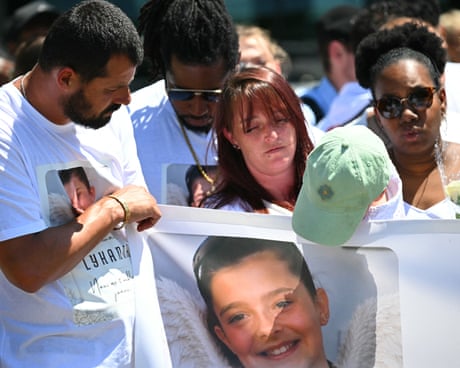
For the small minority of cases that do move forward, justice often operates at a painfully slow pace. Years may elapse between the filing of a complaint and a final ruling, with criminal proceedings frequently taking years to conclude. Last year, the European court of human rights condemned France for failing to effectively protect victims of sexual violence, exposing serious shortcomings in both its legal framework and its handling of rape cases.
While drug trafficking investigations routinely rely on sophisticated investigative techniques such as wiretaps, surveillance, geolocation tracking and undercover operations, reports by the High Council for Equality and other public bodies continue to document serious shortcomings in the investigation of sexual violence cases, including delays in gathering evidence, failures to secure digital material and insufficient follow-up.
In 2023, France’s Independent Commission on Incest and Sexual Violence Against Children (Civise) delivered a scathing assessment. Its conclusion was clear: sexual violence against children is not rare but a systemic phenomenon, perpetuated in part by institutional denial. Across 755 pages and 82 recommendations, the commission highlighted recurring failures in the protection of children, inter-agency coordination, the timeliness of investigations and the judicial handling of abuse cases. And yet, as of 15 June, the commission found that only three of the 17 measures it had designated as priorities in February 2025 had been fully implemented.
In 2024, the Economic, Social and Environmental Council (Cese) warned of a “systemic crisis in child protection”, calling it a “textbook case of the failure to effectively implement social policy”. It urged the government to adopt an emergency action plan. Yet many of its key recommendations remain unimplemented, and the structural shortcomings it identified persist.
During the campaign that secured his re-election, Emmanuel Macron pledged to prioritise child protection. The record suggests that has not happened.
According to Civise, a child is sexually abused every three minutes in France. The scale of the crisis is staggering, yet it has never been treated as the national emergency that it is. This is all the more striking given the succession of high-profile cases involving extreme violence against children that have dominated headlines in recent years.
Last year, France witnessed the trial in one of the largest child sexual abuse cases in its modern history. Joël Le Scouarnec, a former surgeon, admitted to sexually abusing children for decades, with about 300 victims, many of whom had been in hospital. Yet the political, media and international reaction remained strikingly muted given the scale of the crimes.
In recent years, a growing number of public figures have also spoken out about the sexual abuse they claim to have suffered as children. They include the actor Adèle Haenel. This testimony has helped to expose the extent of male sexual violence against children in France and the failures that have long enabled its concealment.
As shocking as this case is, it is not fundamentally different in nature from the widespread and systemic violence inflicted every day on countless children in families, schools, religious institutions, sports organisations and care settings that are supposedly meant to protect them.
French politicians are only now beginning to grasp what feminists, child protection advocates and survivors have been saying for years: it is not a question of a handful of egregious blunders, but of a broader societal failure.
Had Lyhanna survived, her name might well have been added to the already far too long list of child victims whose suffering is met with a frightening degree of indifference.
In French, the very etymology of the word for child is revealing: the term enfant derives from the Latin infans, literally meaning “one who does not speak”. Yet children have always spoken about the violence inflicted upon them. What has too often been lacking is not their voice, but society’s willingness to listen. Childhood remains socially defined by a lack of power and agency, and it is time for that to change.
Rokhaya Diallo is a French journalist, writer, film-maker and activist
===================================================================================

No comments:
Post a Comment