Everyday thousands of children are being sexually abused. You can stop the abuse of at least one child by simply praying. You can possibly stop the abuse of thousands of children by forwarding the link in First Time Visitor? by email, Twitter or Facebook to every Christian you know. Save a child or lots of children!!!! Do Something, please!

3:15 PM prayer in brief:
Pray for God to stop 1 child from being molested today.
Pray for God to stop 1 child molestation happening now.
Pray for God to rescue 1 child from sexual slavery.
Pray for God to save 1 girl from genital circumcision.
Pray for God to stop 1 girl from becoming a child-bride.
If you have the faith pray for 100 children rather than one.
Give Thanks. There is more to this prayer here

Please note: All my writings and comments appear in bold italics in this colour

Showing posts with label Lowell Goddard. Show all posts

Monday, 12 September 2016

The Scale of Historical Child Sex Abuse in the UK is a Catastrophe. We Need Catharsis

And not just in the UK, but in Canada and the USA as well
Beatrix Campbell, Guardian

The scope of the inquiry into sexual crimes against children
must not be narrowed. Until we address the horrors of the past,
there can be no moving on
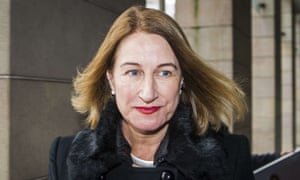
Lowell Goddard
 ‘Lowell Goddard said in a memo to MPs that there was an inherent problem in the sheer scale and size of the inquiry.’ Photograph: Jack Taylor/AFP/Getty Images

Lowell Goddard has told us what we know – that sexual crimes against children are too big, too tolerated and altogether too much. Goddard, the New Zealand judge who resigned from the inquiry into historical child abuse last month, said in a memo to MPs that there was “an inherent problem in the sheer scale and size of the inquiry”.

None of this is a surprise for me or anyone who has been reading this blog for long. It is, however, very disappointing, to the point of maddening, that the US and Canada have completely ignored this tragic situation as though it were confined to the UK and Australia. We have our heads buried in the sand and our national media outlets are doing nothing to change that. It is to our great shame that we are letting another generation of North American children suffer the devastating consequences of child sex abuse, and the nightmare of knowing that little or nothing will ever be done about it.

It was set up in 2014 after a tsunami of scandal: the deaths of prolific but protected abusers, BBC DJ Jimmy Savile and Liberal politician Cyril Smith, and longstanding suspicions about other Westminster politicians. Speculation about organised networks of men sexually exploiting children amplified the clamour to do something. The inquiry announced 13 initial investigations.

Goddard is the third chair to step down, after the previous two appointees resigned. Her memo, drawing attention to the unmanageable scale of the problem, has encouraged cynicism and scepticism, but scale should be no deterrent. Nor should the shame that suffocates survivors of sexual assault.

Victims and survivors don’t expect and don’t get justice. The great American specialist in crimes of sexual domination, Judith Lewis Herman, warns that the perpetrator’s goal is to maintain domination by terrorising and shaming. It is this “dishonouring” of victims, she argues, that makes sexual abuse “so impervious to the formal remedies of the law”.

It is about 'dishonouring' the victims, but I don't believe the motivation for that is to maintain domination and shaming. I believe that the domination and shaming are a means to accomplish the real motivation and that is to destroy innocence. It is literally the evil nature of pedophiles to destroy that which is good.

 If child abuse were a disease, we’d see urgent action.
Our culture must change
Sue Berelowitz

What Goddard and her inquiry have not been able to do, we as a society haven’t been able to do either: sexual crimes against children are ubiquitous and abusers act with virtual impunity.

Sexual abuse of children is one of the great issues of our time. (No, it's the greatest issue of our time). For decades it loitered on the doorsteps of institutions, with nowhere to go. Theresa May’s efforts as home secretary to launch the inquiry in 2014 revealed a rush to judgment and a faith that the great and the good – our own or somebody else’s – could get hold of this and control it.

They can’t. Unlike the Iraq war inquiry, or the Hillsborough inquiry, this is not about one time and place, but about everywhere: all bodies with any responsibility for children – from police to schools, churches, the justice system, the NHS, private schools and public charities – are implicated. Some have been named. I’m currently updating my book Unofficial Secrets, on the Cleveland child abuse crisis 30 years ago. It was a controversy about medical evidence of abuse and how to respond to it.


We need this inquiry to be brave

An inquiry chaired by Elizabeth Butler-Sloss – the same judge appointed in 2014 to lead the new inquiry, before she resigned under pressure over family links – was the defining moment in our era of child-abuse politics: it was a model of not-knowing, of not answering the questions on everyone’s lips. Although the Cleveland inquiry did not doubt the medical signs that were suggestive of sexual abuse, its report neither asked nor answered the question: were the children abused? And it thus created the context in which thousands of childhoods would be ruined. The government squandered a generation of professionals. And it denied justice – or if not justice, at least honour – to the survivors.

There are millions of us – survivors and professionals and their advocates – waiting, waiting, waiting for recognition and respect and the opportunity to participate in a cultural revolution. Goddard has suggested there should be a complete review of the inquiry she has quit, “with a view to remodelling it and recalibrating its emphasis more towards current events and thus focusing major attention on the present and future protection of children”. But to abandon the excavation of the past because it is too big and too hard – as Goddard seems to suggest – is to demand that we commit collective amnesia. It would mean “giving up on a better past” – in Herman’s phrase – for the millions who will suffer in the future.

The inquiry needs to be brave, to innovate. South Africa’s Truth and Reconciliation Commission could be a useful model. It had a target, the old apartheid state, and a mission: to name the guilty men and validate their victims and cement a new consensus. Yet that commission was set up by a post-apartheid government, whereas we are not a post-sexual abuse society. And that commission’s brief – to address individual victims of violence and perpetrators – did not extend to the millions subjected to “social suffering” caused by apartheid.

The child abuse inquiry’s brief is not just to consider abuse in institutional contexts, but the experiences of anyone “failed by an institution”. Nevertheless, a historical inquiry into institutions ignores the place where most sexual abuse takes place – the family. The Office of the Children’s Commissioner (OCC) in England calculates that 1.3 million children will experience serious sexual abuse in their families by the time they reach 18. In the past year the OCC has reportedly lost half its staff. That’s how committed the government is to abused children.

Her Majesty’s Inspectorate of Constabulary expresses its worries, in report after report, that despite law reform and greater awareness raised by successive scandals, the police response to sexual crime is so routinely poor that it risks failing another generation of children.

We need this inquiry to be brave. When it reviews itself, as it will, it must insist on what it needs – more specialist and trained staff and more support for those staff, who may be shocked by their discoveries. It needs huge outreach – who in Gateshead, or Godalming knows that this might be a forum for them? And it needs serious investigative powers and resources.

Why not envisage an inquiry that prefigures permanent vigilance, that morphs into an inspectorate that reports regularly, is respected by those who need it and feared by its enemies; whose brief is to support collective self-discovery so that we are not doomed to be who we were.

We need this inquiry to do something unprecedented: to help transform a catastrophe into a catharsis.

Friday, 20 May 2016

UK Police Expect 30,000 New Child Abuse Reports From Goddard Inquiry

Extent of child sexual abuse in England and Wales begins to become clear as inquiry passes on 100 cases a month
Sandra Laville

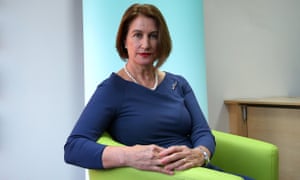
Lowell Goddard, chair of the child sexual abuse inquiry.
Lowell Goddard, chair of the child sexual
abuse inquiry. Photograph: Peter Byrne/PA
The scale of child sexual abuse in England and Wales is being exposed by evidence from thousands of victims, with cases being passed to police at a rate of 100 a month by the public inquiry set up following the Jimmy Savile scandal.

Simon Bailey, head of the national coordinating unit Operation Hydrant, said his team was expecting to be given 30,000 reports of new child sexual offences by the end of the Goddard inquiry, and predicted the rate of referrals of allegations of abuse would increase. 

Reports of child abuse to forces across the country are continuing to rise, said Bailey, who is the chief constable of Norfolk. He calculated that the continuing increase would mean that by 2020 police across the country would be investigating 200,000 cases of child sexual abuse.

Simon Bailey, head of the coordinating unit Operation Hydrant.
 Simon Bailey, head of the coordinating unit Operation
Hydrant. Photograph: Martin Godwin for the Guardian
Bailey added: “It is fair to say I am surprised by the extent of abuse being exposed, it is shocking. In trying to get a message across to the public about the scale of this, it is important to remember that behind each of these figures there is a victim.

“We are seeing a significant rise in the number of referrals each month from the Goddard inquiry, and these allegations relate to abuse in a range of institutions from the church, to schools, the scouts and hospitals.”

Justice Lowell Goddard is running 13 investigations into institutional abuse, which include inquiries concerning Westminster, the Catholic Church, Church of England, and Lambeth borough, and concerning grooming and sexual exploitation in Rochdale, Devon, Cornwall, Oxford and Rotherham, and at the Medomsley detention centre in Durham.

Another 12 investigations will be pursued during the inquiry. Most of these 25 investigations will lead to public hearings.

Gabrielle Shaw, chief executive officer for the National Association for People Abused in Childhood, said: “We have lifted the lid on a hidden problem, now survivors are coming forward in large numbers. These people were failed by institutions in childhood. They deserve to be heard now. Why were signs of child abuse ignored, unrecognised or unreported? The insight survivors have is vital in shaping how our institutions protect children in future.”

On Thursday, the Goddard inquiry opened new offices in Manchester as part of its nationwide “truth project”, which invites victims of abuse to give detailed testimony of their experiences. In many cases these experiences have stayed unspoken about for decades.

Two thousand victims have already contacted the inquiry to give details about experiences of child sexual abuse, and about 600 have already indicated that they would give their full testimony to the truth project.

In Australia where a royal commission into child abuse is being held, the numbers of people who have come forward has surpassed predictions. Bailey said that the same would be true of the Goddard hearings.

Referrals to Bailey’s team on Operation Hydrant stem from allegations made by victims contacting the inquiry and through the investigations being carried out by the inquiry team.

“These referrals are allegations which are new to the police,” said Bailey. “Where there are criminal investigations they will be passed to the relevant police force. What we are seeing is that the face of crime has fundamentally changed and it means we have had to move our resources to crimes against the vulnerable [and concerning] child abuse, adult abuse and rape.”

The huge increase in reports of child abuse to the police – a rise of 80% between 2012 and 2015 – was continuing, Bailey added. At this rate of increase, police will be investigating 200,000 cases by 2020, he predicted.

Police forces across England and Wales investigated 70,000 cases of child sexual abuse last year and 25% of the investigations were into non-recent abuse.

The chief constable said that the rise in investigations was due not just to increased reporting but to more children being abused, with the internet acting as a facilitator for paedophiles to contact children. He has commissioned research in an attempt to establish whether this is correct.

The enormous draw on police resources of these investigations comes as a severe spending squeeze on police budgets continues.

Last week Alison Saunders, the director of public prosecutions, issued new guidance to remind police that her lawyers would not make charging decisions in relation to dead perpetrators, implying that police were not aware of the ruling that the dead could not be charged with criminal offences.

Bailey defended the police from criticism. “It is vital that the police investigate allegations of child sexual abuse thoroughly and proportionately, whether the alleged crimes took place last week or many years ago,” he said. “Victims who report abuse by someone who is now dead have the same expectation that their allegations will be taken seriously and that they will have recourse to justice. Police also need to determine whether the alleged offender may have worked with others who are still alive and could pose a risk today.”

He added that age was no bar to people committing child abuse, citing examples of cases in which men in their 90s were under investigation for abuse.

This week, Theresa May, the home secretary, spoke out against those who said police should only concentrate on current crimes. “Perpetrators must never be allowed to think that their horrific acts will go overlooked or go unpunished ... Victims and survivors … deserve to be heard now, just as they should have been years ago, and they deserve justice, just as they did then,” she said.

Wednesday, 9 March 2016

Inquiry Hears Lord Janner Sexually Exploited 30 Children

Lord Janner is alleged to have exploited children to commit a 'full range' of sexual offences against them dating back to the 1950s, the public inquiry into child abuse has been told.

The late politician was said to have arranged for children 'in whom he had a sexual interest' to be brought to the Houses of Parliament. 

He died aged 87 in December, just days after he was found unfit to stand trial over historical child sex claims.

Claims: Lord Janner is alleged to have exploited children to commit a 'full range' of sexual offences against them dating back to the 1950s. He is pictured left welcoming children to the Commons in 1976

But now the allegations involving the former MP are being examined as part of the wide-ranging Independent Inquiry into Child Sexual Abuse, chaired by Justice Lowell Goddard.

Speaking at the probe's first preliminary hearing on Wednesday, counsel to the inquiry Ben Emmerson QC said: 'The allegations in summary are that Greville Janner exploited children and perpetrated a full range of sexual offences against them, including what would now be termed as rape.'

'In relation to a number of the complainants it is alleged that Janner abused his position as an MP by arranging for children in whom he had a sexual interest to be brought to the Houses of Parliament.' 

Lord Janner, pictured in a court sketch from August 2015,  died aged 87 in December, just days after he was found unfit to stand trial over historical child sex claims


The late politician (pictured left in 2000) was said to have arranged for children 'in whom he had a sexual interest' to be brought to the Houses of Parliament.

In relation to a number of allegations it was claimed that Lord Janner (pictured right in 2002) abused his position as an MP, the hearing was told.

The offending was alleged to have taken place at children's homes and hotels and dated between 1955 and 1988, the hearing was told.

In relation to a number of allegations it was claimed that Lord Janner abused his position as an MP, Mr Emmerson said.

He added that there were 30 alleged victims, 12 of whom were selected to give evidence at trial.

Seventeen complainants have been given core participant status at the inquiry.

CPS AND POLICE REJECTED THREE CHANCES TO PROSECUTE JANNER

Allegations against the late Lord Janner were reported to the Independent Inquiry into Child Sex Abuse after years of missed opportunities to prosecute him. 

When the allegations became public following a December 2013 investigation, Director of Public Prosecutions Alison Saunders originally decided that the peer should not be charged because he was suffering from dementia.

This was overturned by an independent review and a so-called 'trial of the facts' was called - but the peer died before the proceedings could begin.

In January a report by retired High Court Judge Sir Richard Henriques found that three previous chances had been missed to charge Lord Janner while he was alive:

1991: A complaint of sexual assaults by one individual who featured in the trial of paedophile care worker Frank Beck. The allegation, in essence, was one of grooming and sexual abuse of the alleged male victim between the ages of 13 and 15. The CPS decided there was insufficient evidence to prosecute.

2002: In an investigation named Operation Magnolia. Lord Janner was the subject of allegations as part of a probe into abuse children's home. The CPS says specific allegations relating to him were not referred to them and claim police chose not to pursue him.

2006: As part of a new sex abuse investigation, Operation Dauntless, an alleged victim made allegations of serious sexual offending around 1981 by three individuals including Lord Janner. The CPS decision in 2007 was again that there was insufficient evidence to prosecute.

Director of Public Prosecutions Alison Saunders originally decided that the peer should not be charged because he was suffering from dementia, but this was overturned by an independent review.

While he was unfit to stand trial, a proceeding called a trial of the facts was due to take place at the Old Bailey. However this was dropped when he died.  

Mr Emmerson said the inquiry has so far not received an application for core participant status from Lord Janner’s family. They have previously said he is 'entirely innocent of any wrongdoing'.

The examination of claims linked to Lord Janner is one of 13 investigations launched by the inquiry, which is being chaired by New Zealand judge Justice Goddard.

The inquiry is unable to make findings of criminal or civil liability, but Mr Emmerson said it will 'often be required to make findings of fact on allegations which, if true, may amount to the commission of a criminal offence'.

He added: 'No one should be in any doubt, therefore, that where the evidence justifies it ...the panel will make findings of fact on allegations of child sexual abuse.'

Referring to the inquiry as a whole, Mr Emmerson said: 'The task is vast but critically important.'

He cited figures indicating that between April 2012 and March 2014 more than 50,000 children were identified as victims of sexual abuse, adding that there were suggestions the true number may be as high as 450,000.

Mr Emmerson added: 'These figures should answer the doubts of anyone who questions the need for this inquiry.'

However, Mr Emmerson said: 'No-one should be in any doubt that, where the evidence justifies it ... the panel will make findings of fact on allegations of child sexual abuse.

In January a report by retired High Court Judge Sir Richard Henriques found that three chances had been missed to charge Lord Janner while he was alive.

The judge found that in 1991 prosecutors made the wrong decision not to charge Lord Janner after an 'inadequate' police investigation.

The inquiry will consider whether there were institutional failures to protect children, with bodies including Leicestershire County Council, the police and the Labour Party set to come under scrutiny.

In 2002 Leicestershire Police failed to pass claims made by a second alleged victim to prosecutors, and in 2007 again a flawed decision was made not to charge the politician when a third man came forward.

Director of Public Prosecutions Alison Saunders (left) originally decided that the peer should not be charged because he was suffering from dementia, but this was overturned by an independent review.

The allegations involving the former MP are being examined as part of the wide-ranging Independent Inquiry into Child Sexual Abuse, chaired by Justice Lowell Goddard (right).


The examination of claims linked to Lord Janner is one of 13 investigations launched by the inquiry, which is set to last for five years and has a budget of £17.9million for this financial year.

An overarching investigation will also look into allegations of child sexual abuse and exploitation involving people of public prominence associated with Westminster.

Mr Emmerson said: 'Allegations of the involvement of politicians in child sexual abuse are reported, on the one hand, as evidence of a paedophile conspiracy at the heart of Westminster and, on the other hand, as evidence of a modern-day witch-hunt.

'It is the role of this inquiry to move from the realms of rumour and speculation, allegation and counter-allegation, to the assessment of objective facts.'

He added that the inquiry 'will also need to recognise the damage that can be caused by false accusations of sexual abuse, without hesitating to make findings against individuals and institutions if justified by the evidence'.

The first full hearings in the Janner strand of the inquiry are expected to be held in September. 

Thursday, 15 October 2015

Victim Testimonies Permanently Deleted by Child Sex Abuse Inquiry

The Independent Inquiry Into Child Sex Abuse apologised for 
the loss of submissions made through an online form

The inquiry is chaired by Justice Lowell Goddard 
By Sophie Jamieson

Victims of alleged child sex abuse who submitted accounts through the Government's inquiry website were told their testimonies had been deleted because of a technical blunder.

Following a change in the inquiry’s website address, any submissions through an online form between 14 September and October 2 were “instantly and permanently deleted” before reaching staff.

OMGosh, some techie's head should role for this. What a dreadful start!

The inquiry was set up following allegations that a paedophile ring operated
 in Westminster in the 1980s  Photo: ALAMY
The Independent Inquiry Into Child Sex Abuse (IICSA) apologised for “any inconvenience or distress” and reassured those who shared their experiences that their information had not been put at risk of disclosure.

Those whose submissions have been lost have been asked to resend their information.

The inquiry into historic sex abuse was set up last July but has suffered a number of delays after two previous chairwomen resigned.

It is now being led by New Zealand judge Lowell Goddard, who will receive a £482,000 pay package in salary and allowances. No wonder she's smiling.

IICSA said in a statement on its website: "Due to a change in our website address to http://www.iicsa.org.uk on 14 September, any information submitted to the Inquiry between 14 September and 2 October through the online form on the Share your experience page of our website, was instantly and permanently deleted before it reached our engagement team.

"We are very sorry for any inconvenience or distress this will cause and would like to reassure you that no information was put at risk of disclosure or unauthorised access."

Theresa May announces the review into the Home Office investigation
 into allegations of historical child sex abuse  Photo: PA
"Due to the security measures on our website, your information cannot be found or viewed by anyone else as it was immediately and permanently destroyed.

"We would like to apologise again to anyone who submitted details to the Inquiry during this time and to ask you to please resubmit your information through the online form.

"Alternatively you can call the Inquiry helpline on 0800 917 1000 to submit your information over the phone, or email our team at contact@iicsa.org.uk."