Everyday thousands of children are being sexually abused. You can stop the abuse of at least one child by simply praying. You can possibly stop the abuse of thousands of children by forwarding the link in First Time Visitor? by email, Twitter or Facebook to every Christian you know. Save a child or lots of children!!!! Do Something, please!

3:15 PM prayer in brief:
Pray for God to stop 1 child from being molested today.
Pray for God to stop 1 child molestation happening now.
Pray for God to rescue 1 child from sexual slavery.
Pray for God to save 1 girl from genital circumcision.
Pray for God to stop 1 girl from becoming a child-bride.
If you have the faith pray for 100 children rather than one.
Give Thanks. There is more to this prayer here

Please note: All my writings and comments appear in bold italics in this colour

Showing posts with label perverts. Show all posts

Saturday, 29 August 2026

Wolves Among the Sheep > Disgraced Montreal priest facing new charges of CSAM, CSAEM; Catholic victims victimized again in financial settlements


Former Montreal priest imprisoned for sexually abusing boys facing new charges


Brian Boucher has been serving rest of 8-year sentence in the community after statutory release in 2024

Following these new charges, Brian Boucher's next court appearance on Sept. 1. (CBC)

A former Montreal priest who was imprisoned for sexually abusing two boys, and serving the remainder of his sentence in the community under supervision, is facing new charges.

According to his charge sheet, Brian Boucher is accused of being in possession of child sexual abuse and exploitation material between April 7 and 9.

His next court appearance is on Sept. 1.

Boucher is serving an eight-year sentence after being found guilty in 2019 of sexually abusing two boys while he was a priest in LaSalle and, later, in the Town of Mount Royal. Boucher was granted statutory release on July 23, 2024.

While in prison in 2023, Boucher was also charged with sexual assault, voyeurism and criminal harassment regarding alleged incidents inside prison. He was acquitted of those charges in 2025.

Boucher was defrocked in 2020.


‘This whole thing’s a farce’: New Orleans Catholic church sex abuse settlement brings anger and shock

Survivors begin receiving letters with payment amounts months after $305m settlement agreement was struck

Survivors of child rape and other sexual abuse within New Orleans’s Roman Catholic archdiocese learned that $641,000 or so is the most they can individually get under a settlement approved in December to resolve a years-long bankruptcy protection case.

Those amounts were communicated in letters that hundreds of clergy abuse survivors participating in the New Orleans archdiocese’s bankruptcy began receiving on Tuesday. The figures are well below a $2.4m jury verdict awarded to an unrelated Louisiana religious sexual abuse claimant in June 2025 after the state’s legislature temporarily eliminated filing deadlines for such cases.

The amounts cited in the recent letters were also substantially below out-of-court settlements that a handful of clergy abuse survivors in the New Orleans area have reached in the verdict’s aftermath with Catholic institutions not affected by the bankruptcy, which evidently have been more or less comparable to the jury award.

Survivors say the amounts in the letters aren’t just insulting – but also the latest evidence of the disproportionate advantage enjoyed by the more than 40 Catholic institutions that have gone to federal court to declare bankruptcy amid the financial fallout of the church’s worldwide clergy molestation scandal, including nearly 30 such groups that have settled.

“This whole thing’s a farce,” Aaron Hebert, who was abused by Lawrence Hecker, a late, convicted child rapist and longtime archdiocesan priest, said on Thursday. Richard Coon, who has testified to being molested by three men with links to the archdiocese, added: “There’s a lot of survivors that are hurting right now.”

Driving the despair that Coon and Hebert described are two elements: the $305m settlement that the archdiocese as well as its insurers on 8 December agreed to pay to clergy abuse survivors to resolve a bankruptcy protection case opened in 2020; and a zero- to 100-point system determining each individual victim’s payment.

Settlement disclosure documents that disgusted victims virtually from the outset detail how points would be assigned based on the nature of the abuse, among other elements. Rape, for instance, equated to 75 points within the system; oral or digital abuse was 56 units; and grooming behavior was five.

Additionally, the archdiocese and others made comments in open court promising payments by the end of spring 2026. The process instead dragged, with settlement trustee Don Massey filing motions in court to get the church to turn over records needed to make payment determinations.

“Any promises made by the debtor (the archdiocese and its affiliates) were not made by the settlement trust,” Massey said when asked about payments not yet having been doled out. “The settlement trust was not consulted by the debtor prior to making this uninformed promise.”

By Thursday, days after the abuse claims valuations concluded, the Guardian and reporting partner WWL Louisiana had confirmed the maximum 100-point payout equated to an “estimated distribution” from the settlement of $641,425.64. That meant each allocated point was worth $6,414.26.

Hebert shared his letter with the outlets. He had been awarded 56 points – or an estimated settlement distribution of $359,198.

Meanwhile, having endured rape and oral sexual abuse by multiple clergy predators, Coon was allocated 98 points. He said it was “shocking” that he did not get maximum points given the circumstances surrounding his claim.

Coon, Hebert and bankruptcy claimant Brian Manix all expressed disbelief that allocation letters given to survivors failed to break down precisely how the claims evaluator, the personal injury attorney Richard Arsenault, arrived at their points total. The missives just contained the final sum, the estimated settlement distribution and an acknowledgment that the bankruptcy may have required them “to revisit deeply personal and difficult experience”.

Survivors have 30 days to ask for reconsideration, but without the basis for the points total, they are left to guess why they didn’t receive what they expected.

“We asked … for that,” Manix said on Thursday. While he declined to publicly disclose his allocation, he confirmed he was not awarded maximum points, saying, “I was raped. I was made to give oral sex, and I was groomed … I need somebody to tell me … what’s missing.”

After pursuing a case leading to a child rape conviction and sentence of life imprisonment for Hecker, Neil Duhon said he was allocated just 75 points – $481,069.50. He said he got no additional points for his role in Hecker’s successful prosecution, which the system called for.

“Now we know how much it cost a priest to rape a … boy,” said Duhon, who was 15 when abused.

Arsenault did not respond to a request for comment.

Sources familiar with the process say more than 800 abuse claims were given points allocations. Among them were more than 100 that got scores of zero – such as for claiming abuse by a predator or entity not affiliated with the archdiocese.

Furthermore, the sources said that about $56m from the settlement was being temporarily held back to account for successful appeals. And any remaining money held back would then be redistributed to survivors based off their points allocations.

Still, that provided little comfort to Coon, Hebert, Manix and other survivors with whom they said they spoke in recent days. Perhaps most frustratingly for them, survivors who challenge their allocations must pay $1,000 out of pocket, according to a protocol established in December and which the vast majority of claimants approved.

Attorney Richard Trahant, who is part of a legal team representing Coon, Hebert, Manix, Duhon and roughly 80 other abuse claimants in the New Orleans archdiocese’s bankruptcy, said a number of his clients would appeal their allocations.

“The $1,000 fee for reconsideration of the point total is obnoxious,” Trahant also said. “And we will figure out how to address that in the coming days.”

Coon, Hebert and Manix said such factors convinced them that bankruptcy court was the wrong venue to be fairly compensated for their abuse – despite assertions by the archdiocese that it was the venue providing the most equitable solution.

As Coon put it: “The bankruptcy was all about protecting the church.”


Tuesday, 12 May 2026

CSA in the USA > Yet another arrest in Vancouver, WA child sex ring case


Vancouver child molestation case expands with arrest of suspect's wife

Another arrest has been made in the child molestation case surrounding a now-deceased Vancouver pediatrician.

VANCOUVER, Wash. — The wife of a Vancouver medical assistant who was arrested in connection with a wide-reaching child molestation case has also been arrested.

Anna Hartley, Chad Hartley's wife, was booked into the Clark County jail Monday on charges of first-degree trafficking and first-degree child molestation. She's due to appear in court at 1:30 p.m. on Tuesday.

As of now, details about the arrest are unclear.

RELATED: Third suspect under arrest in Vancouver child molestation case linked to pediatrician

The investigation began in February, when Vancouver police received a cyber tip from the National Center for Missing and Exploited Children about child sex abuse material, or CSAM, tied to an IP address in Vancouver.

Detectives identified Chad Hartley as a suspect in the case on April 29. He was a medical assistant at the PeaceHealth Fisher's Landing clinic in Vancouver.

Hartley was later connected with Dr. Michael R. Wilmington, a pediatrician VPD said was "affiliated with multiple medical facilities" in the greater Portland-Vancouver area and was employed at Kaiser Permanente's Salmon Creek Medical Office. Wilmington allegedly hosted naked sleepovers with young kids at his home in La Center.


Credit: KGW
Anna Hartley, wife of medical assistant Chad Hartley, has been arrested on charges of trafficking and child molestation in Clark County.

On May 2, Vancouver police learned that Wilmington had been found dead in Lewis County in an apparent suicide. The Lewis County Sheriff's Office is in charge of the death investigation.

Roughly a week later, Vancouver police announced that officers had arrested a third suspect, 61-year-old William J. Sneiderwine, on charges of conspiracy to commit child molestation and tampering with physical evidence.

According to prosecutors, Sneiderwine encouraged Hartley to bring a young victim to Wilmington when he introduced the two at a nudist bowling event. Police also found an online chat where Sneiderwine allegedly encouraged someone else to sexually offend against their child.

Sneiderwine has a previous sexual misconduct conviction from 1998 involving a 14-year-old in Indiana, according to prosecutors.

This is a developing story. Stay with KGW as we continue to update this article with new information.


Friday, 10 April 2026

The ‘Philomena Protocol’ > Saving Children in the Cayman Islands


Police using new approach to target child sex abuse in the Caymans

At a glance

  • The RCIPS has launched a new process used by police services in the UK, known as the ‘Philomena Protocol’, to help protect children who are being exploited
  • Former head of London’s Met Police team in finding missing persons and exploited children is leading the introduction of new protocol
  • Police asking public to assist with protecting the islands’ vulnerable children

Police have adopted a new protocol in efforts to tackle child sex abuse and exploitation in Cayman.

The Royal Cayman Islands Police Service has begun using what is known as the ‘Philomena Protocol’, which helps to locate and return a child as soon as possible after they are reported missing, as well as to identify and protect potential victims.

The basis of the scheme is for vital information about the young person to be recorded and accessed by relevant agencies, including police and social services, so that it can be used to help locate them safely and quickly.


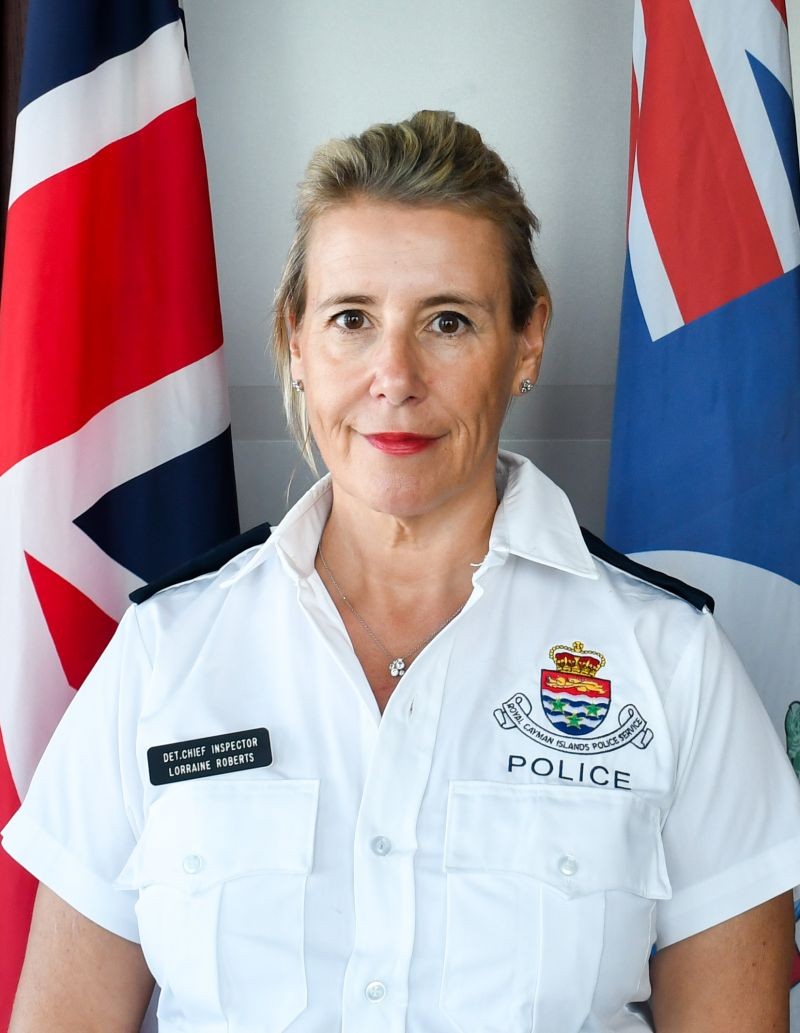
Detective Chief Inspector Lorraine Roberts says the RCIPS is taking a more proactive approach to protecting vulnerable children in Cayman. – Photo: File

RCIPS Protective Services Detective Chief Inspector Lorraine Roberts says groomers usually target vulnerable kids, noting, “You only have to look at the Epstein case at the moment” to see the types of young people who are being groomed and used.

“Cayman is no different to the rest of the world,” she said. “It’s the children … who are looking for love and attention, and suddenly they’ve got this admirer online giving them lots of compliments

“And the message from me, for parents, is to pass on to their children that nothing in life is free. People get given drugs, alcohol; why on Earth do they think that these adults are giving them drugs [or food]?”

She says the RCIPS is aiming to “get more in the prevention space” when it comes to protecting Cayman’s children.

“We know that some offenders are targeting some of our most vulnerable individuals, and now we’re doing much more to now be proactive in this space … in identifying the targeting,” she said, adding that police are making it a priority to be “perpetrator focused”.

The Philomena Protocol

The Philomena Protocol, named in the UK after Saint Philomena – the patron saint of babies, infants and youths – was introduced to the RCIPS shortly before Roberts joined the service last year, and she has been leading it since October.

It has been used by various police departments across the United Kingdom since it was launched in County Durham in northern England seven years ago. Roberts previously was the lead officer responsible for missing people and child exploitation in the Metropolitan Police Service in London.

She explained that, under the Philomena protocol, as soon as a child is reported missing, from school, a household or a children’s home, “we’re on the phone to CCTV to find out where they are … and we’re much more perpetrator focused”.

During her time in London, she said, using this protocol, the Met Police saw a reduction by half in child murders “because … we worked more with the causes; what were children being led into? Why were they going missing? Where was the harm and risk? And it was either for drugs or exploitation.”

As part of the RCIPS’s efforts to become more proactive in protecting the islands’ children, it is working closer with other agencies – like the Department of Children and Family Services, the 911 service, CCTV operators – on the newly adopted protocol.

The RCIPS also want members of the public to start communicating their suspicions to police when they think a child might be in danger from an individual. “Perpetrators are out there, and people who know them, they need to start telling the police who they are, and who they’ve got suspicions about. We need to hear about it,” Roberts said.

Breaking the cycle of sexual abuse of vulnerable victims and protecting them, is vital, says Chief Superintendent Richard Barrow, who heads up the RCIPS Public Protection Bureau.

A complicating factor in this is the interpretation of what is happening by the young victims themselves, he explained, noting that many of the youngsters targeted do not see themselves as victims.

“So we have got to change that mindset,” he said.

Dedicated efforts to deal with the issue of child exploitation and abuse in Cayman have been ongoing for some time, he noted, pointing to the establishment of the Child Safeguarding Board, which was set up in 2016.

That board was set up to help coordinate policies and procedures for preventing all forms of child abuse, and making sure information is shared across agencies.

Changing the language

Roberts has also been leading training within the RCIPS and with the various agencies on tackling “victim-blaming language”, as well as pinpointing exactly what is child exploitation and what can be done to prevent predators from targeting children who regularly go missing.

“They’re not runaways; they’re missing children,” she said. “When you call them runaways, that puts the onus on them. They are missing children because they think they are in a relationship.”

Those relationships are often with much older men, who offer them drugs, alcohol and gifts, and shower them with attention. “You can’t blame the child … they’re being coerced,” she said.

Kids who have little or no parental supervision, who can often be found out in public late at night, are typically among those who are targeted, she noted.

Other language that needs changing within the community would be calling the grown men these girls go with “abuser” instead of “boyfriend”, Roberts said.

She added that if the community mindset is changed from thinking the girls are just “with a boyfriend” versus being “sexually exploited by an adult male who is abusing them … that’s the shift we need.”

“It’s often the same offenders, and it’s just being wise to be proactive and targeting those,” Roberts said.