So far in the 21st century nearly a third of a billion children have been sexually abused, most of them multiple times, some thousands of times. 6 out of 7 are girls. Anything you can do to get this message to as many people as possible will help save abused children all over the world, and maybe even some of the abusers. Please read "Save A Child from Sexual Abuse by 3:15 PM" under "First Time Visitor?" May God bless you and anoint this ministry.
Everyday thousands of children are being sexually abused. You can stop the abuse of at least one child by simply praying. You can possibly stop the abuse of thousands of children by forwarding the link in First Time Visitor? by email, Twitter or Facebook to every Christian you know. Save a child or lots of children!!!! Do Something, please!
3:15 PM prayer in brief:
Pray for God to stop 1 child from being molested today.
Pray for God to stop 1 child molestation happening now.
Pray for God to rescue 1 child from sexual slavery.
Pray for God to save 1 girl from genital circumcision.
Pray for God to stop 1 girl from becoming a child-bride.
If you have the faith pray for 100 children rather than one.
David A. Ritchie, a religion instructor and the prominent lead pastor of Redeemer Christian Church in Amarillo, Texas, has been fired following his arrest over the weekend in a prostitution sting.
Redeemer Christian Church did not immediately respond to a request for comment from The Christian Post on Wednesday, but it confirmed Ritchie’s firing in a statement to ABC 7.
"[Ritchie] was immediately placed on leave, and our elders met Monday night to officially terminate his employment," Andrew Merker, a church spokesperson, told the news outlet on behalf of the elders. "We are shocked and heartbroken by this news, and we are committed to exercising appropriate accountability."
Ritchie, 42, who has been charged with solicitation of prostitution, was one of eight men arrested in the undercover sting conducted by the local Department of Public Safety on Friday and Saturday, ABC 7.
David Ritchie is the former lead pastor of Redeemer Christian Church in Amarillo, Texas. | YouTube/Cantus Firmus
The other men arrested for similar charges and other crimes are John Alexander Grado-Vega, 26, of El Paso; Braiden Deion Sellers, 34, of Pascagoula, Mississippi; William Theodore Bradley, 47, of Amarillo; Jorge Luis Lopez-Najera, 24, of Amarillo; Jerry Mac Rottenberry, 53, of Amarillo; Kody Ray Dick, 37, of Amarillo; and Travis Jordan Brooks, 35, of Clermont, Florida.
Ritchie’s profile has already been scrubbed from the church’s website. An archived page from his own website describes him as a married father of three boys who holds degrees from Amarillo College, West Texas A&M University and Reformed Theological Seminary. He is also listed as a part-time instructor of religion at West Texas A&M.
A university spokesperson told the Amarillo Tribune that he is not employed by the university.
In a post on Facebook on Wednesday, Madison Jonas, who says he has known Ritchie for nearly 20 years, said that while he doesn’t condone what Ritchie did, why so many men are soliciting prostitutes needs to be examined.
Here's a clue to start your research > So many men, even pastors, have not surrendered themselves completely to the Lordship of Jesus Christ. Even our sex lives need to be surrendered to His will, and our will must be surrendered. That's a cross you must carry daily if you are going to be ready to face the Lord on that Great and Terrible Day.
Another candidate for "Mother of the Year". Rube Franke was not only a family vlogger, but thought she was a born again Christian. No doubt Jodi Hildebrandt was a major influence on her, but she will still have to answer before God for what she did to her children, especially in the Name of God. There were demons around those children alright, but their names were Rube and Jodi.
‘Spawns of Satan’: Ruby Franke detailed torture of kids in newly released journal
This image from video provided by the Utah State Courts shows Ruby Franke during a virtual court appearance, Friday, Sept. 8, 2023 in St. George, Utah during which she was charged with child abuse. Franke's journal entries, detailing her abuse of her children, were released by prosecutors on March 21, 2024. Utah State Courts via AP
Caution: The treatment of Franke's children is very disturbing, please proceed with caution.
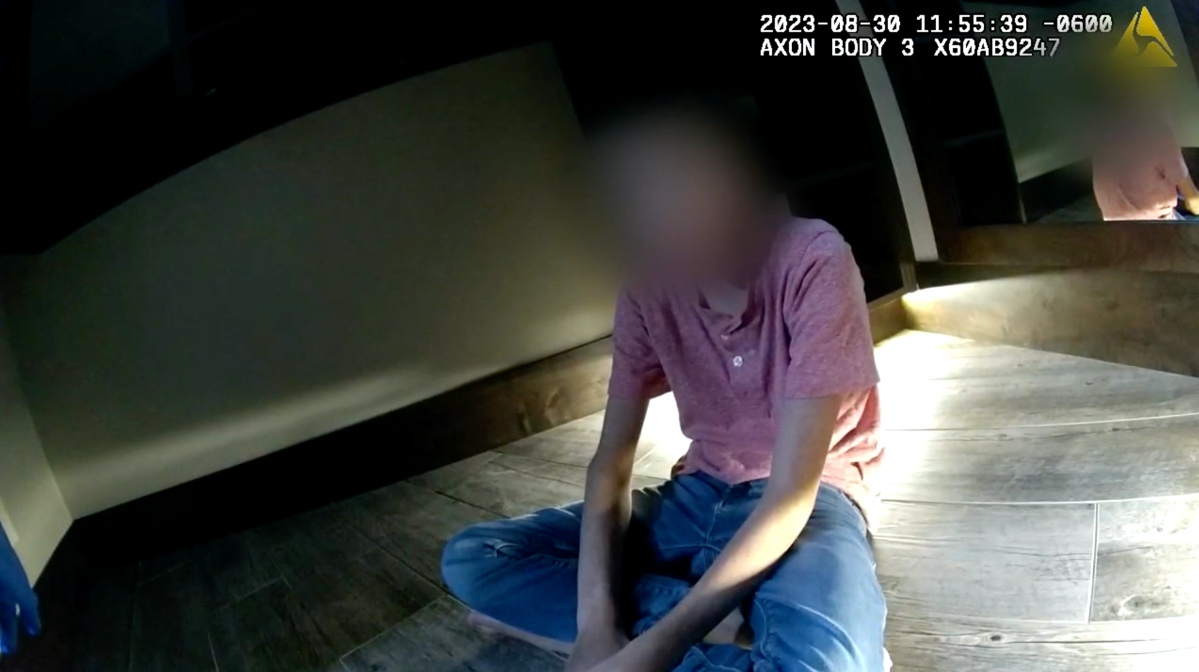
The video footage and photos show Franke’s 10-year-old daughter with stick-thin arms and buzz-cut hair. Police documents detail how she refused medical treatment for hours before letting anyone touch her.
Ruby Franke’s 10-year-old daughter was found emaciated in a closet. Washington County Attorney's Office
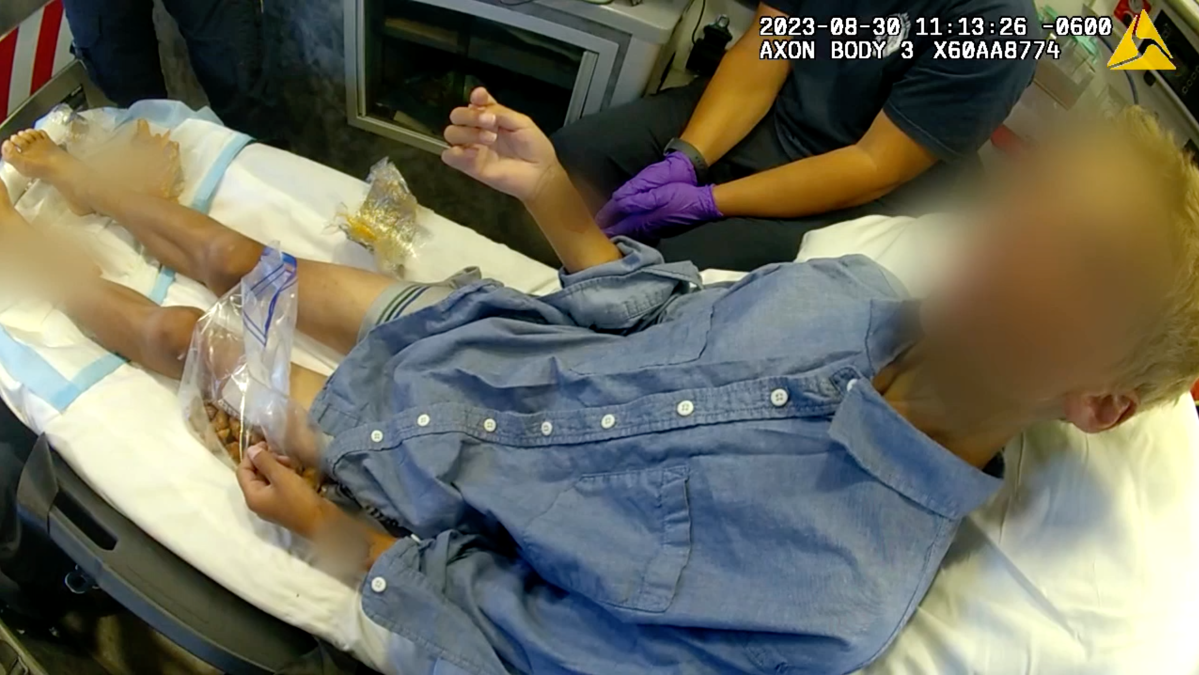
Franke’s 12-year-old son was found with saran wrap around gaping, still-bloody wounds on his ankles. He told a witness he was to blame for his injuries.
Ruby Franke’s 12-year-old son in the back of an ambulance with after medics removed the saran wrap covering the injuries on his ankles and wrists. Washington County Attorney's Office
But the most disturbing pieces of evidence in the collection were journal entries written by Franke, found in the home. The entries detailed how Franke starved and beat her children, and how she believed they were possessed by demons and needed physical punishment to “repent.”
Before getting into the journal entries, here’s what the documents revealed.
A statement from the Washington County Attorney’s Office, included with the trove of documents, described the home environment as a “work-camp like setting,” in which the children were forced to complete gruelling physical tasks, sometimes bare-foot in the heat of the summer sun in Utah.
“The investigation found that religious extremism motivated Ms. Franke and Ms. Hildebrandt to inflict this horrific abuse. The women appeared to fully believe that the abuse they inflicted was necessary to teach the children how to properly repent for imagined ‘sins’ and to cast the evil spirits out of their bodies,” prosecutors wrote.
Franke’s son tried to run away in June 2023, before the children were rescued, which exacerbated the abuse against him and led to him being tied up by his wrists and ankles.
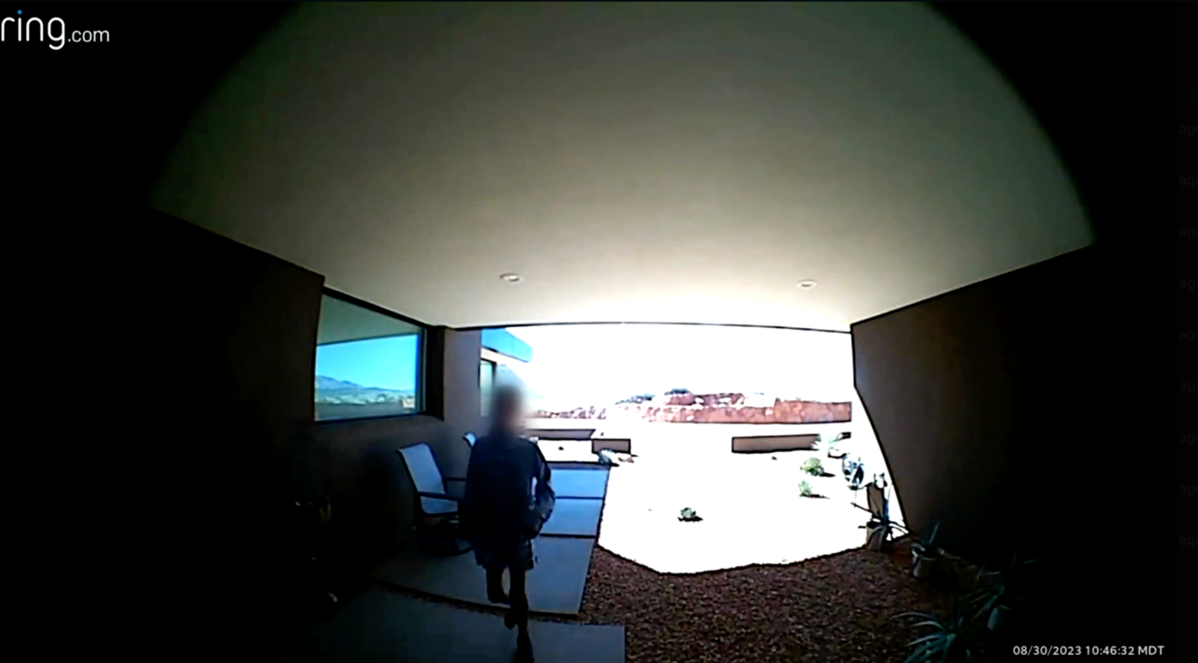
The children were eventually found after Franke’s son, referred to as R in documents, ran away for a second time from Hildebrandt’s Utah home where he was being held, and asked a neighbour for food and water.
A witness statement given by Danny L. Clarkson, the neighbour who discovered R, states that the 12-year-old boy was found with duct tape around his ankles. When asked about it, R said “it was personal business, but that it was his fault.”
“I did not press the issue but became further alarmed,” Clarkson wrote. “We also discovered he had duck (sic) tape around his around his wrists, hidden by long sleeves, and again he said ‘I got these wounds because of me.’ It was obvious to us that he had been in bondage.”
Ruby Franke’s son was captured on a Ring camera walking up to a neighbours house asking for food and water. Washington County Attorney's Office
When police arrived, R told them that he believed two of his sisters were also in Hildebrandt’s home, but he wasn’t certain. He said he hadn’t seen them “in over a month as they were kept separately in the home.”
When Hildebrandt’s home was searched, police found R’s sister, referred to as E in documents. She was found sitting in a walk-in closet inside the expansive home and refused to leave or allow anyone to touch her to provide medical treatment, video footage shows.
The girl was “concerned that Jodi did not want her to go to the hospital. She was concerned that the medical personnel would give her a vaccine and told me, ‘vaccine kill you,'” an officer referred to as N. Tobler wrote in a supplemental report.
Police officers said that during their search of the residence, they “located several rolls of duct tape, plastic wrap, used rope, cayenne pepper, honey paste (described from victim Child 1), used medical gauze and other documents describing the forms of discipline in the household.”
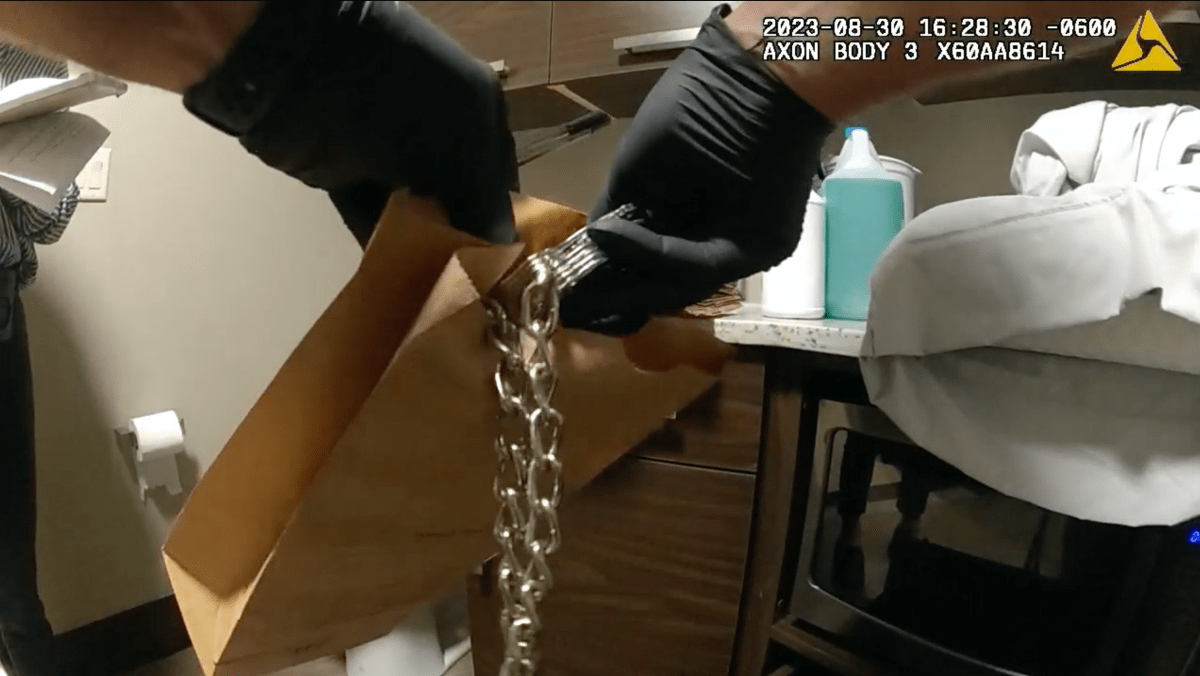
Photos of these pieces of evidence were also released, including a video of a police officer finding a pair of large, silver handcuffs with a long rope attached to the end of it. The handcuffs were found in a safe room in the home’s basement, behind a large vault-like door.
A pair of handcuffs attached to a rope being placed into an evidence bag by a police officer investigating the home of Jodi Hildebrandt. Washington County Attorney's Office
As for the documents “describing the forms of discipline in the household,” those journal entries were made public, though some parts have been redacted, including the real names of the children.
The journal entries
The earliest journal entry dates to June 11, 2023. Franke writes that her daughter, E, has been hitting her own head on the ground in frustration.
“Big day for evil. E manipulates me. She won’t scream when Jodi is around but with me she whails (sic). All night, E screamed, cried and would hit her head on the tile floor.
An undated entry that appears on the same page reveals that Franke cut off E’s hair.
“E is better behaved with Jodi. She likes to think she can still manipulate me. I gave her a pixie haircut. All her long hair is gone. No more distracting with hair.”
In an interview with Franke’s husband Kevin, he revealed that his daughter E had long hair and was very talkative the last time he saw her, which was around a year prior. Kevin told police he and his wife separated because he didn’t treat Franke well enough and had a pornography addiction.
At that time, he said he was working to win his wife back. Kevin has since filed for divorce from Franke.
In a journal entry dated June 12, 2023, Franke writes about how E wants to break her fast — in other words, eat, after being starved. When Franke refuses to feed E, she becomes angry.
“All day E makes rhymes: ‘My mom starves me and calls it fasting,’ ‘My mom won’t lift a finger and bring me food because all she does is lie on the bed and eat brownies,'” Franke writes.
Hildebrandt then helps Franke “intervene” with E, because “allowing lies to be spewed gives the devil a platform. Articulating lies reinforces possession.”
She adds that the longer the lies are allowed to be spread, the more extreme the “intervention” must be to correct it.
“I cut more off E’s head. We doused her with water in the dog wash. E said she wanted to run away.”
A journal entry from June 13, Franke recounts screaming at her son to rid himself of the demon possessing him.
“I told him to send the demon a message for me. ‘I will not give up. I will not leave. I am going nowhere. Get out!’ R released the demon and he has been very workable ever since,” the entry reads.
“It’s been 90 minutes since R ate. I warned him that food would either energize him to truth or defiance. He is defiant again. He pooped his pants and is telling me ‘no.’ His poop is too watery to be fasting. R admits to stealing water 3 times yesterday. R lies and feels no remorse,” the entry adds.
“Sending evil away in a long-time possessed person is not a one and done deal — usually. These wicked spirits in E & R have been pals long before this life.”
She also wrote an explanation for why she forces her children to do gruelling physical labour.
“If you can engage a weak minded soul in a physical activity of obedience you can begin to break the bond Satan made with the weak. Physically stop the acting out behaviours and begin physically doing good. Farm work. Lifting boxes. Exerting energy. Exercises. Jump rope. Milking cows. Weeding a garden. Digging trenches. Satan cannot be where there is good.”
On June 14, Franke wrote about forcing her daughter to carry a heavy box up and down stairs, and shaving the child’s head as punishment for slipping.
“E woke up. I reminded her that if she whined, cried or squinted her eyes at me or soured her face, I would be buzzing her hair. If she is going to act sick, she can look sick. She agreed with a smile. I told her because she didn’t listen the night before, she would do 2 sets of boxes/stairs with a 5 min break. She did the first set easily and agreeably. After 5 min of rest she began whimpering. When she got the bottom stair she ‘slipped’ and dropped the box. I put her in the dog wash and shaved her head. Then back to the boxes,” the entry reads.
“E agreed to sit on the park bench and think about her choices. I made it very clear if she were to move, get up, fidget, talk, take her hat off, she would go back to work. E agreed eagerly. She promised to be obedient. After an hour on the bench, E began moving and looking around. I pulled her into the house and gave her more boxes.”
On the same day, Franke wrote that she told her son that she will not “feed a demon.”
“I will feed R, I will not feed a demon. So I will check on you in a bit and if you want food then be prepared to tell the truth about your behaviours,” Franke wrote of her conversation with her 12-year-old son.
“I bring him dinner of brown rice, beans, lentils and water. He takes the bowl and begins eating. I say, ‘No thank you? Are you going to acknowledge the woman you’ve been abusing just brought you dinner?'” the entry reads.
“‘Well I would say thank you but I wouldn’t really mean it,'” Franke’s son allegedly replied.
“With that I reached down and grabbed his dinner and water and said ‘Wow! … I will not talk with a demon. Your soul is damned and I will not hear your damnable words.'”
The next day, Franke’s son tried to run away. At the time, he was sleeping on the patio outside Franke’s sliding glass window while his sister was sleeping on the floor beside the bed.
At 2:45 a.m., Franke woke up and saw R had run away and left a note written in pebbles on the ground that said: “Jail I will call when I get there.”
Shortly after, Franke found R walking on the side of the road and brought him home. She wrote that the “devil wants me in prison. My children dead.”
“To deescalate the situation I brought R into the house,” Franke wrote. “I tied a rope to my feet and him. To my waist and his.”
She added that she needed to put her son “under sedation,” the next morning.
“The demon is still here and I purposefully put R back into a slumber. Hybernate (sic). To watch R go into the awful state of compliance, knowing the demon he harbors in his heart, is so so sick like stitching up a patient knowing you didn’t get all the cancer out,” she wrote.
About a month later, on July 10, R’s birthday arrived.
“It’s R’s birthday today and he doesn’t even know what month it is. E and R have been in so much deviant behaviour, they won’t control their bodily functions. They are both furious their selfish, sinful lifestyle is being intervened upon. I told R he emulates a snake. He slithers and sneaks around looking for opportunities when no one is watching and then he scurries. If he wants to emulate the saviour, he needs to be 100% obedient with exactness. No wavering. No hiding,” she writes.
On July 23, Franke wrote that she was praying and fasting after learning her children are “spawns of Satan.”
“The good works needs to be painful — otherwise the service becomes another feel-good-distraction. A day of fasting and prayer for me after learning my children have been spawns of Satan. R has been out of control. Pee, poop, lie, steal, run away. E crying, whaling (sic), you could not know what this has been like unless you were here.”
Franke adds that she and Hildebrandt brought E out to the desert and found a cemetery on a local Indigenous reservation.
“Jodi and I took E out to the desert. She refused to stay quiet and would scream and scream. Jodi found a reservation cemetery. She went out in the heat, barefoot. E still tried to run. She screamed for another family, water, food, care, love. On que (sic). A manipulative ploy.”
The next day, Franke and Hildebrandt brought the kids back to the cemetery to continue working there. Video of one of the barefoot children collecting trash at the site was included in the police documents.
“We took E and R the next day, barefoot to increase the discomfort and decrease the running away. The task at hand was to weed the cemetery. Huge sage brush, pokies, thorns, broken glass, garbages over full. We spent a couple hours filling black bags… The kids began to mellow out a bit… We went out the next day and again today. 5 hours of weed pulling.”
Later entries in August, just before the children were saved, reveal that Franke began to whip and kick her children.
“R becomes aggressive and destructive. He started banging and hitting doors. I went in and kicked him. ‘Knock this off!'” she wrote. “R continues to be destructive and violent. I put on a pair of boots. I went in and kick him again. ‘You want me to stop? What are you getting from Satan when he tells you to kick the door? Huh? Nothing but more pain!'”
Later she writes that R is responding to the following abuse: “poking, pouring cold water, towel whip.”
In the last entry, Franke writes that she whipped her son “with a belt yesterday. E too.”
“She peed all over Jodi’s garage floor, screamed at her and lied to her. She is out of control. E seemed to give me her attention after the whipping. She sweeped (sic) the garage with some muscle and mopped it. She did a good job.”
Franke has since apologized for abusing her children. During her sentencing hearing, she thanked the local police officers, doctors and social workers for being the “angels” who saved her children from her at a time when she claims she was under the influence of Hildebrandt.
“I’ll never stop crying for hurting your tender souls,” Franke said to her children, who were not present at the sentencing hearing. “My willingness to sacrifice all for you was masterfully manipulated into something very ugly. I took from you all that was soft and safe and good.”
4:03
Ruby Franke: Utah court sentences disgraced family vlogger to 4-60 years for child abuse
“I sincerely love these children. I desire for them to heal physically and emotionally,” Hildebrandt told the court. She reminded the judge that she accepted her plea deal instead of going to trial because she did not want the children to have to relive their trauma by testifying.
Franke and Hildebrandt’s sentences mean they could be behind bars for a minimum of four and at most 60 years. The Utah Board of Pardons and Parole will decide exactly how long they are incarcerated.
Cuban President Miguel Diaz-Canel signs the country's new Family Code Law, legalizing same-sex marriage, after voters overwhelmingly approved the referendum Sunday. Photo courtesy of government of Cuba.
Sept. 26 (UPI) -- Cuba has voted overwhelmingly to legalize same-sex marriage, with nearly three-quarters of all eligible voters turning out for Sunday's national referendum as the island nation prepared for Hurricane Ian.
The referendum, which overhauls Cuba's family code, includes greater protections for women, children and the elderly, while allowing LGBTQ couples to marry and adopt children.The new code also allows surrogate pregnancies, gives greater rights to grandparents and provides measures against gender violence.
As of Monday morning, more than 66% of those who voted, or 3,936,790, approved the referendum with 33%, or 1,959,090, opposing it, according to Cuba's National Electoral Council.
"Love is now the law," Cuban President Miguel Diaz-Canel tweeted after the landslide vote on Monday.
Love, good grief!
"It is paying off a debt with several generations of Cuban men and women, whose family projects have been waiting for this law for years," he said. "As of today, we will be a better nation."
The next day Hurricane Ian just missed Havana and knocked the power out to everyone in Cuba leaving the entire island in the dark Tuesday night. It's Friday, and they are still in the dark and not very happy about it. Do you think there was a message there that was completely missed?
Many LGBTQ people have faced discrimination in Cuba, even though homosexuality was legalized on the communist-run island in 1979.
Cuba considered similar legislation to legalize same-sex marriage in 2018, but the government abandoned plans for a referendum over fears of anti-gay backlash.
Leading up to Sunday's vote, the measure faced opposition from lawmakers and organizations outside the government, including the growing evangelical movement.
"I think about 95% of Christians disapprove, but it's not just Christians. There are communists who are not in agreement, materialistic people not in agreement," evangelical pastor Yoel Serrano told CNN. "A lot of people who believe in different things that don't agree with the changes they want to make with the new family code."
Mariela Castro, director of the National Center for Sex Education and a promoter of rights for same-sex couples, was a major supporter of the referendum legalizing same-sex marriage. She is the daughter of former President Raul Castro and the niece of his brother, the late Cuban leader Fidel Castro.
Cubans protest in Havana for 2nd night over lack of power
By ANDREA RODRÍGUEZ
Friday, Sep 30th, 2022
People protest asking for the restoration of electrical service after four days of blackout due to the devastation of Hurricane Ian in Bacuranao, Cuba, Friday, Sept. 30, 2022. (AP Photo/Ramon Espinosa)
HAVANA (AP) — Groups of Cubans protested Friday night in the streets of Havana for a second night, decrying delays in fully restoring electricity three days after Hurricane Ian knocked out power across the island.
A foreign monitoring group reported that Cuba’s internet service shut down for the second time in two days, saying it appeared to be unrelated to problems from the storm but rather an attempt to keep information about the demonstrations from spreading.
Associated Press journalists saw people demonstrating in at least five spots in the city or on its outskirts, including the Barreras and La Gallega districts where residents blocked streets with burning tires and garbage.
Masiel Pereira, a housewife, said that “the only thing I ask is that they restore the current for my children.”
A neighbor, Yunior Velásquez, lamented that “all the food is about to be lost” because there was no power for refrigerators.
On Thursday night, people protested at two points in the city’s Cerro neighborhood. That area was mostly calm Friday with the power back on, although people were out on the important Villa Blanca Avenue chanting “We want light!” while banging pots with spoons. Police blocked access to the street, but there were no confrontations.
The country of 11 million people was plunged into darkness Tuesday night, a few hours after Ian roared over western Cuba and triggered problems in the power system that eventually cascaded over the whole island.
Power was restored in some parts of the country the next day, but other areas were left without service, including in the capital.
The government did not say what percentage of the overall population remained without electricity Friday, but electrical authorities said only 10% of Havana’s 2 million people had power as of late Thursday.
Internet and cellphone service also were out Thursday. Internet service returned Friday morning, at least in some areas, but in the evening it was interrupted again, groups monitoring access to the internet reported.
Alp Toker, director of London-based Netblocks, said the blackout in internet service on Thursday and Friday appeared different from an internet outage that occurred soon after Ian hit.
“Internet service has been interrupted once again in Cuba, at about the same time as yesterday (Thursday),” Toker said in an email to AP on Friday night. “The timing of the outages provides another indication that these are a measure to suppress coverage of the protests.”
Doug Madory, director of internet analysis at Kentik Inc., a network intelligence company, earlier described Thursday’s event as a “total internet blackout.”
Repeated blackouts on Cuba’s already fragile electric grid were among the causes of the island’s largest social protests in decades in July 2021. Thousands of people, weary of power failures and shortages of goods exacerbated by the pandemic and U.S. sanctions, turned out in cities across the island to vent their anger and some also lashed out at the government. Hundreds were arrested and prosecuted, prompting harsh criticism of the administration of President Miguel Diaz-Canel.
Experts said the total blackout showed the vulnerability of Cuba’s power grid and warned that it will require time and sources — things the country doesn’t have — to fix the problem.
Cuba’s power grid “was already in a critical and immunocompromised state as a result of the deterioration of the thermoelectric plants. The patient is now on life support,” said Jorge Piñon, director of the Center for International Energy and Environmental Policy’s Latin America and Caribbean program at the University of Texas.
Cuba has 13 power generation plants, eight of which are traditional thermoelectric plants, and five floating power plants rented from Turkey since 2019. There is also a group of small plants distributed throughout the country since an energy reform in 2006.
But the plants are poorly maintained, a phenomenon the government attributed to the lack of funds and U.S. sanctions. Complications in obtaining fuel is also a problem.
Storm Ian: Protests as Cuba capital Havana remains in darkness
Saturday morning, 1 Oct 22
BBC
Protests have taken place on the streets of Havana, Cuba's capital city, after Hurricane Ian knocked out power to the entire country on 27 September.
Only parts of the city have had the lights turned back on, inspiring residents to take to darkened streets in protest at the government's response.
Outside of the capital, much of the island is also still without power, as work crews attempt to repair electricity poles that were damaged in the storm.
Do you think they yet see the connection between the declaration of same-sex marriage, and gay couples being able to adopt children, and the fact that most of the island has been in darkness ever since? Do you see the connection?
The role of women, nuns and seminaries in paedophile networks are also being mapped.
(Reuters: Daniel Munoz)
A "mafia-like" code of silence among "dark networks" within the Catholic Church has begun to emerge from a world-first project mapping clerical paedophile networks, says an academic behind the project.
The project is led by Newcastle sociologist Kathleen McPhillips and criminologist Jodi Death(pronounced Deeth) from Queensland University of Technology's (QUT) law faculty.
The research builds on work done by Sally Muytjens, one of Dr Death's doctoral students, who mapped Catholic paedophile networks in Victoria.
The mapping will now include other hotspots such as Newcastle and the role of women in the church, nuns and seminaries.
Jodi Death is a criminologist leading the mapping project. (Supplied: Twitter)
The Victorian project identified 99 clergy members as abusers linked to 16 paedophile networks in the Melbourne and Ballarat dioceses.
It found there was a "mafia-like" code of silence among clergy perpetrators who formed dark networks (DNs) within the Victorian Catholic Church.
"The covert nature of DNs is due to the illicit activities being conducted by the network," Ms Muytjens said.
"Examples of DNs include terrorist organisations, youth gangs, drug-trafficking rings, price-fixing cartels, and other criminal enterprises."
Researchers say in Victoria they found there were clusters of abusers who ended up clustered together.
(Supplied: Sally Muytjens)
Hunter survivors in focus
Abuse at the hands of paedophile clerical networks in the Maitland-Newcastle Catholic Diocese is now on the radar of the researchers. They have been briefed by about 50 abuse survivors and family members associated with the Clergy Abuse Network (CAN).
"There is enormous enthusiasm for the project because a lot of the survivors are convinced that there were, and probably are, networks of paedophiles," said CAN founder and survivor Bob O'Toole.
Bob O'Toole was sexually assaulted by a Newcastle Marist brother. (ABC News: Dan Cox)
Dr Death said the survivors were invaluable as they held so much information about what happened and how it happened.
Dr McPhillips said it was a world-first project.
"It is very important, this project, in the sense that we think the work that we are
about to do is uncovering a network in a way it has never been seen before," she said.
"We are using documents, but for the very first time we are using the oral histories of survivors to map these paedophile networks across the Catholic Church, so the potential is enormous."
Abuse survivors briefed in Newcastle about the paedophile mapping project.
(ABC Newcastle: Giselle Wakatama)
Dr Death said every survivor likely held information they may not be aware was important in a larger map. "The end result is we want a map that tells us about all the connections," she said.
"In Victoria, we found there were clusters of abusers who ended up clustered together, and abusers weren't just moved around randomly they were removed really quite strategically.
"We would like to know if that's the case across the country and, in the long-term, around the world — we would like a world map."
Light shone on nuns, seminaries
Women in the Church will be examined as part of the mapping process.
"We know it's coming from nuns and lay teachers," Dr Death said.
"Nuns are interesting and may also be part of the dark network, sexualising things like discipline. They are really understudied, and nuns were also vulnerable as victims themselves. We need to map and unpack that issue."
The sex abuse royal commission
It went to some dark places. Here's some of what it found.
Seminaries, colleges where priests where received training, were also deemed a lure for paedophiles, Dr Death said.
"Seminaries were places where people would make connections," she said. "There is also evidence of clergy taking young boys back to a seminary to be abused by other seminarians."
'Like a chocolate wheel'
Clerical abuse survivors have backed the project, with dozens telling the ABC they will share their stories.
Survivor Scott Hallett has applauded the mapping project. (ABC News: Mark Reddie)
Scott Hallett was abused by Vincent Ryan, who was banned from priestly duties after abusing more than 30 boys.
He said it sickened him to think paedophiles were shuffled around.
"It was like a chocolate wheel. Somebody offends, let's spin the wheel and, 'Righto mate, you're there now,'" Mr Hallett said.
Gerard McDonald was abused by the same priest and welcomed the mapping project.
"It is about time. People need to realise that it has been happening for too long and it is time people stood up," he said.
Survivor Gerard McDonald said the mapping project is long overdue. (ABC News: Anthony Scully)
British child migrant Mick Kenny was six in the 1950s when he was placed in a Newcastle children's home.
He said the mapping project would be confronting, but well worth it.
"The nuns, every now again, they would take two or three of us to a nursing home and leave us there with a priest — they knew, they knew,"Mr Kenny said.
Andrew Nash, a Marist Brothers student, died in his bedroom in 1974. (Supplied)
Geoffrey Nash's brother Andrew is the youngest known clerical abuse suicide victim in Australia.
Andrew Nash died in 1974 aged 13 and Geoffrey said the mapping project was a painful but positive step.
"It is work that has been coming for many years and I think it is going to draw all the work that has been done in the past together," he said.
Australia's first dedicated police strikeforce into Catholic clergy abuse was set up in the Hunter Valley in 2007.
Strikeforce Georgiana netted 19 offenders who were convicted of more than 600 offences, relating to 182 victims.
That's an average of more than 9 each, and is probably well underestimated.
Researchers have not put a timeline on the mapping project but say once finished in Australia they intend to move their research offshore.
Cardinal Blase Cupich demanding details on abusive order priests
but won’t post findings
The Archdiocese of Chicago has been getting explicit details from religious orders on problem priests in the area for over two years. But it’s keeping that information secret. Some orders won’t release it, either.
By Robert Herguth Chicago Sun Times
Feb 5, 2021, 5:30am CST
Cardinal Blase Cupich has stepped up behind-the-scenes efforts to get a handle on clergy in religious orders who have been accused of sex abuse. But, even though the Archdiocese of Chicago’s website lists diocesan priests to have faced “substantiated” child sex abuse allegations, Cupich hasn’t made public information about order priests in the archdiocese even when the orders themselves have done so. Ashlee Rezin Garcia / Sun-Times file
Two and a half years after the latest sex abuse scandal rocked the Catholic church and prompted new pledges of transparency, the church in the Chicago region has yet to make a full accounting to the public of its problem priests.
Cardinal Blase Cupich has demanded for more than two years now that Catholic religious orders that operate in his territory fully disclose to him any information on their clergy members who now face or previously have faced accusations of child sexual abuse.
But Cupich — who heads the Roman Catholic Archdiocese of Chicago, which covers Cook County and Lake County, and who reports to Pope Francis — has kept those findings secret.The archdiocese won’t say how many clerics from orders in the Chicago area have faced such accusations or make public any information about them, such as where those clergy members are today.
That’s despite Cupich’s stepped-up behind-the-scenes demands on the semi-autonomous religious orders to produce detailed reports on predator priests and other problem clergy in their ranks — information that some orders have made public but that others have declined to.
The refusal by the archdiocese to make public such information stands in contrast to the responses of other dioceses to the latest church scandal, including those in Joliet and Rockford. Both of those dioceses, which cover parts of the Chicago suburbs, identify order priests currently or formerly in their territories who have faced child sex abuse allegations.
Though the Archdiocese of Chicago hasn’t disclosed similar information for Cook and Lake counties, its website lists diocesan priests — who are under Cupich’s authority — to have faced “substantiated” child sex abuse allegations.
With each order handling its internal affairs differently and some declining to make public the same kind of information, that’s left the public in the dark regarding just how many predator priests, brothers and deacons there have been in the region.
That’s a troubling gap, according to the leaders of some religious orders, who say they not only make such information known to the public themselves but also have done so to the archdiocese in response to Cupich’s demands and church guidelines.
Crackdown on orders began in 2018
Among the events that prompted the archdiocese’s efforts to find out more information about problem clergy from religious orders were revelations in 2018 about a once-prominent Augustinian priest, Richard McGrath. After being accused of having child pornography on his cellphone, he’d been moved into a Hyde Park monastery that’s near a Catholic school and day care center, the Sun-Times reported in September 2018.
The Augustinians are among religious orders that have not released a public list of accused members in the Chicago area. The order is facing two lawsuits in Cook County that say its clerics abused students years ago at Providence Catholic High School in New Lenox and St. Rita High School on the South Side.
“The order’s top officials, including those at the Midwest Augustinians, have employed a pattern and practice of concealing, hiding and not disclosing facts that sexually abusive brothers and religious served in positions with access to children,” says one of the suits, filed in 2020, which accuses a now-deceased cleric of having molested a male student at St. Rita in the 1970s.
According to the lawsuit, the order — which won’t comment on the suit — has “had numerous agents who sexually molested children.”
The Society of the Divine Word’s Techny grounds near Northbrook, where one elderly priest accused of child sex abuse out-of-state years ago now lives. Robert Herguth / Sun-Times
How other orders have responded
The Society of the Divine Wordnear Northbrook and the Redemptorists in Chicago say they have had members who’ve been accused of sexual abuse. Neither of those orders has made public the names of all of those credibly accused, though both say they intend to do so.
The Passionists in Park Ridge and the Christian Brothers in Burr Ridge won’t say whether they have created or plan to create a public list of clergy accused of abuse.
The Alexian Brothers order in Elk Grove Village doesn’t post such a list. The order, which has long been involved in hospitals in the Chicago area, says that’s because there have been no such accusations against its members.
The Carmelites — who help run Carmel High School in Mundelein, Mount Carmel High School on the South Side and Joliet Catholic Academy — released a list in November of what it said were 31 credibly accused clerics in the province that includes Chicago. Twenty had worked at some point in the Chicago area. Thirteen of the 20 are now dead. None of those still alive is currently in any public ministry, according to the order.
“Religious orders are not going to be able to turn the page unless they’re transparent,” says the Rev. Carl Markelz, who became the Carmelites’ provincial leader last June. “It helps the victims to move forward, and it helps us.”
They had better turn the page in a hurry. When they stand before Jesus Christ, they don't want the Book of Life open to this page.
The Rev. Carl Markelz, the Carmelites’ provincial leader: “Religious orders are not going to be able to turn the page unless they’re transparent.” Provided
Some religious orders with a presence in the Chicago area, including the Dominicans, didn’t respond to calls and emails seeking comment.
Cupich, his chief operating officer Betsy Bohlen and their spokeswoman Paula Waters would not answer questions.
In 2018, Waters said the archdiocese’s policy is “to list all diocesan clergy with substantiated allegations of sexual abuse of minor” on its website and that Cupich “calls on all religious orders and dioceses to do the same.”
But even when the orders have posted such information, the archdiocese hasn’t posted that same information.
The country is carved into dioceses, each headed by a bishop and staffed in large part by diocesan priests. Cupich’s domain includes more than 2 million Catholics. The priests who answer directly to him and who staff most parishes are the diocesan clergy.
Male religious orders are groups of priests and other clerics that often extend beyond the boundaries of a particular diocese, focus on a specific mission and identify with a particular philosophy or saint. The Franciscans, for instance, follow in the mold of St. Francis of Assisi, who embraced the poor and sick in the 1200s.
Religious orders have their own leaders and operate relatively freely within dioceses, though they need permission from the local bishop, such as Cupich, if they engage in public ministry, whether that’s in a parish, at a school or hospital or in some other charitable endeavor.
Regarding abusive clergy members in religious orders, Waters said in 2018 that the orders “are the only ones who have this information and can guarantee that their lists are complete.”
But, asked then whether the archdiocese keeps track of accused order priests within its boundaries, she said, “It is done on a regular basis.”
The Augustinian monastery in Hyde Park that, despite being close to a Catholic elementary school, took in a priest in 2018 who had been accused of having child pornography on his cellphone. Robert Herguth / Sun-Times
Cupich began demanding more information on members of the orders working or living in the Chicago region starting in 2018, leaders of some of the orders say.
That began after the Sun-Times reported on McGrath. Cupich’s office knew McGrath had been moved to the Hyde Park monastery near a Catholic school and day care center — he’d been living in Will County, in the Diocese of Joliet — but didn’t inform even its own school.
California Catholic Churches Argue that Childhood Sex Abuse Window is Unconstitutional
Children going to the first holy communion
In California the Catholic Church has filed motions in the Northern and Southern Superior Courts to throw out a 2019 law that allowed accusers of clergy sexual abuse to sue even if they were molested decades ago. The motions filed ask judges to rule Assembly Bill 218 unconstitutional.
Assembly Bill 218 was authored by Assemblywoman Lorena Gonzalez (D-San Diego) who said in 2019, “The idea that someone who is assaulted as a child can actually run out of time to report that abuse is outrageous. More and more, we’re hearing about people who were victims years ago but were not ready to come forward to tell their story until now.”
Her bill was signed into legislation by Gov. Gavin Newsom and took effect January 1, 2020. The landmark bill gives victims of childhood sexual abuse until age 40, or five years from discovery of the abuse, to file civil lawsuits. The previous limit had been 26, or within three years from discovery of the abuse. The new law also suspends the statute of limitations until January 1, 2023 — giving victims of all ages time to bring lawsuits if they wish.
California is one of 15 states that have extended the window for people to sue institutions over long-ago sexual abuse. These “look back” windows have resulted in thousands of lawsuits nationwide, with the majority directed at the Catholic Church.
Victims advocates have shown strong support for AB218. For many victims of sexual assault it takes years to come to terms with what happened. Victims carry shame, guilt and denial, and even well into adulthood are often reluctant to testify against their abusers.The Catholic Church had previously taken advantage of victims reluctance and leveraged statutes of limitation to make sure they never would testify. The church was well aware it had a sexual abuse problem but still continued to secretly harbor pedophile priests in its ranks.
In seeking to overturn AB218 they are asking the court to not to allow victims to hold them accountable. The Catholic Church’s arguments against the bill assert that the longer statute of limitations increases the chances “that witnesses will have died, memories faded, and documents may have been lost. This reality absolutely impairs the defendants’ ability to defend themselves.”
The reality is that under AB218 thousands of victims have finally been given a chance to get the justice they deserve. These lawsuits allow the truths that have been hidden for decades to see the light of day.
It's another dreadful example of the Catholic Church thinking it can get away with horrific sins against children through legal loopholes. They ought to be terrified of standing before Christ, not just for the sexual abuse of children, but for the refusal to deal with the sin in their midst and accept responsibility for the lives they've destroyed.
German archbishop under fire over clergy sex abuse report
In this Sunday, May 3, 2020 file photo, German Cardinal and Archbishop Rainer Woelki, right, celebrate a church service at the Cologne Cathedral, in Cologne, Germany. Cologne Archbishop Rainer Maria Woelki faces mounting discontent in his diocese over his decision to keep under wraps a study on how local church officials reacted when priests were accused of sexual abuse. Woelki has cited legal concerns about publishing the study conducted by a law firm.
By The Associated Press
Fri., Feb. 5, 2021
BERLIN - The head of the German Bishops’ Conference has criticized the handling by one of the country’s most prominent Roman Catholic archbishops of a report on past child sexual abuse by clergy.
Cardinal Rainer Maria Woelki, the archbishop of Cologne, faces mounting discontent in his diocese over his decision to keep under wraps a study he commissioned on how local church officials reacted when priests were accused of sexual abuse. Woelki has cited legal concerns about publishing the study conducted by a law firm.
In other words, it would open the diocese up for lawsuits. Probably lots of lawsuits.
The head of the national bishops’ conference, Limburg Bishop Georg Baetzing, criticized Woelki at a news conference on Thursday.
German news agency dpa quoted Baetzing as saying the “crisis that has arisen because the report is not now public was not well-managed, from my point of view.”
The law firm that prepared report has offered to publish the document on its website and to take sole responsibility for it, but the diocese has rejected that idea.
Sure, lawsuits are good business for lawyers, even when they lose.
Woelki has drawn fierce criticism from Catholics in Cologne. The local diocesan council called last month for “full transparency” and said the confidence of the area’s Catholic faithful in church leaders had been damaged.
“After years of secrecy and denial, people in our diocese finally expect plain talk and concrete steps of responsibility,” the council said. “That is always possible. And it is high time.”
Woelki said Thursday he was “painfully aware that confidence had been lost” and acknowledged that he had made mistakes.
He pointed to the planned March 18 publication of a new report he also commissioned, and said that “after that, those affected and then everyone who is interested will get an insight into the first report.”
So, would this be a report on the report? Perhaps a dumbing down of the language, a glossing over of the most egregious aspects?
Why is there no fear of God in the Catholic Church? Why don't they want to face their sins in truth and humility? Do they actually think God will wink and smile at their demonic deeds and the evil attitudes that enabled myriad paedophiles to appear as though 'men of God' and destroy the children of God? They had better face their sins now before they stand before Him. I guarantee it will not go well for those who have attempted to downplay this great evil.