Everyday thousands of children are being sexually abused. You can stop the abuse of at least one child by simply praying. You can possibly stop the abuse of thousands of children by forwarding the link in First Time Visitor? by email, Twitter or Facebook to every Christian you know. Save a child or lots of children!!!! Do Something, please!

3:15 PM prayer in brief:
Pray for God to stop 1 child from being molested today.
Pray for God to stop 1 child molestation happening now.
Pray for God to rescue 1 child from sexual slavery.
Pray for God to save 1 girl from genital circumcision.
Pray for God to stop 1 girl from becoming a child-bride.
If you have the faith pray for 100 children rather than one.
Give Thanks. There is more to this prayer here

Please note: All my writings and comments appear in bold italics in this colour

Showing posts with label orphanages. Show all posts

Tuesday, 18 November 2025

CSA investigation closes Christian orphanages in Mexico


US-run orphanages in Mexico closed after child sex abuse investigation

Want to see more of NewsNation? Get 24/7 fact-based news coverage with the NewsNation app or add NewsNation as a preferred source on Google!

Editor’s Note: This story contains discussions of rape or sexual assault that may be disturbing. Reader discretion is advised. If you or someone you know has been sexually assaulted, you can find help and discreet resources on the National Sexual Assault Hotline website or by calling 1-800-656-4673.

(NewsNation) — A Christian non-profit in Missouri that has run orphanages in Mexico for fifty years was shut down after an investigation found evidence of decades of sexual abuse of children in those facilities. 

The 256-page report conducted by GRACE, known as the Godly Response to Abuse in the Christian Environment, a Virginia-based non-profit, into Ninos de Mexico (Children of Mexico), published November 12, includes claims against 20 employees citing years of sexual misconduct of minors in their care.

GRACE states it helps Christian groups confront sexual abuses. The organization says it started working on the report shortly after the St. Louis Post-Dispatch detailed alleged years-long abuse at the organization.


Background on Ninos de Mexico

Ninos de Mexico was founded in 1967 in Union, Missouri, by Merlyn and Wanda Beeman. They initially housed orphans in their home in Mexico until they found a larger facility.  The charity grew over the years, with contributions coming from churches and groups across the U.S. According to the report, “Niños de México operates eight children’s homes located in the Mexico City area and in Cholula, Puebla.”  The Beemans were accused of sexually abusing children under their care, going back to the creation of the organization, according to the investigation’s findings.

Claims of child sex abuse at orphanage

A survivor, only identified as “RV2,” gave an account of the claims of Wanda Beeman’s abuse.

“RV2 described a specific incident of sexual abuse by Wanda Beeman when he was around 16 or 17 years old. He found Wanda Beeman crying in the kitchen after an argument with her husband, who she claimed was going to ‘sleep with another man,’” the report says. “Wanda Beeman then hugged and kissed RV2, leading to a sexual encounter. RV2 stated this was the first of multiple such incidents, occurring more than 10 times, causing him to feel sad and depressed. He reported that he felt obligated to her because she provided for him, including school expenses, money, and special treatment such as extra food and use of the car. He felt he needed to ‘pay back’ what she had given him.”

Another survivor, identified as “W31,” said in the report that Beeman’s sexual abuse of a minor was “a secret in a loud voice.”

He told investigators there was a contrast between the biblical teachings of the orphanage and the alleged sexual misconduct of the children in the orphanage.

“This seemingly devout environment was juxtaposed with the alleged misconduct of the Beemans. W31 stated that the children were aware of the alleged sexual misconduct involving the Beemans. This created a dissonance for W31, as the religious instruction emphasized purity and good behavior, while the adults in charge were suspected of engaging in activities that directly contradicted these teachings. He described this situation as ‘a secret in a loud voice,’ suggesting that the inappropriate behavior was widely known but not openly addressed.”

The Beemans reportedly fled after Mexican authorities were alerted to claims of sex abuse against children in 1978, and no longer served as executive directors of the charity. However, the report stated the couple took between 12-13 children from Mexico back with them.

“The Beemans’ decision to take these children suggests a possible attempt to maintain control or conceal information about the situation in Mexico,” the report says.

Wanda Beeman is deceased. Merlyn refused to speak to the GRACE investigators.

After the Beemans’ departure, the abuse did not stop at the Mexico facilities. The report states that in the 1980s, a “house parent,” Fidel Nunez, sexually assaulted multiple underage females.

A male witness alerted the then-executive director, Keith Bader, about the alleged sexual misconduct against a minor female. An internal investigation by the charity was conducted, which concluded that the underage female victim was making false allegations.

“According to the witness, Fidel Nunez would give the girls small gifts and favors. The witness recalled that there were approximately 20 girls in the home. According to the witness, it was later discovered that Fidel Nunez ‘was abusing a few of the girls, the younger girls, young girls,’” the report said. 

In 2023, a “house parent,” Javier Colosia, was found guilty in Mexico for the aggravated rape of two minor girls. He is serving two years in prison.

Steve Ross acted as the executive director as of 2025. Ross was accused of covering up the allegations, but was not accused of participating in the abuse.


Orphanage shuts down after ‘horrific’ investigation findings

The abuse described in the GRACE investigation concluded, “The investigation found that leadership, including multiple executive directors, consistently failed to protect children, actively concealed abuse, retaliated against whistleblowers, and in some cases, were accused of personally abusing children. This requires a complete removal of compromised leadership, a professionalization of all management roles, and the establishment of new accountability standards.”

Shortly after the investigation’s report was published, the Ninos de Mexico Board of Directors posted a message on their official website: “After reviewing the findings of this report, it is with heavy hearts that the board of Ninos de México has decided to end our ongoing ministry effective immediately.”

Read the full report here:


====================================================================================


Sunday, 10 November 2024

Islam Hates Girls > Child Sexual Abuse in Turkmenistan's Orphanages


Children Endure Hunger, Sexual Abuse

In Turkmen Orphanages, Ex-Resident Says

Radio Free Europe/Radio Liberty


MARY, Turkmenistan -- Turkmenistan's state media often describe the country's orphanages as a safe and happy place that provides an idyllic childhood for its kids.

But 27-year-old Mahym, who grew up at an orphanage in the southeastern city of Mary, says the reality is anything but that.

Mahym, whose name has been changed in this report at her request, recalls going hungry and enduring physical and mental abuse at the hands of the staff in the state-run institution. She also said orphans are exploited as child labor in the cotton fields.


"There are all kinds of people working at the orphanage -- some were bad, some were good. But the head of the orphanage and some of the caregivers were just evil," she told RFE/RL's Turkmen Service.

According to Mahym, caregivers would "ruthlessly" beat and bully the defenseless orphans, who had no one to complain to.

"When a child broke something or didn't follow the caregivers' instructions, they would yell, beat, and insult them," Mahym said. "In fact, all the caregivers would beat us regularly. They would often pinch my hips and breasts."

No information is publicly available in the authoritarian Turkmenistan about the number of orphans in the care of government-run institutions.

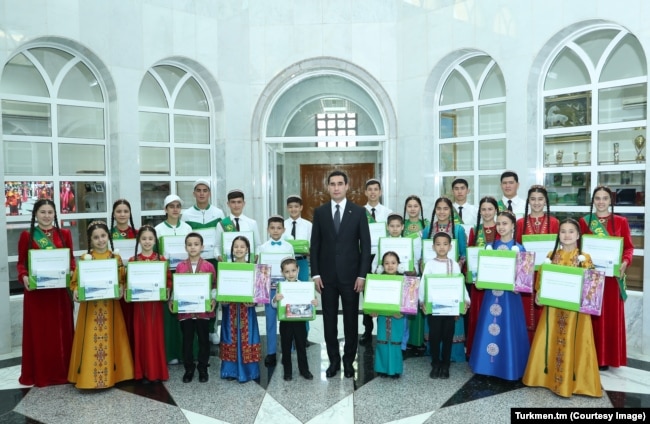
State media often depicts immaculately dressed orphanage children posing for photos with top officials, including the president of the country, who pays a visit to the institutions or send them generous gifts to mark New Year's or other occasions.

The children are sometimes shown on school trips, at concerts, or meeting celebrities.

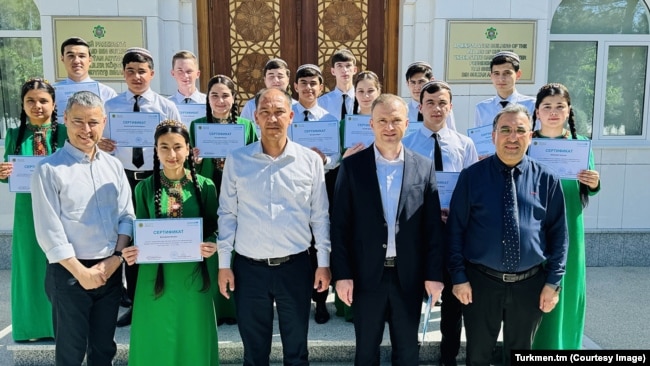
An official photograph shows children from Turkmen orphanages graduating from vocational training courses in May.

But behind the closed doors and away from the cameras, orphans are bullied, threatened, and exploited, Mahym claims. Children are even deprived of a basic education, she adds.

"We would see teachers only once or twice a month. One teacher would teach several subjects," Mahym said. "Therefore, most of the children who grew up in orphanages are illiterate; they can't read or write. The caregivers would often tell us we don't need an education."

Mahym also accuses the staff -- including cooks and caregivers -- at the Mary orphanage where she lived of taking home food that was allotted for children.

Children were only left with little more than boiled pasta, Mahym says, and that the only time the orphans would eat properly was when someone brought them food out of charity.

Sexual Exploitation, Child Labor

In one of her most damning accusations, Mahym claims she had witnessed some teenage girls at the orphanage being coerced into having sex with a law enforcement official.

Mahym did not elaborate on how widespread the alleged sexual exploitation was at her orphanage. But she says a female caregiver, who was hired in 2013, forced several girls to have sex with a police officer. Mahym says the policeman was the caregiver's relative.

"She would select good-looking girls aged 15 to 17 and force them to sleep with [a policeman]," Mahym said. "She would beat those who didn't obey."

Authorities in Mary didn't respond to RFE/RL's request for comment. RFE/RL cannot independently confirm Mahym's allegations, but several other Turkmen orphanage graduates have in the past spoken about abuses they are alleged to have endured or witnessed at the institutions.

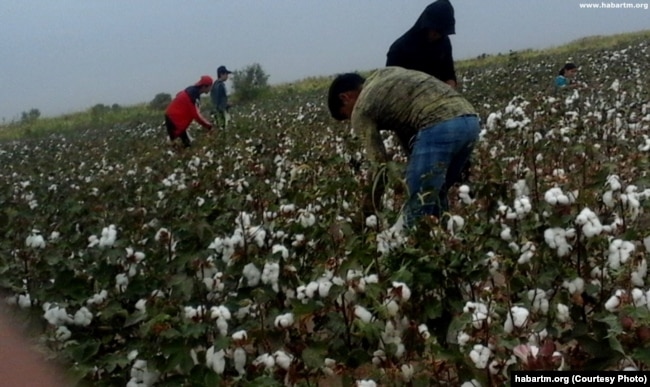
Orphans above the age of 12 in Mary were routinely exploited as child labor to pick cotton for the state during the harvest season, Mahym claims.

Turkmenistan has been widely criticized for forcing students, public- and private-sector employees, and soldiers to harvest cotton.

"We would have lunch at the cotton field and would return to the orphanage in the evening," Mahym said. "Some caregivers would also force children to do chores at their homes."

The Turkmen government has been widely criticized for forcing students, public- and private-sector employees, and soldiers to harvest cotton under the threat of punishment.

Getting Away With Abuse

Mahym says she believes orphanage staff in Turkmenistan get away with what she describes as the abuse of defenseless children who are too afraid to complain and don't have anyone to stand up for them.

She tells the story of a childhood friend, Aisha, who began dating one of the orphanage boys and got pregnant at the age of 15. Aisha resisted the orphanage principal's demands to have an abortion but suffered a miscarriage, Mahym says.

"There were rumors that the staff put abortion pills in Aisha's food. After losing her child, Aisha began having psychological issues and was placed in a psychiatric hospital," Mahym said, adding that her friend subsequently died at the hospital.

"The principal and caregivers threatened us that if we told anyone about Aisha they would turn our lives into a living hell," Mahym said.

An official photo shows Turkmenistan's president visiting an orphanage in Asghabat in 2022.

The orphanage children's troubles continue even after they leave care when they turn 18, as the institutions don't prepare them for independent life, Mahym says.

With no financial resources or a support system, orphanage graduates often fail to integrate into society. Some turn to crime.

By law, orphanage graduates in Turkmenistan are eligible for social housing, but many of them must wait several years for accommodationaccording to a resident of Lebap Province who grew up in state care.

Instead, the authorities place female graduates in retirement homes and forcibly send the boys to the military as conscripts, the Lebap woman told RFE/RL earlier this year.

Both Mahym and the former orphanage graduate from Lebap say they have decided to speak up about their experiences to turn the spotlight on the plight of Turkmen orphans in state care.

Written by Farangis Najibullah based on reporting by RFE/RL's Turkmen Service


Friday, 18 August 2017

The Race to Rescue Cambodian Children from Orphanages Exploiting Them for Profit

Despite good intentions, Australians and others from western countries are often propping up Asian orphanages that separate children from families. Now there’s new efforts to tackle some of the consequences of ‘voluntourism’

A family in Battambang, Cambodia, supported by the Cambodian Children’s Trust which works to keep families together and stop children going to orphanages.

Christopher Knaus

Much was hidden from the tourists visiting Sinet Chan in her rundown Cambodian orphanage.

When they returned to their hotels, cameras full and best intentions sated, they remained oblivious to the reality of what they had just supported.

Chan, the nine-year-old who sang and danced for them, was being starved. She and the other children hunted and ate mice to survive.

The orphanage’s director beat and raped her, repeatedly, over the course of several years. She was forced to toil in his rice paddies and farms without pay. Clothes and toys donated to her would be taken to the market, sold, and used to line the director’s pockets.

“I thought it might be a good place. Maybe I could have enough food to eat, have a chance to go to school. But actually what I imagined is wrong,” Chan told Guardian Australia. “He dressed us up looking poor so the visitors see us, they feel pity for us, and they donate more,” she said.

“But they don’t really know what was going on inside the orphanage.”

What the tourists saw was a pantomime. A cruel theatre with vulnerable children as its cast.

Chan was one child of an estimated 16,500 living in 406 residential care institutions in Cambodia, according to a survey released in April by the Cambodian government and the United Nations children’s fund (Unicef).

The vast majority of those children are not orphans. Roughly 80% still have a living parent, according to Friends International, a child-focused nongovernment organisation operating across south-east Asia.

Between 2005 and 2015, the number of orphanages has increased by 60% in Cambodia, and half are now concentrated in the tourist destinations of Phnom Penh and Siem Reap.

The growth in orphanages is completely at odds with a declining poverty rate and falling numbers of genuine orphans over the same decade, according to Friends International’s Cambodian communications coordinator, James Sutherland.

“Coincidentally that was a period of real growth in tourism as well, and in ‘voluntourism’ – combining holidays with humanitarian work,” Sutherland tells Guardian Australia from Cambodia’s capital, Phnom Penh.

“So essentially what’s happened is that unscrupulous directors of institutions have seen a business opportunity,” he said.

It’s a problem that extends well beyond Cambodia’s borders. An estimated eight million children live in institutions globally, and the vast majority still have family who, given the right support, could care for them.


Sinet Chan and Tara Winkler from the Cambodian Children’s Trust. Photograph: Pete Longworth
The money trail: Australian support for orphanages

Australians are among the top financial supporters of orphanages in many south-east Asian countries, including Cambodia, according to Unicef.

Australia props up the industry through volunteers, donations, and tourist visits, arranged by Australian travel agencies, charities, churches, universities, or high schools.

“Despite their good intentions, supporters of orphanages such as tourists and volunteers, actually end up contributing to the breaking up of families and removing children from their own family environment,” Unicef’s Cambodian communications chief, Iman Morooka, told Guardian Australia.

The support from Australia’s faith-based groups, mostly Christian but also some Islamic groups, is overwhelming. Guardian Australia has been given as-yet unpublished research showing the true extent of religious support for orphanages. It shows 51% of all church attendees in Australia are contributing funding to institutional care overseas.

About one-quarter were providing the funding through a Christian agency or charity, and another 21% did so through their local churches.

The study was organised by ACCI, a Christian charity, which commissioned a report through the national church life survey, a study of 20 Christian denominations, 3,000 local churches, 270,000 adult and child attendees, and 6,000 laypeople and clergy.

ACCI Relief’s international programs chief executive, Rebecca Nhep, said it was the first clear picture of the level of religious support for foreign orphanages. 

“Huge – it’s absolutely huge,” Nhep said. “We knew anecdotally that that was the case, but this is the first time that we’ve seen quantitative data to show it,” she said.

Australian universities that offer volunteer placements and high schools are also significant contributors. A research project conducted by Griffith University law and human trafficking expert, Kate van Doore, last year found 57.5% of Australian universities were advertising orphanage placements through international volunteering programs.

Between 4.35% and 15.61% of public schools fundraised or took trips to orphanages, varying across state and territories.

Australian NGOs and charities are also big players. About 245 registered NGOs directly funded or sent volunteers to residential care institutions, and 565 Australian charities were involved with or operated residential care institutions overseas.

Australian-based travel agencies market orphanage placements as “voluntourism”, a blend of holiday and volunteering sold to well-intentioned travellers.

Van Doore and her team found 22 Australian-based travel agencies or organisations that send volunteers to residential care centres. Another 61 overseas-based travel agencies were found to be recruiting Australian volunteers to work in residential care.

“I think people who are supporting orphanages, whether they’re funding or volunteering, generally have excellent intentions,” van Doore said. “Unfortunately it’s those very good intentions that are being manipulated in these instances.”

It’s not just foreign support that props up foreign orphanages. The phenomenon is driven by complex internal factors like poverty, economic migration, and disability.

But, in places like Cambodia, orphanages are now replacing more traditional forms of kinship care and community-based care as a means of caring for orphaned children. To sustain the business, children are “recruited” from poor families with promises of education and a better life. Some are trafficked.

Many orphanages deliberately market themselves as tourist destinations. Children are kept looking poor and malnourished and taught to sing or dance to maximise pity and western donations.

Often visiting adults are allowed to take children on unaccompanied trips away from the orphanage.

“We see orphanages that have become tourist attractions and in many cases there is no rigorous background check of those given access to the facility,” Morooka said. “This puts children at risk of exploitation and sexual abuse,” he said.

A growing body of evidence suggests that, even where they are well-run, orphanages are damaging for children. Children tend to be more likely to develop reactive attachment disorders, developmental delays, behavioural issues, poor physical health and reduced intellectual capability compared to those living at home.

A path forward: returning children and cutting western demand

The momentum for change is building, in both Cambodia and Australia. In Australia, efforts are focused on pressuring the federal government to ban orphanage tourism.

Unscrupulous orphanage directors know that
if you open hearts, you also open wallets
James Sutherland

Reputable NGOs, charities, and travel companies have formed an alliance, known as ReThink Orphanages, to lobby government. They are also trying to raise awareness among smaller charities, schools, and universities.

The aim is not to cut off precious donations and volunteering resources, but to redirect it to reunification and reintegration services, which link children back up with their families.

Sutherland, from Friends International, says reducing the demand from the west is critical to ending orphanages in places like Cambodia.

“Most tourists, donors and volunteers are simply unaware of the facts, of the scale of the exploitation that is happening,” Sutherland said.

“Unscrupulous orphanage directors know that if you open hearts, you also open wallets,” he said.

There is real hope that the Australian government could soon take decisive action on orphanage tourism.

A parliamentary inquiry into the establishment of a modern slavery act is currently considering banning Australian support for orphanages in places such as Cambodia. 

In an effort to convince Australian politicians, Chan, now an adult, travelled to Canberra this week to give evidence before the committee. She told the inquiry of how an Australian, Tara Winkler, rescued her, after initially working at the orphanage as a volunteer. Winkler soon realised the extent of exploitation occurring within the orphanage.

“I began to realise the gross corruption that was going on, that every cent that was being sent to the orphanage, not just from me, was being embezzled by the director, and the kids were often catching mice to feed themselves,” she told Guardian Australia.

Winkler rescued 14 children, with the help of the Cambodian government, and set up her own orphanage. She soon realised opening her own institution was a mistake. The children, once away from the orphanage, began to open up. They told Winkler their parents were still alive.

Winkler gradually realised the extent of the problem and created the Cambodian Children’s Trust, which helps to reunite children in orphanages with their families.

Tara Winkler, you totally rock!

“I think it’s really important for people to remember, in Cambodia, the poverty rate has been in steady decline, the number of orphans as well, and yet the number of orphanages has skyrocketed,” she said. 

“The heartbreaking thing is that it’s all done with such good intentions ... well, mostly. [But] they’re literally causing the trafficking of these children from their families into these institutions. When people find that out, that’s a jagged little pill to swallow.”

A significant proportion of Cambodia’s orphanage network is operating without scrutiny. The Cambodian government-Unicef survey this year found 12% were not registered with the government, meaning they operate completely off the radar.

About 38% have never been inspected by government, and 21% have no agreement with the government in place.

The Cambodian government is now working with Unicef and Friends International to deal with the problem, a partnership called 3PC.

The partnership involves 50 Cambodian child welfare and protection NGOs, who work to reintegrate children with their families, while providing medical and psychological services, family support, and transitional care.

The ministry of social affairs, veterans, and youth rehabilitation has set a target of reintegrating 30% of children back to their families and communities in five priority provinces by the end of 2018. 

A stricter registration and monitoring regime is being put in place, and the government and NGOs are pressuring orphanages to transition into community-based support services.

Chan is now trying to build a positive life for herself. She works as a script writer on a Cambodian television show, and as an ambassador for Winkler’s trust, recounting her story again and again to try to prompt change.

“I think, for people, around the world, there is no better place like home,” Chan said. “You live with your family. You have your mum and dad, your brother and sister, if you have that kind of family, why do they need to go to live in the orphanage?

“I think if they want to help Cambodian children to have a good future or better education, better to have a poor parent that can look after their own kid, and they can have support on top of that.”


Sunday, 13 August 2017

Meet Some Great People Among the Perverts and Pedophiles Global List

Stories today from North Marianas Islands -2; Oman;
India -2; Cambodia; Bali; & UK -2

Child molester gets 15-yr imprisonment

By Ferdie De La Torre

Northern Marianas Islands
A 36-year-old sex offender, who has several prior convictions, including involuntary manslaughter, was slapped on Friday with a sentence of 15 years in prison for sexually abusing a 10-year-old boy in Chalan Kanoa.

Steven Romie Aguon pleaded guilty to sexual abuse of a minor in the second degree and was sentenced to 15 years in prison—the maximum for the offense—without the possibility of parole, with credit for time served since Aug. 26, 2016.

He was required to register as a sex offender, submit to counseling, and pay restitution, all court costs and fees.

According to the accusation, Aguon, who was then 36 years old, touched the privates of the boy on Aug. 28, 2016, on Saipan.

The Office of the Attorney General had originally charged him with sex abuse of a minor in the first degree, sex abuse of a minor in the second degree, impermissible contact with minors, assault and battery, and disturbing the peace. The charges carry a total maximum sentence of 49 years and six months.

The OAG later amended the charges, this time minus the assault and battery charge. With the change, the charges now carry a total maximum sentence of 48 years and six months.

The OAG again amended the charges last Thursday, this time pushing only the charge of sex abuse of a minor in the second degree, which carries a maximum sentence of 15 years imprisonment.

Assistant attorney general Jonathan Glass Jr. represented the government. Assistant public defender Cindy Nesbit served as counsel for Aguon.

Police said that, according to the boy’s father, his son came home late, having gone biking with Aguon. The father was concerned because he is aware that Aguon was once arrested for sex abuse of a minor. When the father confronted his son, the boy told his father about what happened.

So why did the father allow his son to go biking with Aguon in the first place?

In October 2010, Aguon was sentenced to two years in prison for sexual abuse of a girl.

Two years later, in October 2012, Aguon was slapped with a 24-month prison term for immigration document fraud.

Aguon was also arrested and charged before for, among other cases, sexually abusing girls. He pleaded guilty to involuntary manslaughter and served a prison term for the killing of a Kosraean man in Kannat Tabla in 2001.

All that and he's only 36 years old. When he gets out before he turns 50, he will still have decades to destroy more lives. Good grief!

Chalan & Kanoa, Saipan, N. Marianas Is


AG’s office asks court to dismiss sexual-abuse-of-a-minor case with prejudice
By Bryan Manabat  Variety News Staff 

Northern Marianas Islands
FOLLOWING the denial of the prosecution’s reconsideration motion to extend the discovery deadline in the case of a retired Army reservist who was charged with sexual abuse of a minor, Assistant Attorney General Betsy Weintraub on Aug. 10 filed a notice of voluntary dismissal without prejudice.

Weintraub said the laboratory has not finished processing the forensic evidence in the case, and the defendant is challenging the testimonial competency of the alleged victim.

Should the court find the child not competent to testify (because of her age), the government would be unable to prove its case, the prosecutor said.

Weintraub said “without this key forensic evidence, which the commonwealth did everything in its power to expedite, the government would be unable to fairly represent the interests of the victim and the community by presenting the whole truth to the jury.”

Accordingly, she said, it is in the best interest of justice for the government to dismiss the case at this time.

The defendant, Michael Barry Murphy, 54, was charged with sexually abusing a four-year-old minor.

Murphy was also charged with sexual abuse of a minor in the first degree in another case in Feb. 2016. The prosecution said the incidents happened from 1994 to 2004 when the second alleged victim was a minor. The victim is now 26 years old.

Murphy, through his defense counsel Janet King, opposed the government’s motion to dismiss with prejudice and asked the court to deny it.

King also asked the court to dismiss with prejudice the case against her client under Rule 48 (b) of the Rules of Criminal Procedure.

She said the court “must determine whether the government, after prosecuting Murphy for one year now, and moving for an extension of discovery to allow evidence it inexcusably delayed obtaining and having that motion denied by the court, may now move for dismissal of the amended information against Murphy in order to start the discovery process all over again.”

King said “the lack of good faith on the commonwealth’s part is glaring.”

After the commonwealth’s motion for reconsideration was denied, its reason for dismissal without prejudice became clear in an e-mail communication sent after the hearing, King said.

She quoted Weintraub as stating: “We are considering filing a voluntary dismissal without prejudice and then re-charging the case. If your client (Murphy) agrees to the dismissal and stay-away order, we won’t make him post bail when we re-charge.”

King said recharging Murphy and starting all over again will greatly prejudice him who has already spent significant time and money in the litigation.

“The commonwealth failed to prosecute diligently and moved to dismiss in bad faith, causing the defendant to suffer prejudice by beginning the process all over again.

“Allowing the commonwealth to dismiss would be like agreeing for it to hit the reset button as though the defendant’s life and the criminal case were a video game.”

King attached the signed declaration of Dr. Phillip Danielson, the defense DNA expert, to her motion.

He stated that no sperm/spermatozoa (different terms for sperm cells) were detected in this case at all.

“Microscopic analysis (the most reliable method of detecting sperm cells) of the concentrated material were searched twice for the presence of sperm cells on both the jeans and the undergarments. No sperm cells were detected in either of the microscopic analyses,” Danielson added.

He said sperm cells were not detected on any of the items of evidence examined in this case.

According to his declaration, Danielson is a tenured full professor in the Department of Biological Sciences at the University of Denver where he taught courses in molecular biology and forensic science with an emphasis on serology and DNA analysis.

Northern Marianas Islands are a US Commonwealth


Tackling child abuse is government priority in Oman
If only there were more royalty in the world willing to get their hands dirty and serve their people! God bless you, your Highness.

By Khadija Alzadjali - Times of Oman

The focus of the child abuse prevention programme is on all children
and not just Omani children

Muscat: Almost half of all child abuse cases received by Oman’s Child Protection Committee in the first three months of 2017 came from the Muscat governorate, according to an official at the Ministry of Social Development (MoSD).

“With the launch of the child protection hotline earlier this year, the number of child abuse cases reached 91 during the first quarter of this year,” Shams Al Hajri, director of the Family Protection Department, said.

“Data shows that Muscat governorate had the most reports on child abuse at 46, followed by the South Batinah governorate with 12 cases, due to the high percentage of population in both these governorates,” she added.

Her Highness Sayyida Basma Al Said, founder of the Whispers of Serenity Clinic for Mental Health, is recognised for her active efforts in raising awareness about mental health in the Arab region. She has 11 years of experience working at the Sultan Qaboos University Hospital, where she was part of a national team to combat child abuse.

“Child abuse is a problem, just like it is a problem in any other country. Child abuse is everywhere in the world and has been around for centuries and since the beginning of time. We do have a problem, but it is being tackled as much as it can be.”

“There is individual effort, there is government effort, but we still need more, of course. We are still lacking awareness, and that is what is different from our country versus other countries,” stated Al Said.

Muscat, Oman

Last year, the committee received 299 reports of child abuse.

“Yes, we do receive cases of abuse at the clinic. We deal with child abuse and with adults who were abused as children. I don’t see as much neglect as much as I see abuse,” she added.

“Adults who haven’t talked about this (abuse) face a lot of problems. You find them with low self esteem and sometimes we find that they’ve actually forgotten because the trauma is so hard that the mind actually hides part of it.”

The ministry stated that it received reports of 23 cases of physical abuse, 20 cases of mental abuse, and nine cases of sexual abuse.

“As far as immediate intervention by a child protection representative, if the child is exposed to abuse they are placed in temporary care homes belonging to the Department of Family Protection, which is dedicated to the protection, care, shelter and rehabilitation of a child subjected to violence, exploitation, or abuse,” Al Hajri said.

He further stated that violence and abuse against children generally takes one of four forms: physical violence, sexual violence, psychological or emotional violence, and neglect.

“We do have child abuse just like other countries; the only difference is that it’s hidden. We lack data because a lot of people will not report cases, and if they do tell someone they ask for it not to be reported (to authorities) because of their reputation.”

“The focus of the child abuse prevention programme is on all children and not just Omani children. We all live here, it’s all our society. Whether we’re Omani or not Omani, we all live in the same area and it’s all our responsibility,” pointed out Al Said.


Mumbai parents meet at Shivaji Park, demand harsher punishment for child molesters
Puja Pednekar 

The recent incident of a 4-year-old’s alleged sexual abuse at a Malad school has spurred parents in the city to demand better safety measures at schools and stringent punishment for perpetrators. Last week, a police complaint was registered against a peon of the Malad school for allegedly sexually assaulting the minor in the washroom between August 3 and 5.

To drive the point home, parents from various parts of the city met at Shivaji Park, Dadar, and organised a rally to spread awareness among parents and students about sexual predators and how to keep children safe. Parents demanded that schools should ensure that CCTV cameras are installed at vantage points, allowing parents and education department for random checks in schools and police verification of employees.

“Schools need to be more vigilant and must punishment culprits so that such incidents aren’t repeated and students don’t suffer,” said Anubha Sahai, member of the India Wide Parents Association.

Many schools in India are privately run businesses.

The group has planned to hold similar marches and signature campaigns across city to reach out to maximum parents. A similar march was held by another group of parents in Pune.

Another demand the protesting parents made was that the government should frame stringent safety norms for schools. “Assessment of mental well-being of the employees at a school must be made mandatory,” said Sahai.

Educators and school management said agencies should be hired by schools to do a background check on their students.

“Today, there are many agencies who can help schools. Additionally, schools can directly approach their nearest police station for the same. Schools must also teach their children about good touch and bad touch so that children know that they must alert the elders,” said Swati Popat Vats, president, Early Childhood Association, consisting of 200 preschools and experts that has come up with some steps that schools can follow to ensure safety of students.

One of the suggestions include on how the management should act if any parent or student approaches them with a complaint about sexual abuse.


NSPCC is calling for “robust action” to cut off the supply of child sexual abuse images as the situation has become a social emergency
Diarmuid MacDonagh

Bryan Young, who admitted possessing
almost 2,000 indecent images of children

A children’s charity is calling for “robust action” to cut off the supply of child sexual abuse images as the situation has become a “social emergency”.

Over the last two decades, digital technology has fuelled an “explosion” in the production and consumption of online abuse images, according to the NSPCC.

The NSPCC has spoken out after the Echo reported how former soldier Bryan Young was spared jail after admitting possession of almost 2,000 indecent images of children.

The 79-year-old great-grandad of five, from Marnhull, north Dorset, appeared at Bournemouth Crown Court.

The day before, IT expert Barry Harkcom was sentenced to two years and one month in jail after downloading up to 20 million films and pictures of child abuse.

Harkcom, from Parkstone, collected the images over 16 years and used technology designed to hide the images in his laptop.

An NSPCC spokesperson said the men’s actions had “only fuelled this disgusting industry which destroys children’s lives”.

Sharon Copsey, head of service for the South West, says while progress has been made in tackling the production and consumption of abuse images, more needs to be done by internet providers, governments, and law enforcement agencies to “cut this material off at the source”.

“The sheer numbers of people viewing child sexual abuse images online must be addressed as a social emergency,” 
Sharon Copsey, NSPCC

“We recognise that progress has been made. For example, the work of the National Crime Agency and the police has safeguarded record numbers of victims and arrested hundreds of suspects in the UK. And industry is working with partners such as the Internet Watch Foundation (IWF) to identify and remove child sexual abuse images. But these efforts alone will not solve the problem.”

She added: “We are calling for a robust action plan to cut off the supply of child sexual abuse images in circulation, and deter adults from seeking out child abuse online. We should be long past the point when there are dark corners of the internet where these terrible crimes against children are hosted for the pleasure of paedophiles.”

She said children must be educated about how to keep themselves safe online and offline and how to get help as soon as grooming or abuse happens.

“And every child who is the victim of exploitation and abuse should get the support they need to rebuild their lives,” she added.


Evesham man jailed for more than five years after admitting child sex offences
Sam Greenway

AN Evesham man is behind bars after pleading guilty to six child sexual abuse charges, including the assault of a child under 13-years-old.

Christopher Michael Pennington, aged 39 from Aldington, Evesham, was sentenced to five years and nine months in prison when he appeared at Worcester Crown Court on Friday, August 11.

Pennington admitted the assault, attempting to arrange a meeting with the intention of sexually assaulting a child, possessing indecent images of children, and distributing an indecent image of a child.

He has also been placed on the sex offender register for the rest of his life, and made the subject of a Sexual Harm Prevention Order until further notice.

Pennington was arrested by officers from the Operation Safenet team - specialist officers who investigate those involved in online child sexual exploitation within West Mercia.

And God bless you, everyone.

Detective Inspector Gavin Kinrade said: "I hope that this result gives a clear warning to other offenders that we are absolutely committed to protecting children from sexual abuse and online child sexual exploitation."

"Tackling child sexual exploitation remains a priority for West Mercia Police and we remain steadfast in our commitment to preventing children being abused and exploited, to bring to justice to all those who commit such horrific crimes and to ensure that the public are confident that they can come forward and talk to us about their concerns for a child's safety.

"We understand that cases such as this can cause people within the community concern, particularly parents. We would like to offer reassurance that we are committed to doing everything within our power to protect children and vulnerable people."

Anyone with concerns that a child might be a victim of sexual exploitation or abuse is asked to report this to police by calling 101.

"Specialist officers, working together in partnership with support agencies across our region, are here to listen, to investigate and to bring perpetrators of these horrific crimes before the courts," DI Kinrade added.


The sad, dark truth about Bali orphanages where helping kids is a mask for paedophilia and abuse

Cindy Wockner and Komang Erviani
News Corp Australia Network

FOREIGNERS and locals are setting up orphanages in Bali under the guise of helping local children but allowing a more sinister activity to occur in the form of paedophilia and sexual abuse by staff members.

Former Victorian police officer Glen Hulley, who runs Project Karma, a body aimed at saving children in South East Asia from sexual predators, says orphanages, some of which are illegitimate, are becoming a problem and a crackdown is needed.

Mr Hulley is currently in Bali setting up a pilot project to combat child sexual abuse on the holiday island. The teams include investigators who track down paedophiles and evidence and then hand it to police to make arrests.

Mr Hulley told News Corporation that his organisation is currently running five investigations of child sexual abuse in Bali, at least one of which involves Australians. He expects raids and arrests within the next few months.

This includes two investigations where staff at orphanages are believed to be sexually abusing children in their care.
Glen Hulley’s organisation is currently running five investigations of child sexual abuse in Bali, at least one of which involves Australians.Source:News Corp Australia

Regarding the five investigations, Mr Hulley said he could “only disclose at this stage that they involve both foreigners and locals, mainly in remote regions of Bali”.

Project Karma was instrumental last year in having 70-year-old Australian man, Robert Ellis, arrested and prosecuted for sexually abusing 11 girls aged under 18 years. He was sentenced to 15 years in jail for his crimes, saying he had paid the girls well for what he did to them.
Poorer villages, in remote areas of Bali, which are far away from the tourist strip, are particularly prone to child sexual abuse, especially as the money offered to children by paedophiles is a small fortune and is often condoned by their parents.

It is this which Mr Hulley’s group wants to target, educating local village leaders and village security, about the dangers of abuse and how to identify those responsible and bring them to justice.

Under a pilot project to combat child sexual abuse, which Project Karma is setting up in Bali at present, it is hoped to reach 120,000 people in the next six months.


Mr Hulley has begun a series of community awareness seminars this week in Bali, talking to local security, village leaders, civil police, business owners and university students. The plan is then to train community investigators, with the help of police, and to set up community awareness groups to deliver seminars in villages and schools.

The investigators would gather evidence and work closely with local police to arrest offenders, Mr Hulley said.

Ni Luh Gede Yastini is the legal and policy division head of the Bali Child Protection Commission. She says there should be better supervision of foreigners living in Bali by local police. And she called on the local community to play a more active role.

“The community should be more active and watchful. Whenever foreigners often go out with children, they should be monitored. People should be more vigilant,” Ms Yastini said.

“Paedophiles are different to other common sexual abuse cases. They groom and approach the family of the victim for a long time before doing their acts. Before they get the children they will approach the parents, give them gifts, appear kind so they can take the children”

Ms Yastini said part of the problem was due to the fact that many people do not fully understand the term paedophile and often think that touching the children is okay.

She said there was also a big problem in Bali where many children become pregnant to their grandfather, especially in remote villages, where the child is too afraid to speak up.


Cambodian orphan crusader jailed for
child sex abuse
Lindsay Murdoch

Bangkok: A Cambodian orphanage director who crusaded for years against child sex abuse has been sentenced to three years jail for committing indecent acts on children in his care.

The conviction of 46 year-old Hang Vibol, the director of Our Home Orphanage in Phnom Penh, follows a warning by Tara Winkler, a former NSW Young Australian of the Year, that children are vulnerable to sex predators in Cambodia's 600 orphanages and residential care institutions.

United Nations agencies and a consortium of 50 non-government-organisations have urged Australians to stop supporting Cambodia's orphanages, many of which are not registered and are operated as for-profit businesses.

Australians are believed to be the biggest donors of the institutions despite studies showing that most of the 47,900 children living in them have at least one parent and all would be better off living in the communities from which they come.

A Phnom Penh court's sentencing of Vibol to three years for abusing 11 children under 15 years old has been criticised as too lenient by the organisation where he worked investigating foreign and Cambodian paedophiles.

That's a little over 3 months per child! I wonder how many times he abused those 11 children. If it were 3 times each, then that's about a month for each act of child sex abuse. Lenient is not a strong enough term.

Seila Samleang, the director of Action Pour Les Enfants , said the organisation was happy with the conviction but dismayed at the "lenient" sentence.

"It is shocking that such a case happened…because he worked actively to protect children's rights for many years," he said.

For years Vibol urged courts to impose long jail sentences on convicted child sex abusers in Cambodia, a country where sex tourism is rife.

In 2004 he described the jailing of a New Zealand teacher for 10 years as "the correct sentence that brings justice to the victims". But the same year he said many paedophiles escape conviction.

"In Cambodia, the situation is that if people give money to police or the courts, they get off," he said. "In Cambodia if you have money you can do anything."

A three-year sentence appears lenient compared with other recent cases and given Vibol was in a position of authority to care for children.

Last year an Australian travel agent Trevor Lake was sentenced to eight years in jail for having sex with underage prostitutes and producing child pornography.

Sydney teacher George Moussallie was sentenced to five years in jail for the sexual abuse of six boys.

Vibol left APLE in 2004 to run Our Home Orphanage where the abuses took place. The orphanage was closed following his arrest last year and 60 children moved to other care centres.

APLE investigators helped police probe the activities of Vibol who denied the allegations and claimed they were made against him maliciously.

Ms Winkler, who established the Cambodian Children's Trust in 2007 after rescuing 14 children from abuse at a corrupt Cambodian orphanage, told Fairfax Media that it was "highly unethical to expose vulnerable children to serious risks in order to engage donors and raise funds".

Many orphanages and residential care centres in Cambodia allow visitors to physically interact with children in intimate ways, such as playing and hugging.

"Even though the majority of people who want to visit centres are good people who only want to help, if they are allowed in to provide love and affection, then the same access is provided to potential predators and sex tourists," she said.

International research shows orphanages and residential care institutions take a toll on children's emotional and personal development because they are separated from their families.

This leaves them vulnerable to exploitation and abuse and seemingly endless broken relationships.


Nobel Prize Winner Kailash Satyarthi on
Child Sex Abuse

Child rights activist and Nobel Laureate Kailash Satyarthi, who has liberated over 87,000 children from trafficking and slavery, talks to Lakshi Bhatia ahead of the launch of his campaign, Surakshit Bachpan, Surakshit Bharat (Safe Childhood, Safe Childhood) as a first in engaging with global faith leaders to fight child sexual abuse. Excerpts:

After your Nobel Peace Prize win in 2014, child rights movement grew in India. What your roadmap for India?

The Nobel Prize was not a full stop in my life. I felt a deep sense of moral responsibility and obligation since this was the first time in 100 years that a prize was conferred to this cause. I spearheaded a campaign to include child slavery, violence against children, forced labour, trafficking in the global development agenda that now calls for their abolition. In India, the focus was on amendment of the Child Labour Act and the ratification of two pending International Labour Organization (ILO) Conventions. Success came late.

Campaigns you are working on?

The hidden sin of child sexual abuse is growing at an alarming rate. Last year, 15,000 cases were reported under POCSO (Protection of Children from Sexual Offences Act), which means that every hour, two children are sexually abused in India.

But such cases are in millions. 
Rate of prosecution is 6 per cent, conviction less than 4 per cent.
Gang-rape, rape and murder and the average age of victims is decreasing.

Religious leaders and faith communities are the most networked, claiming allegiance of billions of believers. With the launch of Surakshit Bachpan, Surakshit Bharat, we aim to engage faith leaders to fight child sexual abuse. Besides this, the 100 million for 100 million campaign aims to mobilise victims of multiple violence and those who wish to be change makers.

India has seen a rise of nearly 25 per cent from the previous year in human trafficking—19,223 women and children in 2016 as against 15,448 in 2015.

The middle-class looks for a cheap docile workforce, normally a child from flood- or drought-hit or poverty-stricken areas such as Assam, Bihar and Odisha for domestic work, child marriage and prostitution. This shows the close nexus between traffickers and government agencies. The Railways benefit hugely from this lucrative trade. Simple camera surveillance can help in tracking such cases.