Everyday thousands of children are being sexually abused. You can stop the abuse of at least one child by simply praying. You can possibly stop the abuse of thousands of children by forwarding the link in First Time Visitor? by email, Twitter or Facebook to every Christian you know. Save a child or lots of children!!!! Do Something, please!

3:15 PM prayer in brief:
Pray for God to stop 1 child from being molested today.
Pray for God to stop 1 child molestation happening now.
Pray for God to rescue 1 child from sexual slavery.
Pray for God to save 1 girl from genital circumcision.
Pray for God to stop 1 girl from becoming a child-bride.
If you have the faith pray for 100 children rather than one.
Give Thanks. There is more to this prayer here

Please note: All my writings and comments appear in bold italics in this colour

Showing posts with label clergy. Show all posts

Thursday, 21 September 2017

Some Strange and Awful Cases on Today's Mostly UK PnP List

Paedophile ex-nightclub owner whose venues
hosted the Who and Rolling Stones jailed for
child sex abuse
Ronald Pickstock's son said he twice tried to report his father's crimes, but police did not investigate
BY ALEX SCAPENS

Paedophile Reginald Pickstock owned a string of nightclubs, where he would pick out and abuse vulnerable teenagers (Image: MEN Media)

The owner of a string of nightclubs which hosted stars including Jimi Hendrix, The Who and the Rolling Stones has been jailed for sickening child sex abuse.

Reginald Pickstock, 87, used the venues he operated to pick out and exploit vulnerable youngsters in the Sixties and Seventies.

His son - who claims he twice tried to report the paedophile to police - said Pickstock's status protected him from being brought to justice, the Manchester Evening News reports.

The predator has been jailed for 10-and-a-half years after being found guilty of 22 counts of indecent assault following a trial at Minshull Street Crown Court.

Some of the abuse dated back to the 1950s.

Pickstock was well-known around Stockport for running clubs such as Manor Lounge, the Tabernacle and Blazers.

Before his abuse came to light Pickstock’s venues were the place to be for youngsters in the 1960s and top acts - also including Jimi Hendrix and Rod Stewart - appeared there in front of adoring fans.

Pickstock's son Keith (pictured) said he twice attempted to inform police about his father's crimes (Image: MEN Media)

But Pickstock’s son Keith, 53, who was not a victim but gave evidence at the trial, says he twice tried to report his dad to the police but was sent packing.

Keith, a lorry driver, said: “I went to Stockport police station to try and report it in the late 80s and early 90s and was told to go away.

“They said if I came back again I would be locked up. My dad owned a lot of nightclubs and he was looked after.

“If he walked through Stockport everyone would come up and say hello to him, he was very well known because of his clubs."

The Manor Lounge, one of the clubs he owned, in its 1960s heyday (Image: MEN Media)

“I believe he did it to attract young girls, I guessed. He got away with it for so long. I am just relieved he has been jailed, he is an evil, manipulative person.

"One reason I am talking about this is because I wonder how many others there were.”

The charges Pickstock, of Church Lane, was found guilty of relate to three girls. He first appeared at Stockport Magistrates Court in relation to them in September last year.

Until his arrest Pickstock remained a respected figure because of his background in the music industry.

He even supported a campaign to get a blue plaque at the site of the now demolished Tabernacle.


Former clergyman from Leeds had begged victims of child sex abuse not to tell police

A former clergyman from Leeds has been jailed for six years after admitting sexually abusing underage girls as long ago as the 1950s.

 John Bailey, 76, of Kippax, assaulted three girls under 14 - one as young as four - over the course of a 27-year period of offending.

The ex-Church of England minister had pleaded guilty to 25 charges of indecent assault at an earlier hearing on August 29.

Lincoln Crown Court today heard that the married clergyman, who formerly worked in the Diocese of Lincoln, committed the offences between 1955 and 1982.

He also wrote letters to his victims, begging them not to go to the police.

Bailey had recently been diagnosed with Alzheimer’s and vascular dementia and the judge admitted the pensioner would find it “harder than many” in prison.

He assaulted his first victim during a four-year period in the 1950s, then abused two more between the mid-1970s and early 1980s.

Bailey, wearing a grey jacket, dark blue shirt and a blue and white spotted tie, sat in the dock and looked straight ahead he was sentenced. Judge Simon Hurst told him: “I have had the advantage of reading victim impact statements and it is clear that in their different ways, they were all profoundly affected by your abuse of them.

“You did it for no other reason other than to gain sexual gratification for yourself.”

Bailey was arrested during Lincolnshire Police’s Operation Redstone, which started in October 2015 and followed a review of past safeguarding cases by the Diocese of Lincoln.

Chris Moran, defending, said Bailey clearly wanted to “express remorse” but at the same time admitted there was “a degree of somebody who doesn’t want to be reported to police”. Mr Moran said: “Other than this offending he is a man who is known as a caring, responsible individual - a dependable one in many ways.”

There is no 'other than' for child sex abusers. What they do is cruel and evil and nothing they ever do can change that. They may seek and even receive forgiveness from their victims and even from God, but they can never be considered good people.

Bailey was told he would have to register his movements with police for the rest of his life, under the Sexual Offences Act.

After the sentence, Detective Superintendent Richard Hatton said: “The sentence today reflects the breach of trust that John Bailey has shown in terms of his position as an ordained minister in the Church of England."

Mr Hatton said the investigation was one of several into the recent safeguarding concerns raised by the Dicoese of Lincoln.

In a statement issued afterwards, the Bishop of Lincoln, the Rt Rev Christopher Lowson, said: “It is hard to express the impact that John Bailey’s appalling crimes must have had on the lives of the survivors of his abuse and on their families. I wish to pay tribute to their courage in bringing him to justice."

“I would also like to thank the police for their work on this case and for their continued commitment to Operation Redstone, which was established in response to detailed case reviews carried out by the bishop’s safeguarding team."

“I want to reassure everyone that our safeguarding work in the diocese includes mandatory training and background checks for all clergy and church officers.

“The public are fully entitled and deserve to expect the highest conduct from clergy, who promised solemnly at their ordination to order their lives according to the way of Jesus Christ.

“We continue to work in partnership with the police and statutory authorities and will leave no stone unturned in bringing to light crimes which have, for whatever reason, remained hidden.”


Man cleared of child sex offences is jailed for going missing during his trial

Anthony McQuade was found not guilty - but had earlier skipped bail :: He has now been given six months jail

Is it just me, or is it passing strange that an innocent man would bolt from his trial and disappear?
BY GARETH LIGHTFOOT

A man accused of child sex offences who went missing in the middle of his trial has been jailed for skipping bail.

Anthony McQuade, 53, was found safe and well after he was found not guilty by a jury, but was still in trouble for absconding. He disappeared while he was being tried at Teesside Crown Court, leading to a police appeal for information.

He denied nine charges - five of rape, two of indecent assault, one of indecency with a child and one of assault causing actual bodily harm. On Monday a jury found him not guilty of all charges, reaching unanimous verdicts after just over three-and-a-half hours’ consideration.

The allegations of grooming, sexual abuse and violence concerned a boy more than 15 years ago. McQuade, of Corporation Road, Redcar, denied that any of the alleged incidents happened and told police he never sexually abused the boy. He vanished before he had the chance to give evidence.

The trial continued in his absence as a judge found he had “voluntarily absented himself” from the proceedings. A warrant was issued for his arrest amid extensive police inquiries. The verdicts were delivered without him in the courtroom.

The judge, Recorder Jamie Hill QC, told jurors after the trial’s conclusion: “I’m not too sure where the defendant is at the moment. The police have been looking for him. In due course when the bench warrant is executed the defendant will have to be dealt with.”

McQuade was then found safe and well in Redcar. He appeared back in court on the arrest warrant, and admitted breaching his bail. Judge Howard Crowson jailed him for six months on Wednesday.

In the trial Nigel Soppitt, defending, told the jury the case boiled down to one person’s word against another’s. He argued the prosecution evidence was not reliable or credible.

He told jurors: “It’s an easy allegation to make. It’s an unstoppable allegation. It’s been almost a two-year waking nightmare for this man.”

Last week, prosecutor Robin Patton said McQuade had been reported as a “high-risk” missing person. Police said he was spotted in the Houghton-le-Spring area at 1.37am last Thursday.

The judge said he left his home the previous day and his phone seemed to have been switched off later. “Further inquiries indicated he took various items with him including a tent and alcohol. But since then there have been no sightings,” he added.

In an attempt to help trace him amid growing concerns, police appealed for information about McQuade’s whereabouts. It was later confirmed he had been found.


Canberra man who planned to sexually abuse children charged in undercover sting
Megan Gorrey 

A Canberra man who planned to sexually abuse children overseas when he was caught by an undercover cop, who posed as an English mother pimping out her three children online, told police he'd spoken of molesting them "purely as a fantasy". 

Federal police arrested Nathan Sertori, 36, at Sydney Airport and stopped him boarding an international flight after a tip-off from INTERPOL sparked an investigation from Australian child protection officers in June 2016.

Sertori had planned to fight the charges but later pleaded guilty in the ACT Supreme Court to planning to have sex with a child outside Australia and transmitting child pornography. He faced court for a sentence hearing on Thursday.

The case is believed to be the first time the Commonwealth offence of planning to abuse a child overseas has been prosecuted in the ACT.

Court documents said Sertori had online conversations, which began on an incest website, with an undercover British police officer posing as "Sadie" about plans to meet in London and sexually abuse the woman's three children in late July.

In a series of explicit exchanges, he spoke of plans to have sex with the woman and abuse her two daughters, aged 12 and 14, and her son, aged 10.

"The accused had a particular interest in Sadie's daughters," the documents said.

Police who investigated the man's online profile, under the username of "Dtyungman", discovered he also belonged to teen sex and child rape online discussion boards.

An IP address was used to track the online profile to Sertori's family home in Holt. Police matched his online profile description with images on social media and his passport photograph. He was arrested after Australian Border Force officials alerted police Sertori had flown out of Canberra and was booked on a flight with his mother from Sydney to Dubai on July 12. 

In a police interview, Sertori admitted he'd contacted a woman online about engaging in sexual activities with her two daughters and said she'd offered her son for him to rape. He said he knew the children were all younger than 18.

But he told police he asked the woman about having sex with her children "purely as a fantasy" and had no intention of meeting up with them in London. He said he also planned to travel to Paris and Copenhagen with his mother. 

He'd asked for photos but planned to send them to police, court documents said. He was charged when the interview finished.

During a search of his home the next day, police seized his computer and electronic devices, child exploitation material from online chats, and a travel itinerary. 

The court on Thursday heard the last online conversation of a sexual nature had been on June 24, nearly three weeks before Sertori's arrest.

Defence barrister Alyn Doig argued Sertori didn't necessarily intend to carry out his fantasy at the time he boarded the plane and "may well have come to his senses" by that time. But federal prosecutors, who called for an immediate term of imprisonment, said Sertori had given the undercover police officer a date and shared where he would be staying in London.

Mr Doig noted the child exploitation material had been written comments and didn't include images. He said the offender's trip with his mother had not been planned for the purpose of child sex abuse. He said Sertori, who had been assessed as a low risk of general reoffending, had shown insight into his crimes and sought psychological help. "He's well on his way to being as rehabilitated as he can be, given the circumstances."

Mr Doig urged the court to consider an intensive corrections order, which would allow Sertori to serve his sentence in the community. Justice John Burns will hand down his sentence next Thursday.


Former children's home boss arrested on suspicion of historical child sexual abuse
BY TOM PETTIFOR
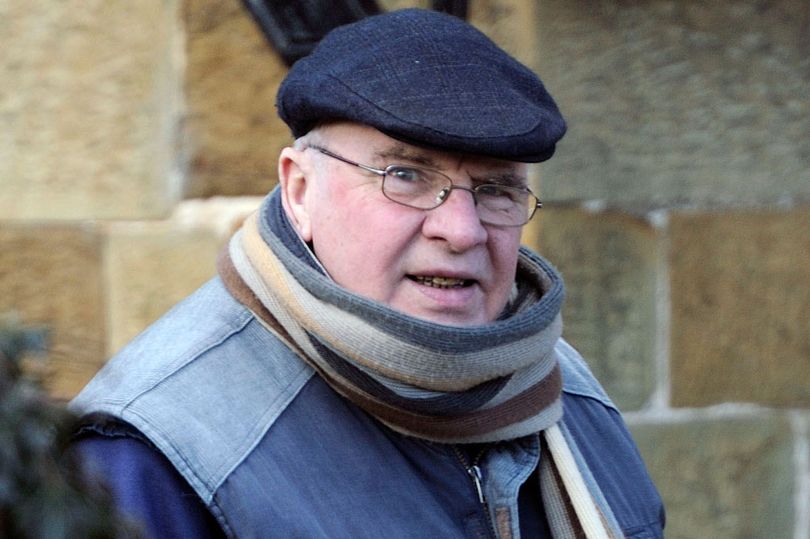
Michael John Carroll, 69, was held after two former care home residents came forward to claim he attacked them in the early 1980s.

Carroll, who is known as John, was in charge of Angell Road children's home in Brixton for a decade from 1981. He worked at the Highland Road home in nearby Gipsy Hill from 1978.

Carroll was arrested at his detached house outside Oswestry, Shropshire, last Thursday by detectives from Operation Winter Key.

The specialist team was set up by Scotland Yard in the wake of the formation of the national public inquiry into child sexual abuse. It deals with allegations of non-recent abuse involving prominent people and cases where institutions are suspected of having failed to protect youngsters.

The arrest comes after the formation of the Shirley Oaks Survivors Association which represents hundreds of former residents of Lambeth children’s homes. SOSA has been investigating allegations of historical abuse in the borough for a number of years.

A Scotland Yard spokeswoman said: “Can confirm officers working on Op Winter Key at the Met arrested a 69 year old man on Thursday, 14 September in Shropshire on suspicion of non recent sexual assault against two individuals in the early 1980s. The man was bailed to a date in October.”

Mr Carroll's solicitor said: "My client was interviewed under caution by officers from the Met police and cooperated fully and answered each and every question.

"He maintains his innocence."


Luton woman jailed for ‘sickening’ abuse of child

A Luton woman has been jailed for four years after sexually abusing a small child. 

Renata Manyoki, 21, of Dallow Road, Luton, was found guilty of sexually assaulting a child under the age of 13 and taking indecent images of children. 

Manyoki was arrested in 2016 after videos of her sexually abusing a child were found. 

An investigation was carried out by Bedfordshire Police and she was subsequently charged with two counts of child sex abuse. 

Det Sgt Graeme Twyford said: “This was an absolutely sickening case of child sexual abuse which saw a young child being taken advantage of in the very worst possible way. It is incomprehensible to imagine that anyone would think it is acceptable to sexually abuse such a young child and I’m pleased that she will be locked away and prevented from causing any further harm.” 

If you’re concerned about child sexual abuse you can call police on 101, or the NSPCC on 0808 800 5000. You can also visit the NSPCC website for help and support, including how to spot signs that a child may be being abused.


Sunday, 9 April 2017

Guam Clergy Child Sex Abuse Cases Could Reach 150-200

Haidee V Eugenio

The world’s largest network of priest abuse survivors says Guam’s clergy sex abuse cases could reach into the hundreds over the next couple of years, from 46 at present.

Guam children were allegedly abused by Catholic clergy between 1956 and 1988, based on lawsuits filed in local and federal courts between Nov. 1 and April 6.

(Photo: Frank San Nicolas/PDN)
“I would not be surprised if you saw 150 to 200 cases over the next couple of years,” said Joelle Casteix, volunteer western regional director for the St. Louis-based Survivors Network of those Abused by Priests, or SNAP.

Casteix said her estimate may seem high but Guam children faced a very influential Catholic leadership.

Based on lawsuits, former altar boys said their parents and other adults they knew, were devout Catholics who did not believe them when they tried to tell them about a priest abuse. Others did not attempt to tell adults at all, out of fear they won’t be believed, lawsuits say.

Casteix said the current number of cases is not surprising, either.

The current plaintiffs -- 45 men and one woman -- are now 37 to 73 years old.

“This scandal has rocked the entire Catholic faithful on Guam, to the point where confidence and trust in our clergy is zero,” said David Sablan, president of the grassroots movement Concerned Catholics of Guam.

Casteix said two other factors have not yet been fully explored: the issue of military chaplains, and finding much younger victims who were abused in the 1990s and 2000s, now that the statute of limitations on childhood sexual abuse has been completely removed.

“Abuse did not stop in the 1980s,” Casteix said. “The reason that you are not hearing from younger victims is that many are not ready to come forward. Others are not healed enough. Others are struggling with addiction. Many have young children and families.”

The present number of lawsuits does not necessarily reflect the full extent of clergy abuses.

A handful of others, for example, reached out to the Archdiocese of Agana to report their childhood abuse by priests, but were not among those who already filed lawsuits, said the church’s sexual abuse response coordinator, Deacon Leonard Stohr,.

When she visited Guam a few years back, Casteix said what she found shocking was the fear and secrecy surrounding the mere discussion of clergy sexual abuse.

“That indicated to me that the problem was far bigger than even I had imagined,” she told Pacific Daily News.

‘Nowhere to escape’

Casteix, who has been working in child sex abuse prevention for almost 15 years, said the children of Guam faced the same problems that Native Alaska children faced: strong, centralized, very influential Catholic leadership, and children with nowhere to escape.

“Eskimo kids were trapped in Alaska villages with no way out, just like Guam’s children were trapped on the island. And for generations, they were sexually abused,” Casteix said.

Like fishing in a barrel! Remote locations with lots of children are huge magnets for pedophile priests.

She said Guam lawsuits are unique in the way that they mirror the abuse in the Native Alaska villages of Western Alaska.

“They are the only two places I have worked where child sexual abuse was the biggest unspoken ‘elephant in the room’, so to speak. Everywhere else I have worked — California, Delaware, New York, Florida, Washington, almost every state in the union, Native American reservations, even Europe, the abuse was shocking to parents and the community,” Casteix said.

On Guam and Alaska, everyone was just waiting for the first victim to come forward publicly, she said. “Then the floodgates opened,” she added.

When men started publicly accusing Archbishop Anthony S. Apuron of raping or sexually abusing them in the 1970s in Agat, the Legislature introduced a bill lifting the statute of limitations on child sexual abuse.


‘Pope Francis’ legacy’

Guam’s archbishop for nearly 31 years, Apuron is also undergoing a Vatican canonical penal trial. This has put a global spotlight on the island’s Catholic church sex abuse scandal. Pope Francis suspended Apuron on June 6, 2016 over abuse allegations.

“What truly makes Guam unique is Apuron. How his case unfolds, I believe, will write Pope Francis’ legacy on child protection and victims’ rights. What will he choose?” Casteix said.

The Guam situation is also unique because its own archbishop is among the ones accused of abuse, canon lawyers had said. Most cases across the United States involve a bishop or archbishop accused of covering up the abuse of his priests.

The pope appointed Archbishop Michael Jude Byrnes, of Michigan on Oct. 31, 2016 , to replace Apuron should Apuron be permanently removed, resign or retire.

One former island priest, Louis Brouillard, has admitted to abusing at least 20 boys while he was on Guam. The number of complaints naming Brouillard as their alleged perpetrator now nears 30.

'Late in the game'

Across America, states have been considering expanding or eliminating statutes of limitations on rape and child sex abuse because of high-profile sex abuse allegations.

“Guam is late in the game,” attorney David Lujan told reporters when a Vatican tribunal for the Apuron canonical trial went to Guam. Lujan represents most of the clergy abuse plaintiffs.

Not as late as New York and Pennsylvania! They are disgustingly dragging their feet on statute of limitations reform.

He said lawsuits against priests and the church were filed in the early 2000s across the country, but Guam started only in 2016.

Tim Rohr, who writes about critical church issues on his blog, JungleWatch, initially posted in 2015 a notice asking for information about clergy sex abuse. A year later, Concerned Catholics of Guam paid for newspaper advertisements to post the same notices and the first former altar boy to publicly accuse Apuron came forward on May 17, 2016.

“Concerned Catholics of Guam is hopeful that the survivors of the clergy sex abuse get justice, and that Apuron is defrocked, and will no longer serve as the archbishop of Agana,” Sablan said.

Nearly 600 pages of documents related to Bill 326-33, which lifted the civil statute of limitations for child sex abuse cases, was provided to the Archdiocese of Agana. (Photo: Haidee Eugenio/PDN)


Judge recusals 

Guam’s justice system is also just beginning to realize the extent and nature of the clergy sex abuse cases. Guam's population is about 85 percent Catholic.

All of the eight Superior Court of Guam judges already filed 89 notices of recusals from hearing clergy sex abuse cases, to avoid doubts about their partiality.

Some conflicts of interest that the judges cited, included relationships with the plaintiffs or defendants. But some were bordering on just being a Catholic. Many of the cases have been filed in the U.S. District Court of Guam because of the local court  judges’ recusals.

Seattle-based Attorney Michael Pfau, who has represented hundreds of childhood sexual abuse survivors in multiple states and is co-attorney for some Guam clergy abuse survivors, said it’s unusual for a judge to recuse himself or herself even if that judge is Catholic.

“It is extremely unusual for so many judges in one court to recuse themselves as they have in Guam,” Pfau said. “I have never seen anything like it in my 15 years handling Catholic clergy cases in the United States.”


FAST FACTS

Guam priests who allegedly abused children:

1. Archbishop Anthony S. Apuron, now also under Vatican canonical penal trial.

2. Retired Saipan Bishop Tomas A. Camacho, a former Guam priest.

3. Former priest Louis Brouillard, has nearly 30 complaints against him and admitted to abusing at least 20 boys.

4. Former priest David Anderson, reportedly in Hawaii.

5. Former priest Raymond Cepeda, defrocked around 2010 after a sex abuse allegation investigation.

6. Former priest Joe R. San Agustin or Andrew San Agustin, defrocked at his request for health reasons.

7. Father Andrew Manetta, also faced sex abuse complaints in Hawaii before he was transferred to New York.

8. Antonio Cruz, now deceased, accused in a handful of complaints but was not a named defendant.


Saturday, 28 January 2017

French Bishops Release New Stats on Child Sex Abuse in Church

French Cardinal Philippe Barbarin is pictured in this March 25, 2016 photo while attending a Good Friday Mass in the cathedral in Lyon, France. On Aug. 1, 2016, prosecutors dropped an investigation into accusations that he covered up acts of sexual abuse by an archdiocesan priest.
(CNS photo/Robert Pratta, Reuters)
Catholic News Service 

PARIS.  More than 200 victims have reported child sex abuse to the French church in the past six years, according to data collected by the French bishops.

"More than 60 percent of these testimonies are about events that happened before 1970; 35 percent happened between 1970 and 2000; and 4 percent were abuse that have taken place since the 2000s," the conference said.

The bishops released the results of a national inquiry on pedophilia along with a new version of the "Fight Against Pedophilia" guide. It's the guide's third edition, after the original one from 2002 was updated in 2010. Last year, the bishops promised they would react to new sex abuse scandals in the church, especially in the Archdiocese of Lyon.

"The promotion and the diffusion of this work are part of the means taken to make the church a safe place for children and youth," said a statement from the French bishops' conference.

It said the conference also wanted to renew its 2010 "quantitative inquiry" about pedophilia.

"This new inquiry was allowed to take place thanks to the bishops' commitment from April 2016 to be available for the victims and their close family or friends that would come forward. From these contacts and meetings, a quantitative census was asked of the bishops about their experience," said the statement.

The bishops confirmed that nine clergy members in France are now in prison for crimes related to pedophilia, 37 have been convicted and are now out of jail, and 26 are being investigated.

In the past six years, the church has asked France to look into 137 cases related to pedophilia.

Sunday, 6 November 2016

Freda Ens Says She Was a Baby When Her Birth Mother Sold Her for a Bottle of Beer

Sexual abuse haunts children as open secret
in indigenous communities

Within indigenous society, the knowledge that children are being molested is often an open secret -- but one to which few are willing to give voice. Instead, they dance around the words, talking instead about child welfare, bullying, substance abuse, inter-generational trauma and community conflict

    Federal Indigenous Affairs Minister Carolyn Bennett talks with reporters at a meeting of the
    Atlantic Policy Congress of First Nations Chiefs Secretariat in Halifax on Wednesday, in an
    April 27, 2016, file photo. THE CANADIAN PRESS/Andrew Vaughan

Kristy Kirukup and Sheryl Ubelacker, The Canadian Press 

Freda Ens says she was a baby when her birth mother sold her for a bottle of beer.

The buyer was an unrelated man she would later call "Grandfather." Her earliest memories include being sexually molested by a number of men in his extended family.

"I don't ever remember being able to say, 'No, you can't do that,' or, 'No, I don't have to do that,"' recalled Ens, 59, who grew up in B.C.'s Old Massett Village, a Haida community.

"I would wake up and it would be dark and I wouldn't know who it was ... It could have been an uncle ... it could have been another cousin.

"The one I knew was my dad, who went to jail,
and then my grandfather."

Child sexual abuse is a disturbing reality in many of Canada's First Nations, Metis and Inuit communities, research is beginning to show.

It's about time, too. It was 1987 when I attended a seminar that included considerable discussion of Native Residential Schools. I had been working for the previous 5 years in the village of Lytton, British Columbia, which has a large indigenous population - a population with many, many social problems. The lectures on Residential Schools explained a lot of the reasons for the many behavioural problems among First Nations people. 

It is good that some of this information has come out about what went on in those schools, but the inter-generational behaviour that affected people like Freda Ens and thousands of other indigenous children is still much in need of exposure. Many people still need help to overcome the evil that first invaded their grandparents or great-grandparents in those schools. I don't see any programs in place to deal with it, only a disproportionate number of First Nations people in prison.

    St Georges Residential School, Lytton B.C.

Extensive interviews with social scientists, indigenous leaders and victims undertaken over the past few months by The Canadian Press show that the prevalence of sexual abuse in some communities is shockingly high. And only now are prominent indigenous leaders speaking out publicly for the first time about the need for communities to take a hard look.

It's a painful legacy connected to almost 120 years of government-sponsored, church-run residential schools, where aboriginal leaders say many native children were physically and sexually molested by clergy and other staff.


The abused in turn became abusers, creating a cycle
of childhood sexual violation that has spread in
ever-expanding ripples from one generation to the next

Within indigenous society, the knowledge that children are being molested is often an open secret -- but one to which few are willing to give voice. Instead, they dance around the words, talking instead about child welfare, bullying, substance abuse, inter-generational trauma and community conflict.

    Lytton, B.C.

While The Canadian Press has a policy of not identifying the victims of sexual assault, Ens agreed to be identified in this story as part of her ongoing efforts to raise awareness about the problem in aboriginal communities.

Community health nurse Shelly Michano, who lives and works in Biigtgong Nishnaabeg First Nation in northwestern Ontario, is on the front lines. She sees the consequences of sexual abuse among some residents, which can manifest as alcohol and drug abuse, chronic illness and suicide.

"I would say as First Nations people, you're hard-pressed to find anybody who doesn't have personal experience with this," said Michano.

"But it's never, ever quite on the surface. There's still lots and lots of stigma attached around that. And people don't necessarily openly speak about it still."

Finally, however, some aboriginal leaders are beginning to tear away the veil of secrecy, acknowledging that until the cycle of sexual abuse is brought to light, it will continue, threatening the well-being of future generations of Canada's First Peoples.

"Sexual abuse and incest is amongst our people, there's no question," Perry Bellegarde, national chief of the Assembly of First Nations, said in an interview.

"Have the courage to stand up and say: 'This is an issue and let's expose this to the light of day' ... that's the obligation of the community leadership and the communities themselves."

Sexual violation of children is an ugly fact of life worldwide, crossing all cultural, educational and socio-economic boundaries. Within Canada's overall population, research shows one in three girls and one in six boys experience an unwanted sexual act, with 30 to 40 per cent of victims abused by a family member.

But the prevalence of abuse among indigenous populations is difficult to assess accurately, experts say -- in part because of conflicting evidence, and also because the issue is so taboo within communities that it often remains shrouded in silence.

In a 2015 review of studies, published in the American Indian Culture and Research Journal, researchers say child sexual abuse is one of the major challenges facing indigenous communities across the continent, but data is often contradictory.
    Old Masset, Haida Gwaii, B.C.

Research is crucial

"Sometimes, reported incidence rates of CSA are comparable to those found in the general population. Other times, incidence is much higher," the authors write, concluding that research to determine the actual scope of the problem in Canada "is crucial."

In a 2014 Statistics Canada report, a higher proportion of aboriginal people reported experiencing some form of childhood physical and or sexual maltreatment before the age of 15, compared to their non-aboriginal counterparts. The study also noted it is possible that some of that abuse may have been a direct or indirect impact of residential schools.

In his work as the chairman of the Truth and Reconciliation Commission, which looked at the toll taken on survivors of residential schools, Sen. Murray Sinclair frequently heard gut-wrenching stories about sexual abuse and its devastating long-term effects. But he has no way to know the true extent of the problem.

"There is very little data, people are just not looking at it," Sinclair said.

"In our calls to action at the TRC, we said one of the things we lack in this country is an understanding of the magnitude of the problem and we need to look at better ways of gathering data so we can develop solutions that are properly focused."

Intergenerational sexual abuse is one key reason behind widespread substance abuse, a form of self-medication that helps both victims and perpetrators push down their emotional pain and bury their shame, health experts and aboriginal leaders say.

"If somebody's going through trauma or addicted to alcohol or drugs, there's a reason," said Jason Smallboy, deputy grand chief of the Nishnawbe Aski Nation, an organization representing 49 indigenous communities in northern Ontario.

"And probably 80 per cent, 90 per cent is related to sexual abuse."

The abuse has gone beyond residential school survivors, their children and grandchildren, said Sinclair.

"We are looking now at a situation where intergenerational children are abusing each other," he said. "Where members of street gangs are victimizing young girls, girls are going missing and being hauled into the sex trade in significant numbers."

The impact of childhood sexual abuse is expected to be a central issue raised when hearings begin early next year for the inquiry into missing and murdered aboriginal women. An interim report is due in November 2017.

"Throughout the (pre-inquiry) hearings on missing and murdered indigenous women and girls, we certainly found the incidents of child abuse and the association of child abuse was very, very frequent, in both the descriptions of the victims and in the perpetrators," said federal Indigenous Affairs Minister Carolyn Bennett.

One of the first steps in addressing sexual abuse is acknowledging its existence and saying it is not OK, said First Nations child advocate Cindy Blackstock.

"We have to make sure that our kids know that elders are the keepers of the traditions and no one in our community, including elders, ever has a right to harm a child," Blackstock said.

"We have to, as a group, embrace what hurts and we have to say to those young people that 'We know that's part of your experience and we are not going to deny it. We know it is there and we want to be there with you to do something about it."'

Ens, who knows her memories of abuse are far from unique after nearly three decades of working with victims of crime, said she hopes sharing her experiences will help others scarred by being sexually violated as children.

"My biggest message would be to tell someone, and that it is not your fault," she said.

"When we don't talk about it, we are just as guilty as the perpetrator. We are covering it up."