Everyday thousands of children are being sexually abused. You can stop the abuse of at least one child by simply praying. You can possibly stop the abuse of thousands of children by forwarding the link in First Time Visitor? by email, Twitter or Facebook to every Christian you know. Save a child or lots of children!!!! Do Something, please!

3:15 PM prayer in brief:
Pray for God to stop 1 child from being molested today.
Pray for God to stop 1 child molestation happening now.
Pray for God to rescue 1 child from sexual slavery.
Pray for God to save 1 girl from genital circumcision.
Pray for God to stop 1 girl from becoming a child-bride.
If you have the faith pray for 100 children rather than one.
Give Thanks. There is more to this prayer here

Please note: All my writings and comments appear in bold italics in this colour

Showing posts with label refugee camps. Show all posts

Monday, 9 January 2017

Germany's Secret Program to Rescue Hundreds of Yazidi ISIS Survivors

'They raped us; they killed our men': Psychologist helps Yazidi women recover from trauma of ISIS captivity

Yazidi women and families are finding security and therapy in Germany
By Nahlah Ayed, CBC News 

Farida Khalaf, 20, lost her father, older brother, friends and the quiet life she knew in village in northern Iraq to ISIS. She was enslaved by the Islamist militants along with hundreds of other women and girls. Her four-month odyssey in the hands of several ISIS operatives took her to the heart of their territory: Raqqa, Syria. (Stephanie Jenzer/CBC)

Lodged in the memory of psychologist Dr. Jan Ilhan Kizilhan are the stories of 1,400 girls and women who were once enslaved by ISIS.

The German trauma expert personally interviewed each of them, hearing countless stories of torture and rape. It was, by any measure, a grim and daunting undertaking.

All were Yazidis, a long-persecuted minority. One of the youngest was just eight years old.

"She was, for 10 months, in the hands of the [Islamic State in Iraq and Syria] and was raped hundreds of times," said Kizilhan, 51, a German psychologist and professor with Kurdish roots.

But he couldn't help all the women.

His agonizing task was to assist German officials who travelled with him to northern Iraq to choose which of the women would have the life-altering opportunity to move to Germany for treatment.

'Psychotherapy means to give the feeling "yes, we have some cruel, evil persons, but the world is not all evil."'
- Dr. Jan Ilhan Kizilhan

Even as the rest of Germany grappled with accommodating a million asylum seekers in 2015, the government of Baden-Wurttemberg state had unilaterally committed to bringing traumatized Yazidi women and providing them with therapy and housing.

Under a special program, several hundred women and their families — 1,100 people in all — were ultimately airlifted over a year for a rare chance at recovery from hellish post-traumatic stress disorder (PTSD).

They live in more than 20 secret shelters across the state.

German psychologist Jan Ilhan Kizilhan travelled to camps in northern Iraq to choose which victims of torture and rape would have the life-altering opportunity to move to Germany for treatment. 'In Germany, they have security. We can give them orientation and stabilization,' he says. (Nahlah Ayed/CBC)

As therapist to many of them now, Kizilhan's task has only grown in enormity: not just helping them overcome deep trauma, but also restoring the women's faith in humanity.

"In this case," he explained, "people lost their trust in humanity, and psychotherapy means to give the feeling 'yes, we have some cruel, evil persons, but the world is not all evil.'"

Unsurprisingly, that is a hard sell among the women.

Ask Farida Khalaf. She was a schoolgirl when ISIS fighters descended on her village on Aug. 15, 2013. They killed the men and took the women away, the younger among them to be bought and sold and appallingly abused.

In the process Khalaf lost her father, older brother, friends, and the quiet life she knew. Her four-month odyssey in the hands of several ISIS operatives took her to the heart of their territory: Raqqa, Syria. Where, despite repeatedly resisting, she was raped.

Khalaf has the name of her village, Kocho, tattooed on her hand. The village no longer exists. (Stephanie Jenzer/CBC)

"We used to wash their clothes and do everything for them. We were slaves for them," she said.

She often refused their demands and suffered for it — once beaten so badly she lost sight in one eye and couldn't walk for two months. After several attempts to escape, she made it back to northern Iraq where most of her village's survivors — including, it turned out, her little brother — were then living in refugee camps.

Khalaf, now 20, was among the women chosen to settle in Baden-Wurttemburg, with her mother and brother. They live in a secret shelter on a quiet street, embedded among other nondescript German homes.


No longer exists

When we visited (on condition its location be kept secret), the home was buzzing with the sounds of lunch preparations and children playing.

Khalaf's clinical retelling of a story that involved several attempts at suicide is devoid of emotion — until she speaks of home, a village that no longer exists.

Its name, Kocho, is tattooed on her hand.

"Even now when I try, I can't smile with my whole heart," she said in an interview.

"They raped us, they killed our men, and did all that only because we are Yazidis."


Demanded conversion

Yazidis are ethnic Kurds living mostly in northern Iraq. Their religion borrows elements of Christianity, Islam and Zoroastrianism.

ISIS extremists saw Yazidis as devil worshippers, and when they invaded, they demanded the Yazidis convert. The Yazidis refused. Thousands were killed and displaced, prompting an international bombing campaign that has yet to entirely stamp out ISIS.

In acts of symbolic support, the UN and recently Canada, declared the events acts of genocide. Canada committed to taking in some of the traumatized women, but Ottawa has yet to announce details.

Khalaf' keeps photos of family and friends, many of whom she has lost. 'Even now when I try, I can't smile with my whole heart,' she says. (Stephanie Jenzer/CBC)

There are estimates that as many as 3,400 Yazidi women remain in ISIS captivity. Hundreds more languish in refugee camps with the stigma of having been enslaved — and without psychological treatment.

"I myself documented about 60 cases of women who committed suicide," said Kizilhan, who spent 20 years researching in Northern Iraq.

"We shouldn't forget they belong to a patriarchal society: cases of honour and dishonour, and they will not have the feeling [of being] accepted by this society."

Despite that, several survivors now in Germany, including Khalaf, are telling their stories publicly in an effort to help save some of those left behind.

Nadia Murad has called on Canada to take in as many women and families possible. (Nahlah Ayed/CBC)

Nadia Murad, one of the most outspoken, called on Canada to take in as many women and families possible, to help build a sustainable community.

"It is unacceptable for a woman to be rescued from captivity from ISIS to come and not have a place to live, to be put in refugee camps," she said in an interview.

Those refugee camps are where Kizilhan's original, agonizing interviews took place.

The women had to meet three criteria:

They had once been held by ISIS.
They suffered psychological and medical consequences.
The state had the know-how to treat them.

Part of the state's plan included training psychologists and interpreters. But how can anyone overcome such deep trauma? Are the women treatable?

Kizilhan says yes — but only if they can leave the camps of northern Iraq behind.

Kizilhan interviews a Yazidi refugee. 'They should know that they are not alone,' he says. (Courtesy Sonderkontingent Baden-Württemberg)

"In Germany they have security. We can give them orientation and stabilization … and if you don't have that, you can't start treatment.

"The main idea of treatment is not to [teach] them how to forget it. It's a part of their lives."

But they can be taught to overcome their trauma, he says, perhaps in as little as two to three years.

Kizilhan says they are making progress.

Khalaf is recovering and has written a book. She has learned to tell her story in German.

There hasn't been a single case of suicide among the women.

"They are motivated to survive," says Kizilhan, because they've been rescued.

"This for me, also as a psychotherapist, is very important. They should know that they are not alone … we will stand behind them."

It is long past time for Canada and the US and other western countries to help these women and girls recover from this most horrific of evils.

Monday, 7 November 2016

There's No Escaping Evil in Nigeria if You're a Woman

Nigeria sends female police to guard women in refugee camps fleeing Boko Haram
By Doug G. Ware UPI

In a refugee camp for internally displaced persons near Yola, Nigeria, a father holds photographs of his 18-year-old daughter and 6-year-old son, both of whom were kidnapped by members of Boko Haram during an attack on the family’s village. Photo courtesy UNICEF/Sebastian Rich

LAGOS, Portugal, (UPI) -- The Nigerian government has sent about 100 female police officers to a relief camp to guard females displaced by Boko Haram and investigate claims that they're being re-victimized there by authority figures, officials said Monday.

Nigerian police commissioner Damian Chukwu said Monday that the officers will guard the women, who escaped the terrorist insurgency in northern Nigeria.

The government's move is also motivated by a report last week by Human Rights Watch that dozens of the girls and women at the camps, who've been displaced by Islamist insurgents belonging to the group Boko Haram, have been sexually abused by camp leaders, policemen and soldiers.

These are not the Chibok girls who recently returned, but many villages in northeast Nigeria were torched by Boko Haram over the past few years and most survivors fled to refugee camps.

Nigerian President Muhammadu Buhari said he was "shocked" and "worried" about the report and ordered an investigation into the allegations. The female officers from the Borno Police Command, Chukwu noted, will help "dig out" the truth about what's happening at the camps.

Who is going to protect the female police officers?

The police commissioner said many of the female officers are part of a special panel that will take over operation of the camps -- thereby removing the prospective abusers from being in a position to abuse.

"I have constituted a [police] committee ... to take over the daily running of the camps," Chukwu added. "It is interesting to say that most members of the committee are females.

"The male officers will be limited to handling of the territorial coverage and patrol within the camps."

Boko Haram, a militant insurgency group established in 2002, has carried out attacks in Nigeria, Chad, Niger and Cameroon. Formerly allied with al-Qaida, it pledged allegiance to the Islamic State last year. It's now considered the official West African offshoot of the terror group known by the acronyms ISIL and ISIS, since it appointed Abu Musab al-Barnawi as Boko Haram's leader in August.

Boko Haram was responsible for the mass kidnappings of more than 200 Nigerian schoolgirls in April 2014. Nearly two dozen have since been freed and rescued, but most remain unaccounted for.

Monday, 15 August 2016

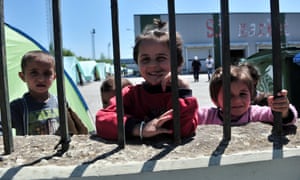
‘Sexual Assaults on Children’ at Greek Refugee Camps


Charities claim youngsters and women are too afraid to leave tents after dark at government-run camps

Children inside a camp for refugees and migrants in an abandoned factory in Thessaloniki.
Children inside a camp for refugees and migrants in an abandoned factory in Thessaloniki. Photograph: Sakis Mitrolidis/AFP/Getty Image

Mark Townsend, Guardian

Children as young as seven have been sexually assaulted in official European refugee camps, the Observer has been told. The claims come as testimony emerges suggesting that some camps are so unsafe that youngsters are too terrified to leave their tents at night.

Charities and human rights groups allege that children stranded in supposedly safe camps in Greece that were built to deal with Europe’s migration crisis – many of whom are likely to be eligible to claim asylum in the UK – have been sexually abused.

In one government-run camp, in a former Softex toilet roll factory on the outskirts of Thessaloniki, aid organisations claim that the level of risk of sexual attack is so acute that women are too afraid to visit the camp toilets alone at night.

Yvette Cooper MP, chairwoman of Labour’s refugee taskforce, said the revelations “should shame us all” and called for immediate action to protect vulnerable children.

A series of government camps were built near Thessaloniki after the informal one at Idomeni, near the Macedonian border, was closed in May. Weeks earlier, the European commission had unveiled an extra £71m of humanitarian funding for emergency projects to help the 57,000 refugees stranded in official government camps throughout Greece.

One volunteer serving at the Softex camp, which holds 1,400 mostly Syrian refugees, alleged that some young girls had been effectively groomed by male gangs. He said an Iraqi family had to be moved to emergency accommodation outside the camp after their daughter was attacked.

“The parents are still in disbelief over what happened. A man from one of the ‘mafia’ groups asked their seven-year-old daughter into their tent to play games on his phone and then zipped up the tent. She came back with marks on her arms and neck. Later the girl described how she was sexually abused. It has scarred a seven-year-old child for life,” said the volunteer, who asked to remain anonymous.

Family members, he said, were so demoralised they were planning to abandon their dream of resettling in Europe and return to the country they had fled.

Leader of the Lib Dems Tim Farron joined calls for the British government to honour its pledges by immediately rescuing vulnerable minors who are eligible to be in the UK, saying: “If Theresa May does not act now, she will not only be shaming her government but shaming the country.”

Anita Dullard of the International Federation of Red Cross and Red Crescent Societies said there had been a rise in incidents of sexual violence in Greece’s refugee camps and that they had alerted the government.

She said they had been forwarding alleged incidents of sexual violence against women and children to the UN.

Anna Chiara Nava of Médecins Sans Frontières in Thessaloniki confirmed that they had heard allegations of children being victims of sexual violence. Nava said they were in regular contact with at least 10 women from the Softex camp who had complained of sexual violence and explained that many occupants, including children, were too afraid to speak out.

“It’s really hard for the unaccompanied minors – 16- and 17-years-olds – to survive. It’s the survival of the fittest in there. In the evening and night it’s impossible to find them [children] because they are hiding in the tents. The women are afraid. They complain that during the night and evening they cannot go to the toilet alone. They have all heard of reports of others being attacked,,” said Nava.

The office of the UN High Commissioner for Refugees confirmed it had raised concerns with the Greek authorities. It said: “It is an issue when it comes to Softex and others. UNHCR has been raising concerns about this, specifically about this issue [sexual violence], saying that we don’t think it will be safe for women and for children. We’ve raised the issue of security again and again. This is a problem; it’s under discussion.”

The government coordinator for the refugee crisis, Giorgos Kyritsis, said: “Softex is the camp with the most cases of small criminal behaviour but there was not any case of rape reported to the camp’s staff.”

Of the people in Softex, 60% are believed to be Syrian, of whom around 170 are thought to be children.

A pressing issue for the British government is determining how many of the children are eligible to claim asylum in the UK. Under a clause in the EU’s Dublin regulation covering asylum claims, refugees who have close family members in a particular country can claim asylum there. In the refugee camp at Calais, for instance, 150 minors out of 600 are eligible. In addition, the government promised three months ago to house unaccompanied minors stranded in Greece, Italy and France under the Dublin amendment, with charities under the impression that homes would be found for several thousand.

Despite this, around 20 of the estimated 88,000 unaccompanied child refugees in Europe have so far arrived into the UK under the scheme, prompting fierce criticism.

Cooper said: “The UK government needs to urgently wake up to its responsibility. Parliament passed the amendment exactly because we were worried about child refugees being exploited, trafficked and sexually abused because other countries were overwhelmed with the scale of the problem.”

Friday, 1 April 2016

Germany to Spend €200mn on Combating Sexual Abuse in Refugee Housing


© Fabian Bimmer

© Fabian Bimmer / Reuters

Germany is implementing measures to safeguard women and children in refugee accommodation against sexual assaults and trauma, and will spend €200 million on the initiative starting April.

The funding will go toward remodeling refugee camps and homes, which will now be fitted with designated safe areas for the women and children – a group that continues to experience a lack of protection from violence and abuse.

The program will be carried out by municipal authorities with help from the Ministry for Families, Seniors, Women and Youth (BMFSFJ), (in other words, the Ministry of Everyone but Men) which reported the news in a statement.

"Unfortunately we know that children and women in the camps are not safe from abuse and sexual assault. That's why we have to make sure that they're protected," Ralf Kleindiek, a junior minister, said, according to the Local.

"Not only measures regarding staff, but also structural measures have to be implemented such as lockable accommodation units and separate sanitary facilities,” he added.

The scheme is broader than safety and security, Kleindik explains. Children and adolescents also need areas where they can play, learn and develop.

About €4 million (US$4.6 million) will be spent on setting up specialized centers, counseling and therapy for victims of abuse physical and psychological trauma.

Not included in the sum, but also part of the initiative, authorities will work with UNICEF to train staff and set up an information network for over 100 facilities.

This is all good; 6 or 8 months ago would have been better, but, it's all good.

The problem with sexual abuse in camps is that word doesn’t spread easily and no one quite knows the exact figures. There are varying estimates, but Die Welt reported a total of 15 cases in September of last year in a camp in Hesse.

The problem is compounded by an increasing flow of refugees – Germany has accepted 1.1 million in 2015, becoming by far the most welcoming member of the EU. This has had an effect on the quality of life offered in the refugee centers struggling to cope with such numbers.

Germany already finds itself the target of two investigations relating to how it observes EU guidelines. According to the investigations, it failed to implement certain points by last summer, Euractive.de reports.

The country has also been setting up integration programs, one initiative in particular receiving criticism: that refugees would have to learn German and integrate if they wished to stay. That is the plan offered by Interior Minister Thomas de Maiziere. A similar law was already put in force in Austria in January.


Germany happy about Balkan closed borders policy

But while the government of Chancellor Angela Merkel is criticized at home for being too liberal with its open-door policy, it has also allegedly been moving in the other direction of late. The minister president of the State of Bavaria and of chairman of the Christian Social Union (CSU), Horst Seehofer, criticized Merkel in Bild newspaper recently. He claimed that Germany is only too happy as the Balkans and other countries on the migration route are closing their doors, as it restricts the flow to Germany and allows it to save face at the same time.