Everyday thousands of children are being sexually abused. You can stop the abuse of at least one child by simply praying. You can possibly stop the abuse of thousands of children by forwarding the link in First Time Visitor? by email, Twitter or Facebook to every Christian you know. Save a child or lots of children!!!! Do Something, please!

3:15 PM prayer in brief:
Pray for God to stop 1 child from being molested today.
Pray for God to stop 1 child molestation happening now.
Pray for God to rescue 1 child from sexual slavery.
Pray for God to save 1 girl from genital circumcision.
Pray for God to stop 1 girl from becoming a child-bride.
If you have the faith pray for 100 children rather than one.
Give Thanks. There is more to this prayer here

Please note: All my writings and comments appear in bold italics in this colour

Showing posts with label Greece. Show all posts

Saturday, 11 May 2024

Islamization of Greece > Pakistani rapes 16 y/o British girl in restaurant with her parents


A minor tourist reported being raped in a bar in Malia

translated from “Ανήλικη τουρίστρια κατήγγειλε τον βιασμό της σε μπαρ στα Μάλια,” Proto Thema, May 9, 2024:


A minor British tourist who was having fun with her parents fell in a bar in Malia and reported that she was a victim of rape.

The incident happened last night, when the 16-year-old wanted to go to the bar’s toilet. There, as she reported to the police of the Peninsula Department, was the perpetrator, who attacked her and raped her.

After his act, the perpetrator hurried to get away, while the 16-year-old, in a state of shock, went with her mother to the police station, where they reported her rape.

The police searched for footage from the security cameras of the store and other businesses in the surrounding area, and it didn’t take long to identify the man. He is a 28-year-old man from Pakistan who is wanted by the authorities.

Pakistani men believe that young British girls are fair game for them. Pakistani men are responsible for tens of thousands of British girls being raped in England over the past 35 years. Search this blog for 'grooming'.


Saturday, 17 February 2024

Approaching Sodom > Greece - 1st Orthodox Christian country to embrace Sodom and Gomorrah


Greece legalizes same-sex marriage, 

1st Orthodox Christian country to do so

WATCH: Greece became the first Orthodox Christian country to legalize same-sex civil marriage on Thursday, despite opposition from the influential, socially conservative Greek Church. However, some Greeks expressed mixed feelings after
the vote by parliament paved the way for same-sex civil marriage.


Greece on Thursday became the first Orthodox Christian country to legalize same-sex civil marriage, despite opposition from the influential, socially conservative Greek Church.

A cross-party majority of 176 lawmakers in the 300-seat parliament voted late Thursday in favor of the landmark bill drafted by Prime Minister Kyriakos Mitsotakis ‘ center-right government. Another 76 rejected the reform while two abstained from the vote and 46 were not present in the house.

Mitsotakis tweeted after the vote that Greece “is proud to become the 16th (European Union) country to legislate marriage equality.”

“This is a milestone for human rights, reflecting today’s Greece — a progressive, and democratic country, passionately committed to European values,” he wrote.


He forgot the include 'godless'! While 80-90% of Greeks are Greek Orthodox, it would appear that Greek Orthodox has become more of a social club than a Christian Church.


Opinion polls suggest that most Greeks support the proposed reform by a narrow margin, and the issue has failed to trigger deep divisions in a country more worried about the high cost of living.

The bill was backed by four left-wing parties, including the main opposition Syriza.

“This law doesn’t solve every problem, but it is a beginning,” said Spiros Bibilas, a lawmaker from the small left-wing Passage to Freedom party, who is openly gay.

Click to play video: 'Biden signs landmark Respect for Marriage Act to safeguard same-sex, interracial marriages'
3:37
Biden signs landmark Respect for Marriage Act to safeguard same-sex, interracial marriages

It was approved despite several majority and left-wing lawmakers abstaining or voting against the reform. Three small far-right parties and the Stalinist-rooted Communist Party rejected the draft law from the start of the two-day debate.

Supporters, waving rainbow banners, and opponents of the bill, holding religious icons and praying, held separate small, peaceful gatherings outside parliament Thursday.

“People who have been invisible will finally be made visible around us. And with them, many children (will) finally find their rightful place,” Mitsotakis told lawmakers ahead of the evening vote.

“Both parents of same-sex couples do not yet have the same legal opportunities to provide their children with what they need,” he added. “To be able to pick them up from school, to be able to travel, to go to the doctor, or take them to the hospital. … That is what we are fixing.”

The bill confers full parental rights on married same-sex partners with children. But it precludes gay couples from parenthood through surrogate mothers in Greece — an option currently available to women who can’t have children for health reasons.

Maria Syrengela, a lawmaker from the governing New Democracy, or ND, said the reform redresses a long-standing injustice for same-sex couples and their children.

“And let’s reflect on what these people have been through, spending so many years in the shadows, entangled in bureaucratic procedures,” she said.

Dissidents among the governing party included former Prime Minister Antonis Samaras, from ND’s conservative wing.

Click to play video: 'Roger Thibault, one half of first same-sex civil union in North America, dies at 77'
2:23
Roger Thibault, one half of first same-sex civil union in North America, dies at 77

“Same-sex marriage is not a human right … and it’s not an international obligation for our country,” he told parliament. “Children have a right to have parents from both sexes.”

Polls show that while most Greeks agree to same-sex weddings they also reject extending parenthood through surrogacy to male couples. Same-sex civil partnerships have been allowed in Greece since 2015. But that only conferred legal guardianship to the biological parents of children in those relationships, leaving their partners in a bureaucratic limbo.

The main opposition to the new bill has come from the traditionalist Church of Greece — which also disapproves of heterosexual civil marriage.

Church officials have centered their criticism on the bill’s implications for traditional family values, and argue that potential legal challenges could lead to a future extension of surrogacy rights to gay couples.

Church supporters and conservative organizations have staged small protests against the proposed law.

Far-right lawmaker Vassilis Stigas, head of the small Spartans party, described the legislation Thursday as “sick” and claimed that its adoption would “open the gates of Hell and perversion.”

Politically, the same-sex marriage law is not expected to harm Mitsotakis’ government, which won easy re-election last year after capturing much of the centrist vote.

A stronger challenge comes from ongoing protests by farmers angry at high production costs, and intense opposition from many students to the planned scrapping of a state monopoly on university education.

Nevertheless, parliament is expected to approve the university bill later this month, and opinion polls indicate that most Greeks support it.


Friday, 28 April 2017

The Unchecked Sexual Exploitation of Child Migrants

Amid European immigrant debate, dangerous conditions go unaddressed, report says
By Al Powell, Harvard Staff Writer

Athens' Pedion tou Areos Park, Greece

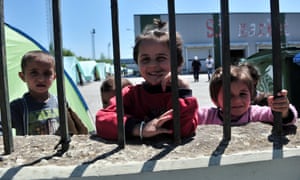
Closed borders, unsafe holding camps, and increasing desperation have created an “emergency within an emergency” concerning child sexual abuse and exploitation among migrants who are stalled in Greece, according to a new report by Harvard’s François-Xavier Bagnoud Center for Health and Human Rights (FXB Center).

The report released last week describes abuses in the crowded, makeshift holding camps, unstaffed at night and with inadequate lighting, where lone men and those associated with criminal gangs prey on children left unattended.

Older boys and girls are allowed to leave camp and sometimes engage in prostitution in hopes of saving enough to pay traffickers to smuggle them to their destination country, often Germany, Britain, or Sweden. The sex they provide brings in so little cash, €15 an encounter, that smugglers’ fees often remain out of reach. Drug use increases the danger the child will become trapped in the commercial sex industry, said the report, “Emergency within an Emergency: The Growing Epidemic of Sexual Exploitation and Abuse of Migrant Children in Greece.”

While the report focuses its attention on that country, it’s co-author, Jacqueline Bhabha, research director of the FXB Center, said the situation is likely similar in other European nations, such as Serbia and Italy. She cited a 2016 Europol report that said 10,000 children known to have entered Europe during the refugee crisis have disappeared. While some likely have united with family members or are working in the unofficial economy, some have been preyed upon and trafficked, said Bhabha, professor of the practice of health and human rights at the Harvard T.H. Chan School of Public Health.

The investigation underlying the report was conducted last November at four locations in Greece, on two islands that are frequent entry points for migrants, Lesbos and Chios, and in two cities where many migrants are held after their initial entry, Athens and Thessaloniki.

The report’s primary author, Vasileia Digidiki, a research fellow at the FXB Center, interviewed 24 experts, including psychologists, government officials, and physicians. Because of ethical concerns, she didn’t interview children who had been raped or otherwise abused. She also conducted field observations, visiting sites her interview subjects identified as hubs for the local sex trade and the sexual exploitation of children, including Athens’ Victoria Square and Pedion tou Areos Park. What was happening was obvious, she said.

“You can see it,” Digidiki said. “You see the child waiting, a client approaching. You see the initial contact and see them going away together.”


Authors Jacqueline Bhabba and Vasileia Digidiki say their report is just the tip of the iceberg.
Photo: Courtesy (1) of Jacqueline Bhabha; (2) courtesy of the FXB Center

The report outlines the preconditions and the context of the crisis, though it doesn’t define the numerical scope of what is happening, in part because its illegality and the shame felt by its victims keep it in the shadows, and in part because it is not yet of enough concern to a government agency that can conduct further investigations.

“At the moment, nobody’s in charge. It’s nobody’s problem, it’s on nobody’s desk,” Bhabha said.

Bhabha avoided blaming the Greek government, saying the nation has shouldered an overwhelming burden during the refugee crisis, especially as it occurred as Greece was struggling to emerge from financial crisis.

The migrants’ plight has worsened as more nations have closed their borders. Migrants find themselves stranded for longer periods in first-stop countries such as Greece, which previously they would have passed through to their final destinations. Now, Digidiki said, people — including children who often have been tasked with earning money to send back home — grow increasingly desperate to move on. If they can’t do it legally, they try to raise the money to pay smugglers.

Though commercial sexual exploitation is a clear focus of the report, also important are physical violence and sexual assault in the camps where migrants are held. Psychological violence can include the lasting fear, shame, and humiliation of such violations, sometimes worsened when children are blackmailed with images of their abuse. Then there are child marriages, in which girls are married off to older men, a practice often hidden because marriage under 18 is illegal in most European countries.

The investigation is an outgrowth of two center reports last year. One was an examination of the migrant experience on Lesbos, and the second a report on the plight of child migrants. It was apparent as those reports were being assembled that child sexual exploitation needed a closer look, Bhabha said.

The new report contains numerous recommendations, including increasing the presence of trained police in camps; physical improvements such as adding lighting and separating sanitation facilities for men and women; and providing areas for families with children and children traveling alone. The report also recommends improving child welfare services, integrating migrant children into the education system, improving data collection, and raising awareness in the local population.

Bhabha said she believes what the report describes is just the tip of the iceberg. The broader goal, she said, is to put the problems on the radar screens of officials in Greece and other nations, so additional investigations and multinational solutions can begin to be devised. There is some urgency, she said, because the fighting in their homelands is still driving migrants to the road. Also, spring has arrived and will bring more migrants.

“There aren’t any quick-fix solutions,” Bhabha said.

Thursday, 30 March 2017

Second-Time Offender Afghan Refugee Charged with Murder, Rape of German Student

EU officials daughter raped and murdered
Migrant to be tried as juvenile though it is likely he lied about his age
- given the benefit of the doubt even though he has already been
convicted of rape and murder in Greece

Maria (centre) with friends


German prosecutors have charged an Afghan migrant with the murder and rape of a 19-year-old medical student in Freiburg. The suspect already served a prison term for a similar offense in Greece but was released early.

Oh great! Not only is Turkey sending Europe the worst of the worst, but Greece seems to be as well. Good grief!

Officials in the southwestern German city of Freiburg, home of one of Germany’s elite universities where the incident had taken place, announced the charges on Thursday.

The prosecution team accused the suspect known as Hussein K. of having "attacked, strangled and raped" Maria Ladenburger, a 19-year-old medical student who disappeared while on her way home from a party on October 16, 2016.

The prosecutors claim he then dumped her in the nearby Dreisam River. Her body was found on the river bank the next morning by locals.

The prosecution's charge described Hussein K. as having killed Maria “insidiously and for sexual satisfaction,” DPA news agency reported. Hussein K. was linked to the crime through DNA evidence — authorities used a strand of hair found in the bushes near the girl’s body to identify and arrest him.


The old town is seen from the cathedral tower in Freiburg, Germany © Kai Pfaffenbach / 
ReutersUnderage refugee suspect in rape & murder of female student – German Police

Hussein K. had arrived in Germany from Afghanistan as an unaccompanied asylum-seeker in 2015, with no identity papers, and had been living with a Germany foster family since. At the time of his arrest, he told police he was 17 years old. However, two studies by medical age experts suggest the suspect was at least 22 at the time of the crime.

So, how is it he had no ID papers but he had been in prison in Greece? Seems odd to me. 

Due to the uncertainty under German law, Hussein K. will be tried as a juvenile instead of adult law. His case will be heard by the juvenile chamber of the Freiburg district court. If convicted of murder, he could be handed a 10 year jail term, DPA reports.


Daughter of EU official

The case sparked public outcry after journalist and author Oliver Janich said he discovered that the murder victim was Maria Ladenburger, daughter of Clemens Ladenburger, who has been an assistant to the Director-General of the European Commission's Legal Service since 2008. It also emerged that Maria had worked as a volunteer in one of the local refugee shelters in her spare time, helping people like Hussein.

The outrage grew louder when it was revealed that Hussein K. had previously been detained on charges of murdering a woman in Greece. According to police, he raped a Greek student and threw her off a cliff on the isle of Corfu in May 2013. He had been sentenced to ten years in prison but was released prematurely only two-and-a-half years into his sentence in October 2015, following a Greek law to ease prison overcrowding.

Ease prison overcrowding by sending them to Germany, Sweden and the Netherlands. Great! Why don't we give Greece a whole lot more money since they are so nice?

If Hussein K. was 17 six months ago, he could have been no more than 13 or 14 when he raped and murdered the girl in Corfu. That is both very disturbing and unlikely. What's even more disturbing is the German judiciary is giving him the benefit of the doubt. He's a convicted rapist and murderer, but surely, he wouldn't lie about his age!!!!

A date for Hussein K.’s court appearance has not yet been announced. His background has risen questions about why European police had failed to identify and pick up his trail after he left Greece.


Monday, 15 August 2016

‘Sexual Assaults on Children’ at Greek Refugee Camps


Charities claim youngsters and women are too afraid to leave tents after dark at government-run camps

Children inside a camp for refugees and migrants in an abandoned factory in Thessaloniki.
Children inside a camp for refugees and migrants in an abandoned factory in Thessaloniki. Photograph: Sakis Mitrolidis/AFP/Getty Image

Mark Townsend, Guardian

Children as young as seven have been sexually assaulted in official European refugee camps, the Observer has been told. The claims come as testimony emerges suggesting that some camps are so unsafe that youngsters are too terrified to leave their tents at night.

Charities and human rights groups allege that children stranded in supposedly safe camps in Greece that were built to deal with Europe’s migration crisis – many of whom are likely to be eligible to claim asylum in the UK – have been sexually abused.

In one government-run camp, in a former Softex toilet roll factory on the outskirts of Thessaloniki, aid organisations claim that the level of risk of sexual attack is so acute that women are too afraid to visit the camp toilets alone at night.

Yvette Cooper MP, chairwoman of Labour’s refugee taskforce, said the revelations “should shame us all” and called for immediate action to protect vulnerable children.

A series of government camps were built near Thessaloniki after the informal one at Idomeni, near the Macedonian border, was closed in May. Weeks earlier, the European commission had unveiled an extra £71m of humanitarian funding for emergency projects to help the 57,000 refugees stranded in official government camps throughout Greece.

One volunteer serving at the Softex camp, which holds 1,400 mostly Syrian refugees, alleged that some young girls had been effectively groomed by male gangs. He said an Iraqi family had to be moved to emergency accommodation outside the camp after their daughter was attacked.

“The parents are still in disbelief over what happened. A man from one of the ‘mafia’ groups asked their seven-year-old daughter into their tent to play games on his phone and then zipped up the tent. She came back with marks on her arms and neck. Later the girl described how she was sexually abused. It has scarred a seven-year-old child for life,” said the volunteer, who asked to remain anonymous.

Family members, he said, were so demoralised they were planning to abandon their dream of resettling in Europe and return to the country they had fled.

Leader of the Lib Dems Tim Farron joined calls for the British government to honour its pledges by immediately rescuing vulnerable minors who are eligible to be in the UK, saying: “If Theresa May does not act now, she will not only be shaming her government but shaming the country.”

Anita Dullard of the International Federation of Red Cross and Red Crescent Societies said there had been a rise in incidents of sexual violence in Greece’s refugee camps and that they had alerted the government.

She said they had been forwarding alleged incidents of sexual violence against women and children to the UN.

Anna Chiara Nava of Médecins Sans Frontières in Thessaloniki confirmed that they had heard allegations of children being victims of sexual violence. Nava said they were in regular contact with at least 10 women from the Softex camp who had complained of sexual violence and explained that many occupants, including children, were too afraid to speak out.

“It’s really hard for the unaccompanied minors – 16- and 17-years-olds – to survive. It’s the survival of the fittest in there. In the evening and night it’s impossible to find them [children] because they are hiding in the tents. The women are afraid. They complain that during the night and evening they cannot go to the toilet alone. They have all heard of reports of others being attacked,,” said Nava.

The office of the UN High Commissioner for Refugees confirmed it had raised concerns with the Greek authorities. It said: “It is an issue when it comes to Softex and others. UNHCR has been raising concerns about this, specifically about this issue [sexual violence], saying that we don’t think it will be safe for women and for children. We’ve raised the issue of security again and again. This is a problem; it’s under discussion.”

The government coordinator for the refugee crisis, Giorgos Kyritsis, said: “Softex is the camp with the most cases of small criminal behaviour but there was not any case of rape reported to the camp’s staff.”

Of the people in Softex, 60% are believed to be Syrian, of whom around 170 are thought to be children.

A pressing issue for the British government is determining how many of the children are eligible to claim asylum in the UK. Under a clause in the EU’s Dublin regulation covering asylum claims, refugees who have close family members in a particular country can claim asylum there. In the refugee camp at Calais, for instance, 150 minors out of 600 are eligible. In addition, the government promised three months ago to house unaccompanied minors stranded in Greece, Italy and France under the Dublin amendment, with charities under the impression that homes would be found for several thousand.

Despite this, around 20 of the estimated 88,000 unaccompanied child refugees in Europe have so far arrived into the UK under the scheme, prompting fierce criticism.

Cooper said: “The UK government needs to urgently wake up to its responsibility. Parliament passed the amendment exactly because we were worried about child refugees being exploited, trafficked and sexually abused because other countries were overwhelmed with the scale of the problem.”

Friday, 15 July 2016

Refugees Caught up in Child Prostitution in Athens

By Daniel Howden, Refugees Deeply 


Some refugee children stuck in Athens have turned to prostitution in order to earn the money they need to leave Greece. File Photo by hikrcn/Shutterstock

ATHENS -- There are new arrivals in the once-grand park of Pedion tou Areos in central Athens. Among the drug dealers and dog walkers, joggers and junkies, are a shifting cast of refugee children. Lured into the vastness of its ruined tree-lined avenues and vandalized statues by the promise of money and a way out of Greece, they have found themselves prey to a burgeoning sex trade.

Every day as the intense heat of Athenian summer slides towards sunset, young boys take their places, sitting alone on benches, waiting for a nervous game of eye contact to begin. Older men, some pretending to read newspapers, others pretending to be out for an early evening stroll, assess the marketplace.

Activity is usually most intense at a secluded pedestrian roundabout, where a chin-high hedge offers the promise of privacy. Inside the bushes is a broken fountain and a small clearing long enough to lie down in. A filthy foam mattress has been unrolled on the grass surrounded by discarded cans and bottles, and a handful of used condom wrappers. It's an open-air brothel.

Outside, a handsome boy with black hair and blue eyes, who looks no older than 15, is more confident than the others and patrols the circle meeting the gaze of all around him. Spotting a lone, older man on a bench, he approaches and sits down. He says his name is Zehman and adds in broken English that he is 16 and from Afghanistan.

He moves closer and waits for a proposal. When it's made clear that there are only questions on offer and no money, he gets nervous and moves on.

A few benches away sits Ali, hunched over, looking exhausted. He has none of Zehman's swagger, or even his broken English, but he is less coy. Offered a phone to talk to a colleague in Farsi, he says he is 17 and has been in Greece for three months. He agrees to meet the next morning outside of the park and tell his story.

"I never thought I'd have to do something like this," Ali admits. "When the money ran out I had to learn to do this. The first time I did it I felt very ashamed, but over time you start to get used to it. It was the first time I do this, I had no experience."

At such a young age, Ali, whose straight, dark hair falls into his eyes, is already twice a refugee. His father fled Daykundi province in central Afghanistan during the Soviet war in the 1980s. They made it as far as Tehran, the capital of Iran. When his father died, Ali moved in with his uncle who already had too many mouths to feed.

There are few prospects for Ali's generation, with nearly 1 million registered Afghan refugees growing up in Iran, most, like him, living in hardscrabble poverty on the outskirts of Tehran. One day last year, he says, he realized that all his friends had left, so there was no reason to stay: "When everyone leaves, you feel left behind."

Getting to Greece involved an 18-hour trek through the snow and past dead, frozen bodies over the mountains into Turkey. Once across the border it was a bus journey to Istanbul and down to the coast, across the water from the Greek island of Lesbos.

The first attempt to reach Greece ended when the overcrowded dinghy he was in sank. Luckily it was near enough to the Turkish shore that they could swim back. After nightfall they clambered into another inflatable and tried again. Although he remembers being scared by the night and the overcrowding, once the other shore was reached "we thought we'd arrived in a dream."

Ali and his boatload of new friends got temporary papers and left Lesbos the next day on a ferry to Athens. Everyone was in a terrible hurry after the closure of Greece's northern borders, he says. After risking so much to get this far, there was a forlorn hope that he could continue.

Together with some other boys he traveled north to the informal refugee encampment at Idomeni on the border with the Former Yugoslav Republic of Macedonia. They stayed for 10 days in appalling conditions, hoping to somehow find a way through the Greek border. "I needed to know it really was closed," he says.

Ali's phone, on which he once exchanged excited Viber and Facebook messages with a friend who had reached Austria, is gone. So is almost everything else. He has been wearing the same clothes for a week. He has more, but they're equally filthy and kept in a plastic bag inside the park.

Sometimes the men who want sex give him 10 euros ($11), sometimes only 5 euros. Most of the time the men want sex up against a tree or in the bushes, he says. Most of them don't use condoms. Some of the younger or prettier boys can earn up to 30 euros a time and are taken to apartments or to the cheap hotels that line the nearby Victoria Square.

"These men are ill," Ali says of the clients. "They're deeply sick."

Tassos Smetopoulos, an experienced Greek social worker who has been monitoring the drug scene and the arrival of refugees in greater numbers at the park, has his own explanation.

"The word is out that these kids are the cheapest and the youngest," he says. "They have got mixed up in a crisis that has nothing to do with them and has been years in the making."

These children who came to Europe in the hope of a better life have found themselves as collateral damage in the worst economic crisis the EU has seen. After six years of precipitous recession, there are whole areas of the Greek capital, like Pedion tou Areos, where the state is effectively absent.

After the closure of its borders, 57,000 refugees and migrants have been stranded in a country wholly unprepared to look after them. Nearly 40 percent of the new arrivals in Greece in 2016 are children, of whom 1,146 are registered as unaccompanied minors. Most of the children traveling alone do not even appear in these figures as they have avoided being registered as underage, like Ali did, for fear of being detained.

Sunday, 17 January 2016

Refugee Girls, Women Subject to Sexual Violence en Route to Europe, Says Rights Group

'It's taking a long time for the international community ... to wake up to this crisis'
Refugees walk to a chartered train at the railway station of Passau, Germany, on Jan. 5. Many women and girls making the journey to Europe, especially those travelling alone, have been subject to sexual harassment or violence, Amnesty International says. (Armin Weigel/Associated Press)

The Associated Press

Women and girl refugees coming into Europe face violence and sexual harassment at every stage of their journey, according to a new report from Amnesty International.

This can't be a surprise to anyone! Seriously!

The report released by the human rights group was based on interviews with 40 women and girls in Germany and Norway last month who had traveled from Turkey to Greece and then across the Balkans.

Women and girls traveling alone or accompanied only by children said they felt particularly under threat in Hungary, Croatia and Greece, where they were forced to sleep alongside hundreds of male refugees. Those interviewed included female refugees from Iraq and Syria.

The vast majority of the refugees and migrants streaming into Europe are men, which leaves women particularly vulnerable, aid workers say. Women at camps reported having to use the same bathroom and shower facilities as men, and some said they did not eat or drink to avoid going to the toilet.

The report did not separate out incidents of sexual harassment from general violence. One 22-year-old Iraqi woman told Amnesty International that a uniformed security guard in Germany offered her clothes in exchange for spending time alone with him.

Some aid workers say violence is harder to prevent because of an ad hoc system for receiving and registering refugees.

"One of the challenges we have been facing is that it is taking a long time for the international community, and by that I mean governments, to wake up to this crisis and to realize that it is not something that they can wish away," Jenny Becker, protection co-ordinator with the International Rescue Committee in northern Lesbos, Greece, told The Associated Press.

© The Associated Press, 2016 

Sunday, 17 May 2015

After 23 Years, Hope in Missing Toddler Case

Detectives investigating his disappearance receive potentially significant new information in Needham case

A picture of Ben Needham from the official Facebook campaign page.
Gulf News
BY PATRICK SAWER AND NICOLA HARLEY, THE TELEGRAPH GROUP LIMITED, LONDON 2015

London: Hopes of a breakthrough in the case of missing British toddler Ben Needham rose yesterday (Saturday) after detectives investigating his disappearance received potentially significant new information, including a possible photograph of him.

The potential new leads came after Ben’s family, from Sheffield, appeared on Greek television to make a renewed appeal on his whereabouts, 23 years after he went missing on the island of Kos. As a result of the appeal, more than 30 people contacted police, including one who supplied a photograph thought to show an individual who could be Ben. Police believe there are approximately seven potentially new and “interesting lines of inquiry”, which will now be investigated further by South Yorkshire detectives, working with their Greek counterparts. Ben’s mother, Kerry, who has always insisted that he could still be alive, said she was heartened by the result of her appeal. She said yesterday: “The Greek TV show last night had a massive impact on Ben’s investigation, and new information was given to South Yorkshire Police on the show and also to Operation Ben headquarters in the UK. This information will now be investigated by British detectives.”

She added: “A photograph was sent to the show which I have seen, but I believe stronger information should take priority.” It had been reported that a man came forward to say he believed he is Ben, but the individual had previously been discounted from the investigation after a DNA comparison. Another man who recently came forward has also been ruled out.

Needham said: “I want to make it clear that the information about someone who called the show claiming to be Ben is old information and has already been dealt with.” South Yorkshire police said they are determined to pursue any new information in order to solve the mystery of the toddler’s disappearance. Det Supt Matthew Fenwick, who is leading the inquiry, said: “Ben would be a 25-year-old adult now, so it’s important that we appeal to him too. We will ask anyone out there if they’ve ever had doubts about where they come from; if they look completely different to their family or perhaps there are no photographs of them as a baby.

“We will ask anyone with these doubts to come forward — we have a sample of Ben’s DNA, so we can easily determine whether someone is indeed Ben.” Ben was 21 months old when he went missing on July 24, 1991, after travelling to Kos with his mother and grandparents, who were renovating a farmhouse in the village of Iraklise. Over the years there have been a number of possible sightings and a range of theories about what happened. Speaking on the programme, Needham said: “Please end the pain that my family is suffering. I know he’s out there somewhere. Please call the police and please put an end to this.”

Needham also spoke about the young men who have come forward during the investigation only to be ruled out. “It is shocking — and every time I meet someone that we think is Ben, and we’ve had a DNA test and it’s not Ben, it’s heartbreaking. And sometimes, it’s very difficult to recover from that,” she said.

Needham had said earlier: “I know that no one can guarantee they will uncover what happened to my son, but knowing that the police are trying to find answers has lifted my strength and hope immensely.

“It means everything to me and I know that South Yorkshire Police are working with the Greek police and will do their best for us.

“My family and I will not rest until we uncover what happened to Ben, and I believe that someone out there knows what happened to him — I would urge them to please get in touch with police.”

Ben’s sister, Leighanna, 22, said: “I have been involved in Ben’s investigation since I was born. Even though I didn’t meet him, the pain is still there. I feel my mum’s pain and my family’s pain.”

She added: “To see photographs of the brother I have never met is horrible.”

Det Supt Fenwick added: “The lives of Ben Needham’s family were ripped apart when he disappeared more than 20 years ago and their determination to find him has not diminished. It is likely that someone out there knows what happened to him.”

In January, South Yorkshire Police were granted pounds 700,000 (Dh4 million) of Home Office funding to support the Greek authorities in continuing inquiries to find Ben. The force had asked for the financial help to follow up information, which the family believes has never been properly investigated. The Home Office backed a South Yorkshire Police operation in 2012 when land was excavated on Kos, near the farmhouse from where Ben went missing. No trace of him was found. Last year, a DNA test on a young man featured in video footage shot in Cyprus proved negative.

We can hope and pray that one of these leads will reveal what happened to the boy. If his story can be found out, then there is hope for Madeleine McCann's story being revealed.