Everyday thousands of children are being sexually abused. You can stop the abuse of at least one child by simply praying. You can possibly stop the abuse of thousands of children by forwarding the link in First Time Visitor? by email, Twitter or Facebook to every Christian you know. Save a child or lots of children!!!! Do Something, please!

3:15 PM prayer in brief:
Pray for God to stop 1 child from being molested today.
Pray for God to stop 1 child molestation happening now.
Pray for God to rescue 1 child from sexual slavery.
Pray for God to save 1 girl from genital circumcision.
Pray for God to stop 1 girl from becoming a child-bride.
If you have the faith pray for 100 children rather than one.
Give Thanks. There is more to this prayer here

Please note: All my writings and comments appear in bold italics in this colour

Showing posts with label death penalty. Show all posts

Thursday, 11 January 2024

This Week's Pervs and Pedos in the USA > Florida seeking death penalty for child rapist


Florida seeks death penalty in Lake County

sex abuse case under new law

The Lake County case may be the first in which the state has sought a death sentence for a charge other than murder.

Joseph Giampa

Published Dec. 14, 2023|Updated Dec. 14, 2023

In what may be the first case of its kind in the state, central Florida prosecutors said Thursday they will seek the death penalty against a man accused of sexually abusing a child, making use of a new law that expanded capital punishment to sex crimes against children.

The office of State Attorney William Gladson, who prosecutes cases in five counties northwest of Orlando, filed a notice of intent to seek a death sentence for Joseph Andrew Giampa, who faces charges of sexual battery on a person younger than 12.

In a statement, Gladson’s office noted the “severity of the crime and its impact on the community. The decision to pursue the highest penalty reflects the gravity of the charges and the State Attorney’s Office’s dedication to holding criminals accountable for their actions,” the statement read.

The case appears to be the first in modern times in which Florida prosecutors have sought capital punishment for a charge other than murder. It is also a case likely to pose constitutional challenges, as U.S. Supreme Court precedent forbids the death penalty for the crime of rape.

Giampa, 36, of Leesburg, was arrested in November in Lake County.

An arrest affidavit in his case states that Lake County sheriff’s deputies questioned him at his home Nov. 2. During their conversation, Giampa led the deputies to a camper and allowed them to look at a video on a laptop computer, the document states. The affidavit describes the video as depicting a man sexually abusing a child while recording the act.

During a portion of the video, the man put the camera down and moved in front of it. Deputies identified the man as Giampa, according to the affidavit. Giampa is being held in the Lake County Jail.

In its notice of intent to seek the death penalty, Gladson’s office cited four aggravating circumstances that they say qualify death as an appropriate punishment. They include that the crime was committed for pecuniary gain and that it was especially heinous, atrocious or cruel.

The U.S. Supreme Court in 1977 ruled that applying the death penalty for rape violated the Eighth Amendment’s prohibition on cruel and unusual punishment. In 2008, the high court likewise ruled in the case of Kennedy v. Louisiana that the death penalty was unconstitutional in cases of child rape that do not result in the death of the victim.

Death of the soul, death of innocence, death of joy and confidence, death of so many attributes that can help make a person happy and successful in life. Arguably, the victim's sentence is worse than death.

State lawmakers this spring nevertheless passed a bill that made sexual battery on a child a death-eligible crime.

The text of the bill expressed a belief that prior high court rulings on the issue were “wrongly decided and that such cases are an egregious infringement of the states’ power to punish the most heinous of crimes.”

Sen. Jonathan Martin, R-Fort Myers, sponsored the legislation. Martin, who was a prosecutor, said that in his experience, sexual battery cases are the most egregious and cause lifelong trauma.

YES!

“The most serious crime like sexual battery on a child needs the most serious punishment and the most serious penalty and the most serious deterrent,” Martin said.

Martin said he thinks both the U.S. Supreme Court and the Florida Supreme Court would find the law’s language constitutional.

Gov. Ron DeSantis, when he proposed the idea of pursuing the death penalty against child rapists, also said he believed the current iteration of the U.S. Supreme Court would support Florida’s law.

The bill passed with bipartisan support and was signed into law by DeSantis.

It came in tandem with a bill that lowered the threshold for Florida juries to recommend the death penalty from a unanimous vote to an 8-4 vote. That law was seen as a response to the outrage that ensued after a Broward County jury fell short of recommending a death sentence for Parkland school shooter Nikolas Cruz.

The law making child rape a death-eligible crime went into effect Oct. 1.

Robert Dunham, the former director of the Death Penalty Information Center, said the court’s 2008 decision clearly closed the door on whether nonlethal crimes could be subject to the death penalty.

“There is nobody who understands the law who thinks otherwise,” he said.

Florida’s leadership has challenged the Eighth Amendment question in other ways.

This year Attorney General Ashley Moody signed onto a friend-of-the-court brief saying that it was “long overdue” for the U.S. Supreme Court to remove the “evolving standards of decency” test to determine if a punishment is cruel and unusual.

The brief stems from a case in Alabama, where an appeals court ruled a prisoner could not be executed because of his low IQ scores.

Stephen Harper, the founder of Florida International University’s Center for Capital Representation, worked on the Eighth Amendment case that led to the U.S. Supreme Court prohibiting the execution of juveniles.

He said the question of “evolving decency” can cause controversy, because at the time the Constitution was ratified, many punishments were considered acceptable that are out of practice today. In recent cases, the court has evaluated state laws, what professional organizations are saying and other materials to consider what penalties are appropriate.

He said it would look “very ugly” if the court were to reverse Kennedy v. Louisiana, the 2008 decision that determined the death penalty could only apply to a murder conviction.

It looks pretty ugly now, when a man can destroy a child's life and severely affect the rest of its family, and avoid the death penalty. Who is standing up for the children if the courts stand up for their rapists?

“The Supreme Court, in order to be legitimate, has to stick by prior decisions,” Harper said, “even if the current members of the court disagree with it.”

That's a crock! A year ago the Supreme Court overturned Roe v Wade, an historical mistake of Biblical proportions. Child sexual abuse is equally as evil and horrendous as abortion.


Wednesday, 19 April 2023

Florida to re-introduce Capitol Punishment option for Child Sexual Abuse

..

Florida passes bill allowing death penalty for child sexual abusers


By Selim Algar, NYPost
April 19, 2023 5:42pm  Updated

Florida lawmakers have approved legislation backed by Gov. Ron DeSantis that would permit the death penalty for those convicted of sexually abusing children.

The bipartisan proposal — which passed by a vote of 34-5 late Tuesday — will also allow juries to hand down death sentences by votes of at least 8-4, after previously requiring unanimity.

The bill — which passed the Florida House of Representatives 95-14 last week and which DeSantis is expected to sign — would apply to those convicted of abusing a child under the age of 12.

“My view is, you have some of these people that will be serial rapists of six, seven-year-old kids,” DeSantis told “Good Morning Orlando” Monday. “I think the death penalty is the only appropriate punishment when you have situations like that.” 

State Senate Minority Leader Lauren Book (D-Davie) and state Sen. Jonathan Martin (R-Fort Myers), the bill’s co-sponsors, argued that those who sexually harm kids are likely to repeat their crime and deserve the ultimate penalty.

“Once a predator has a child ensnared, they will harm that child over and over and over again,” Book said. “And then move on to another innocent child.”

Florida Gov. Ron DeSantis.
Getty Images

Book argued that execution guards against the targeting of additional victims.

“Pedophile behavior has been deemed highly repetitive to the point of compulsion,” she said.

State Sen. Rosalind Osgood (D-Broward), one of the five who opposed the bill, said she agreed that sexual attacks on kids are severe crimes, but told fellow lawmakers that she struggled with imposing the death penalty in general due to her religious beliefs.

Florida state Sen. Lauren Book
AP

The bill also runs up against Supreme Court precedent. In 2008, the high court ruled 5-4 in Kennedy v. Louisiana that the death penalty could not be levied against child rapists or anyone who committed a crime in which the victim did not die.

However, DeSantis suggested this week that the current Supreme Court, made up of six conservatives and three liberals, might be open to overturning that decision.

The death penalty controversy made headlines in Florida last year after a jury spared Parkland school shooter Nikolas Cruz from execution, instead handing down a life sentence.

Florida state Sen. Jonathan Martin
AP

All but one juror voted for Cruz to be executed, which DeSantis said Monday was “really the only appropriate punishment.”

“If you don’t support capital punishment, I respect that,” the governor added, “but the way to deal with that is to try to get the laws changed in the state through the democratic process – not to be on a jury and to nullify capital punishment.”


========================================================

Monday, 3 April 2023

Islam - Current Day > Iranian women arrested after hijab attack; Two Muslim Men Rape 13 y/o Swedish Girl

..

Iran arrests women for not wearing hijab after man threw yogurt on them


By Adam Schrader
   
Authorities in Iran have arrested two women at a store in the city of Shandiz after a man was seen throwing yogurt at them Thursday. Photo courtesy of Mizan News Agency


April 2 (UPI) -- Authorities in Iran have arrested two women at a store in the city of Shandiz after a man was seen throwing yogurt at them Thursday, officials said.

Iran's judiciary said in a statement published by its media arm, the Mizan News Agency, that the two women were arrested on the charge of "committing a forbidden act" by not wearing hijabs.

Iranian officials also criticized the man's "unconventional treatment" of the women, arresting him and charging him with "practical insult and disturbance of order."

"The necessary judicial orders were issued in this regard and these people were arrested," the statement reads.

The Mizan News Agency also released an image taken from surveillance footage at the store, in which one of the women is seen unveiled with her hair covered in yogurt. Another woman seen in the image is veiled.

"Chastity and hijab are a religious necessity. Hijab is immunity, for the individual and society," President Ebrahim Raisi said in a statement on Twitter from the Iranian government.

"We are faced with a legal obligation, compliance with the law is agreed upon by all. Today, the issue of hijab is a legal issue and all members of our society should be committed to the issue of chastity and hijab, as they have been committed so far."

The news comes as Iranians across the Muslim country continue to protest the country's hardline government after the death of 22-year-old Mahsa Amini.

Amini died in the custody of the country's morality police after she was arrested for not properly wearing her hijab, sparking widespread protests that some have called a "revolution."


Prosecutors want to deport Muslim men who raped 13-y/o Swedish girl


Translated from “Ã…klagare vill utvisa män som vÃ¥ldtog 13-Ã¥rig flicka,” 
Samnytt, March 30, 2023:

Two men from western Sweden are charged with, among other things, child rape in connection with the disappearance of a 13-year-old girl last year. The prosecutor wants both men to be deported after serving their sentences.

It was in October last year that a 13-year-old girl from Kil in Värmland disappeared from school on a Thursday afternoon. She had taken the train to Gothenburg to meet a man she got in touch with via the internet.

The man, a 23-year-old from Azerbaijan who was previously convicted of sexual offenses against children, was arrested fairly quickly. He is initially suspected of contact to meet a child for sexual purposes.

But the 13-year-old girl was still missing and both the police and volunteers from Missing Persons were participating in the intensive search for her.

On the evening of October 11, the police announced that the missing girl had been found safe.

It turns out that another man, a 25-year-old Iraqi, was involved in her disappearance and that it was him she was with after the 23-year-old was arrested.

The 25-year-old and the 23-year-old are friends with each other. Both men have been convicted of several crimes in Sweden.


The 23-year-old’s name is Latif Süleymanov. He came to Sweden from Azerbaijan together with his mother and brother in September 2008, when he was nine years old.

The mother wants a residence permit in Sweden because of her fragile health, which the Migration Agency rejects. The decision is appealed to the migration court, which in 2010 grants the family a residence permit due to “extremely painful circumstances.”

Three years later, Latif’s father also gets a residence permit in Sweden. The following year, the mother dies.

The 25-year-old’s name is Ibrahim Fahmwai and he is a Palestinian from Iraq. He and his sister came to Sweden in April 2015 as so-called quota refugees.

The Palestinians have fled Iraq to Syria in 2010, escaping the Iraqi government’s hunt for Al-Qaeda sympathizers. As “foreign Arabs,” they are regarded with suspicion.

In Syria, however, they are not welcome, and they are sent back to Iraq. It is through UNHCR’s care that Ibrahim and his sister come to Sweden instead.

The trial against Latif Süleymanov and Ibrahim Fahmwai began in the Gothenburg District Court on Tuesday and will end on Friday. Süleymanov is charged with two counts of child rape, while Fahmwai is charged with one count of child rape and child sexual abuse.

Both men deny wrongdoing. However, one man’s sperm has been found in the girl’s panties.

The prosecutor wants both men deported after serving their sentences and banned from returning to Sweden.

Here is my solution to the problem of Islamic migrants raping little Swedish girls. Sweden should introduce the death penalty for child rape and the rapists should be deported before the death penalty, but if they return to Sweden, they should be immediately arrested and immediately put to death. Any appeals should happen before deportation, and if deportation is contested and the migrant avoids deportation, he should be put immediately to death. 

Of course, this will never happen in Sweden, or any other European country, it's too barbarian! They would rather see their little girls be destroyed by a barbarian ideology that teaches its adherents that raping little white girls glorifies Allah and is obedient to Mohammed.


Friday, 4 January 2019

More Positive Stories in the War Against Child Sex Abuse, Episode VI

Positive stories on child sex abuse are few and far between. 
Not everyone will agree that the death penalty is a positive story,
but India is so dreadfully desperate to stop child sex abuse,
and too many don't even know it.

Union Cabinet Approves Death Penalty In Aggravated Sexual Offences Under POCSO

Written By Asia News International | Mumbai | 

The Union cabinet on Friday approved death penalty in aggravated sexual offences under the Protection of Children from Sexual Offences (POCSO) Act.

The cabinet, chaired by Prime Minister Narendra Modi, approved the proposal for amendment in the POCSO Act, 2012 to make punishment more stringent for committing sexual crimes against children.

To discourage child sexual abuse, sections 4, 5 and 6 of POCSO are proposed to be amended to provide an option of stringent punishment including death penalty for committing aggravated penetrative sexual assault crime on a child to protect the children from sexual abuse.

The amendment is expected to act as a deterrent due to strong penal provisions incorporated in the Act. It may also protect the interest of vulnerable children in times of distress and ensure their safety and dignity. The amendment aims to establish clarity regarding the aspects of child abuse and punishment thereof.

The amendment in sections 4, 5, 6, 9, 14, 15 and 42 of POCSO Act, 2012, is made to address child sexual abuse in an appropriate manner. The modification is made to address the need for stringent measures required to deter the rising trend of child sex abuse in the country.

The amendments are also proposed in Section 9 to protect children from sexual offences in times of natural calamities and disasters and in cases where children are administered, in any way, any hormone or any chemical substance, to attain early sexual maturity for the purpose of penetrative sexual assault.

OMG, they do that?

Sections 14 and 15 of the Act are also proposed to be amended to address the menace of child pornography. It is proposed to levy fine for not destroying/or deleting/ or reporting the pornographic material involving a child.

Moreover, the person can be further penalised with jail term or fine or both for transmitting / propagating / administrating such material in any manner except for the purpose of reporting as may be prescribed and for use as evidence in court. Penal provisions have been made more stringent for storing/possessing any pornographic material in any form involving a child for a commercial purpose.

The POCSO Act, 2012 was enacted to Protect the Children from Offences of Sexual Assault, sexual harassment and pornography with due regard for safeguarding the interest and well being of children.

The Act defines a child as any person below 18 years of age and regards the best interests and welfare of the child as a matter of paramount importance at every stage, to ensure the healthy physical, emotional, intellectual and social development of the child. The Act is gender neutral.


Spain moves to extend statute of limitations
for child abuse
By Agence France-Presse

Spain’s cabinet approved a draft law on Friday which will extend the statute of limitations for cases of physical or sexual abuse of children.

Under the bill, the statute of limitations for cases of physical or sexual abuse of children would begin with the victim turns 30, instead of 18 as it currently stands under Spanish law (AFP Photo/DANI POZO/ MANILA BULLETIN)

Under the bill the statute of limitations for these types of crimes would begin when the victim turns 30, instead of 18 as it currently stands under Spanish law, the government said in a statement.

This is definitely an improvement but it's incremental, and needs to be improved considerably. The average age for repressed memories of childhood trauma is well over 30 and, even then, it often takes many years for a person to develop the courage to deal with it. The age limit should be eliminated altogether.

Campaigners have long argued that many victims take years to digest the abuse they have suffered and report them, meaning that in many cases the offenders cannot be prosecuted.

The proposed change to the criminal code, which still has to be approved by parliament, would affect sexual crimes, physical abuse, human trafficking and attempted murder.

The bill also includes “a broad definition of violence that encompasses any type of physical, emotional or psychological abuse, including corporal punishment or neglect,” the statement added.

The proposed law also includes new crimes committed online such as incitement to commit suicide, commit sexual crimes or encourage bulimia or other eating disorders.

The government also said it plans to tighten the rules granting conditional release or temporary exit permits from jail for people serving time for sexual assaults against minors.

Excellent! Good start!


Elizabeth Smart to be honored at
Barbara Sinatra Luncheon
Gulf California Broadcasting


PALM DESERT, Calif.- - Elizabeth Smart, who was abducted from her Salt Lake City home at age 14 and held captive for more than nine months, will be recognized at the Barbara Sinatra Children's Center's 2019 Champion Honors Luncheon in Palm Desert next month.
   
Smart, now 31, will serve as the luncheon's headliner and take part in an on-stage conversation with Natalie Morales, NBC West Coast ``Today'' show anchor and host of ``Access Hollywood.''
   
Following her abduction, Smart has spent her adult life as an activist advocating stricter legislation regulating sexual predators and training for educators on child sexual abuse.
   
The luncheon is scheduled for Jan. 22 at the Marriott Desert Springs Resort in Palm Desert and supports the Barbara Sinatra Children's Center in Rancho Mirage, which provides therapy and supports child abuse and neglect programs.
   
Smart said she was ``extremely honored to have been selected as the Champion Honoree'' for the luncheon.


``The Barbara Sinatra Center has impacted the lives of so many children and I am thrilled to be a part of this event to support the continued growth and efforts of this incredible organization,'' she said in a statement.
   
Event Co-Chair and Children's Center Trustee Hal Gershowitz added, 

``We are delighted Elizabeth is coming to share an up-close and personal glimpse into her story, the healing process and her emergence as a nationally recognized leader and advocate for issues related to child abuse.''
   
Tickets are $150 per person. Ticket information is available by contacting the Children's Center at (760) 773-1636.
   
``The efforts by Elizabeth to protect children from abuse is noteworthy and complements the mission of the Children's Center,'' Barbara Sinatra Children's Center Executive Officer John Thoresen said. ``Natalie Morales has previously interviewed both Elizabeth and her parents, so we can expect a most enjoyable and revealing conversation.''


#MeToo law restricts use of nondisclosure agreements in sexual misconduct cases
By STACY PERMAN
LA Times

Harvey Weinstein's former assistant, Zelda Perkins, shown in November 2017, signed a nondisclosure agreement that she now calls an "unethical" bargain. (David M. Benett / Getty Images)

For nearly 20 years, Zelda Perkins, Harvey Weinstein’s former assistant, lived with a secret.

Perkins, who had worked at Miramax’s London office, told no one about the movie mogul’s rampant bullying, how he had regularly exposed himself to her and forced her to take dictation while he bathed. She said nothing about the colleague who’d claimed that Weinstein had attempted to rape her, an incident that led Perkins (and the colleague) to leave the company after negotiating a settlement and signing a nondisclosure agreement that forbade them from discussing Weinstein’s behavior, even with family.

But once investigations into Weinstein turned up claims of rape in October 2017, Perkins was forced to reconsider the “unethical” bargain she made. “I was just so angry and frustrated, and I wasn’t allowed to speak to anybody about what happened,” she told the Los Angeles Times. Although she faced crushing legal and financial repercussions if she went public, “I felt I had an absolute moral duty to break this agreement.”

Perkins told her story in the Financial Times later that month, helping stir up questions about NDAs and the role they’ve long played in enabling men accused of abuse to evade discovery.

The onerous agreement Perkins signed — which included a $316,000 payout, split with the co-worker who had accused Weinstein of sexual assault — not only prohibited Perkins from speaking out, but also barred her from sharing her story with friends, family or doctors, unless they too signed NDAs. It also limited the scope of what she could say in any criminal case brought against the producer and bound Perkins’ lawyers to their own set of confidentiality agreements. Perhaps most bizarrely, Perkins wasn’t even allowed to possess a copy of the NDA she’d signed.

Weinstein, through a spokesperson, declined to comment on Perkins’ claims, and has repeatedly denied “any allegations of nonconsensual sex.”

Critics have long argued that NDAs can protect serial abusers from discovery and prosecution, and thus enable further abuse. In the 14 months since she broke what she calls an “immoral agreement,” Perkins has sparked British Parliamentary hearings about the legality of NDAs and a broader move to ban them as cudgels that mask workplace harassment and discrimination.

California will be among the first places to restrict the use of nondisclosure agreements. (Last April, New York endorsed a new NDA law that starting in 2019 permits confidentiality clauses only at the request of the victim; other laws are in the works.)

In September, outgoing Gov. Jerry Brown signed into law a bill that would ban nondisclosure provisions in settlements involving claims of sexual assault, harassment or discrimination based on sex. The California bill, one of a raft of #MeToo-inspired laws, goes into effect Jan. 1.

Nancy Erika Smith, a partner at New Jersey law firm Smith Mullin, who has backed a bill to ban NDAs in New Jersey, calls them untenable for women.

“I’ve been fighting NDAs for 38 years,” she said. “Every time they say they won’t settle unless we agree not to talk about it.”

Smith’s client, former Fox News host Gretchen Carlson, won a $20-million settlement against the late Fox Chairman Roger Ailes, but Carlson is prevented from discussing in detail the terms of her own settlement.

In March, the Weinstein Co. filed for bankruptcy and released anyone who had signed an NDA as a result of claims of sexual misconduct on the part of Harvey Weinstein.

However, Smith said another client wants to talk about a Weinstein sexual assault claim she made in 1998, the NDA she then signed, and the role of NDAs in enabling his behavior since. But the client is fearful and remains barred from doing so because her settlement took place when she worked for another company, one that hasn’t revoked those agreements.

A spokesperson for Weinstein said: “The allegations are absolutely untrue, and there has never been any claim of sexual assault that was part of any agreement.”

“Women don’t want to sell silence and lawyers shouldn’t be selling or buying silence,” Smith said.

Perkins had trouble finding work in the film industry after her settlement with Weinstein. She said that was partly because she could not explain why she had abruptly left the employ of a powerful and ascendant producer. And so Perkins, now 46, moved to Guatemala and trained horses for five years.

“I don’t think I understood the impact of being silent for 20 years,” she said.

For Weinstein, she said, “this is 10-minute drama. Six weeks later he was picking up the Oscar for ‘Shakespeare in Love.’ I should have been there too. It was the last movie I worked on.”

But when Perkins decided to break her NDA in the Financial Times in the fall of 2017, she found that no law firm would represent her. “No one would touch me,” she said. “It was infuriating.”

She said the lawyers who negotiated her settlement told her not to bother. “They said, ‘Harvey was being exposed,’ ” she recalled, “But I said, ‘This is bigger than Harvey.’ There are always going to be Harveys, and if the law is being used immorally to cover up criminal behavior, we’re in a dire situation.”

So Perkins lobbied members of Parliament, which recently established a committee devoted to examining the misuse of NDAs. “We will find out whether we will follow in the footsteps of California,” Perkins said.

What lawmakers and advocates are keenly aware of, they say, is that the new restrictions on NDAs are just an opening gambit. “While we’ve made great strides, there is so much more to do,” state Sen. Hannah-Beth Jackson (D-Santa Barbara) said at a recent news conference.

Brown signed into law several important bills but declined to enact laws banning forced arbitration and extending statutes of limitations on filing a claim. Others believe current proposed legislation could go further.

Bloom said perpetrators accused of harassment should not be allowed to walk away with massive financial rewards. Moonves was to exit CBS with a $120-million severance package until the company’s board found that he had misled the investigation into alleged sexual misconduct; Ailes left Fox with a $40-million payout after multiple allegations of sexual harassment and abuse.

“I think things are starting to change,” said Cathy Schulman, president of Women in Film and the head of Welle Entertainment. But she said harassment is a symptom of a larger problem: gender disparity. For the last seven years she’s been working with a group of Hollywood executives on Reframe, an organization devoted to creating new systemic models in Hollywood.

“I think this legal relief coming our way has to be coupled with an effort to attack the problem systemically,” she said. “Harassment is a symptom not a cause of a discriminatory environment.”


Virginia Delegate announces bills to fight child abuse


By Veronike Collazo, vcollazo@loudountimes.com  

State Del. Wendy Gooditis (D-10th) on Friday announced four pieces of legislation aimed at combating child abuse, specifically sexual abuse.

During a press conference in Leesburg, Gooditis shared that her brother developed PTSD after being sexually abused as a child by the leader of an after-school activity.

The lawmaker's brother died in 2017 days after she announced her House of Delegates candidacy, and now Gooditis said she wants to make sure what happened to him doesn’t happen to anyone else.

Unfortunately, the reporter here makes it sound like Gooditis could actually stop child sexual abuse. Gooditis, herself, seems to know that, at best, she may make a small dent in the carnage.

“My grief and loss have created an energy in me,” Gooditis said. “... I couldn’t help my brother. I couldn’t fix it for him. If I can do anything to save that one child who is being abused right now, with the help of the people in this you and all of you watching, then I will do it.”

Longwood University Assistant Professor of Social Work Ian Danielsen commended Gooditis and her team for doing research and speaking with stakeholders to find the gaps in the system and propose bills to better help child abuse victims.

“If we grownups seek system reform through legislation like this, and we realize that a child experienced a better, more trauma-informed system because of our work, yet they never knew what those laws were, then we’ve done a good thing,” Danielson said.

Loudoun Abused Women’s Shelter (LAWS) and Loudoun County Child Advocacy Center (CAC) Director Judy Hanley also commended Gooditis and her team for doing the work to help child victims. The criminal justice system can sometimes re-traumatize children. Loudoun’s CAC and interdisciplinary team tries to avoid re-traumatizing kids, and Gooditis’ bills would directly help that mission, advocates said.

“Del. Gooditis’ draft bills are directly related to the child victims that LAWS and the Child Advocacy Center serve. The bills further the conversation to address system gaps,” Hanley said.

Loudoun County Board of Supervisors Chairwoman Phyllis Randall (D-At Large) said in her work as a mental health professional in prisons she’s seen many offenders who were once abused, and by stopping or preventing child abuse, efforts like Gooditis’ could stop the cycle of abuse from continuing.

The first of the four bills would change how child sexual abuse is defined to make it illegal to touch any part of the body of a child under 13 with clear sexual intent. Gooditis’ team says the bill would provide prosecutors with the ability to jail child molesters while maintaining due process for the accused and redress for those accused in bad faith.

The second bill would make clergy of all religious denominations mandated reporters of child abuse.

The third bill would maintain records of child abuse investigations in a secure database for three years regardless of how much evidence the investigations produced.

The fourth bill was developed in conjunction with the Loudoun County commonwealth’s attorney’s office and would penalize the exposure of children to domestic violence. The bill would create a separate offense for domestic violence in front of children in hopes of preventing childhood trauma.

Loudoun County Commonwealth’s Attorney Jim Plowman (R), who participated in the press conference, supported the measures and said he plans to advocate for their passage.

“What we have here, draft bills are just the first step,” Plowman said.

The Virginia General Assembly 2019 session convenes Jan. 9.


Saturday, 21 April 2018

Disturbing Reports from Afghanistan, India, UK-3, Canada-Switzerland on Today's Global PnP List

US Human Rights Report Paints Grim Picture
Of Afghanistan

Key issues raised in the annual report on human rights for 2017 pointed to the exploitation of children and teenagers.


The United States Department of State on Friday issued its annual country reports on human rights in the world and warned of the increase in attacks on civilians in Afghanistan.

According to the report, Country Reports on Human Rights Practices for 2017 - Afghanistan, anti-government armed groups used children and teenagers as soldiers, suicide attackers and weapons carriers and in some government forces also recruited teenagers.

“Child Soldiers: There were reports the ANDSF (Afghan National Defense and Security Forces), particularly the ANP (Afghan National Police) and ALP (Afghan Local Police), and pro-government militias recruited children. The AIHRC (Afghanistan Independent Human Rights Commission) reported that government security forces in Kandahar province used child recruits. UNAMA documented the recruitment and use of 14 boys by security forces from January to June. The government continued to work towards the expansion of Child Protection Units to all 34 provinces. As of August there were 21 active units, the report read.

The report stated however that under a government action plan, the ANP took steps that included training staff on age-assessment procedures, launching an awareness campaign on underage recruitment, investigating alleged cases of underage recruitment, and establishing centers in some provincial recruitment centers to document cases of attempted child enlistment.

“Recruits underwent an identity check, including an affidavit from at least two community elders that the recruit was at least 18 years old and eligible to join the ANDSF. The Ministries of Interior and Defense also issued directives meant to prevent the recruitment and sexual abuse of children by the ANDSF. Media reported in some cases ANDSF units used children as personal servants, support staff, or for sexual purposes.”

Killings, torture, sexual abuse

The report stated that government forces have also been charged with extrajudicial killings, torture, arbitrary detention and sexual abuse of children and adolescents.

It stated the most significant human rights issues included extrajudicial killings by security forces; disappearances, torture; arbitrary arrest; detention, including of women accused of so-called moral crimes; and sexual abuse of children by security force members.

Additional problems included violence against journalists, criminalization of defamation; pervasive government corruption; and lack of accountability and investigation in cases of violence against women.

Discrimination against persons with disabilities and ethnic minorities and discrimination based on race, religion, gender, and sexual orientation persisted with little accountability, the report read.

Widespread disregard for the rule of law and official impunity for those who committed human rights abuses were serious problems and the government did not consistently or effectively prosecute abuses by officials, including security forces, the report added.

“There were major attacks on civilians by armed insurgent groups and targeted assassinations by armed insurgent groups of persons affiliated with the government.

“The Taliban and other insurgents continued to kill security force personnel and civilians using indiscriminate tactics such as improvised explosive devices (IEDs), suicide attacks, and rocket attacks, and to commit disappearances and torture.

“The UN Assistance Mission in Afghanistan (UNAMA) attributed 67 percent of civilian casualties (1,141 deaths and 3,574 injured) to nonstate actors. The Taliban used children as suicide bombers, soldiers, and weapons carriers. Other antigovernment elements threatened, robbed, kidnapped, and attacked government workers, foreigners, medical and nongovernmental organization (NGO) workers, and other civilians,” the report read.


In reaction to the report on overcrowded and unsanitary prisons, the ministry of interior’s spokesman, Najib Danish said: “We are committed to implementing all laws on human rights in Afghanistan prisons. We urge the national and international institutions to come and see our prisons to make sure that human rights have been respected here,".

Afghan Integrity Watch meanwhile said the National Unity Government (NUG) so far has not made any big achievement in fighting corruption and bringing reforms. 

"After three and a half years of the NUG, still government has not met the expectations that the civil societies had in terms of bringing reforms and eradicating corruption," Integrity Watch Afghanistan researcher Nasir Timori said. 

Another major area of concern, meanwhile was that of child labor.

“Child labor remained a pervasive problem. The Ministry of Labor declined to estimate the number of working children, citing a lack of data and deficiencies in birth registrations.

“Child laborers worked as domestic servants, street vendors, peddlers, and shopkeepers. There was child labor in the carpet industry, brick kilns, coalmines, and poppy fields. Children were also heavily engaged in the worst forms of child labor in mining (especially family-owned gem mines), commercial sexual exploitation, transnational drug smuggling, and organized begging rings.


“Some forms of child labor exposed children to land mines. Children faced numerous health and safety risks at work, and there were reports of sexual abuse of children by adult workers. There were reports of recruitment of juveniles by the ANDSF during the year. Taliban forces pressed children to take part in hostile acts,” read the report.

Europe, are you reading this? This is, unfortunately, all too typical of Muslim countries where there is weak leadership - Afghanistan, Pakistan, Bangladesh, Jammu & Kashmir, Nigeria, Somalia, Albania, etc., etc.

The only Muslim countries where there is some sort of order are those autocratic countries like Saudi Arabia, Iran, Turkey, other Gulf States, etc.

Which of these directions do you want your future to run?


India seeks death penalty for child rapists

By Sugam Pokharel and Laura Smith-Spark, CNN

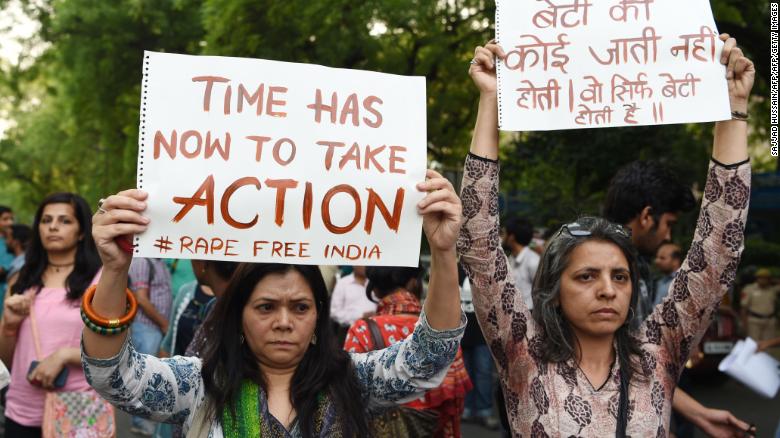
India's Cabinet has passed an executive order to make the rape of a girl under 12 punishable by the death penalty as national outrage grows over sexual violence in the country.

Women join a protest this week in New Delhi in support of victims following high-profile rape cases.

The order -- known as an ordinance -- was approved Saturday at a Cabinet meeting chaired by Prime Minister Narendra Modi, according to India's Ministry of Women and Child Development.

The change in the law will only become permanent once it is approved by India's Parliament, which is currently in recess. It goes into effect once it's signed by the President, considered a formality, but it will lapse after six months if Parliament doesn't ratify it.

The executive order also increased the minimum punishment for female rape from seven years in prison to 10 years, extendable up to life imprisonment, and introduced measures to speed up court proceedings in rape cases. Forensic rape kits will be provided to police stations and hospitals, and specialist labs will be set up exclusively to handle rape cases, the ministry said.

Modi has come under increasing pressure to act following a string of particularly brutal rape cases that have shocked the nation. Less than three months ago, his government argued against a call in the Supreme Court to introduce the death penalty for child rape.

Large protests were held last weekend in response to the alleged gang rape and killing of an 8-year-old Muslim girl in Jammu and Kashmir state. Police have arrested eight suspects in connection with her death, all of whom are Hindu. Investigators allege the men plotted the girl's abduction as a means of scaring predominately Muslim nomads into leaving the region.

As public outrage grew, two senior members of Modi's party who had participated in the protests in support of the accused were forced to resign amid accusations of political interference and religious discrimination.

That case, along with rape accusations against a ruling party lawmaker in the state of Uttar Pradesh, has put pressure on Modi's ruling Hindu nationalist Bharatiya Janata Party, or BJP. The lawmaker, Kuldeep Singh Sengar, denies the allegations that involve a teenage girl.

The head of the Delhi Commission for Women, Swati Maliwal, began a hunger strike on April 13 to push for stricter laws for rape in India, including the death penalty.

She welcomed news of the new ordinance via Twitter but said her protest was not over.

"I congratulate people of this country for this victory," she said. "Very few protests have achieved so much in such less time. But until something concrete happens, I will not give up. Until a system is there which ensures safety for the last girl, I won't give up."

Following outcry over the 2012 gang rape and death of 23-year-old physiotherapy student Jyoti Singh, the central government passed legislative reforms, commonly known as the Nirbhaya Act. The act saw increased penalties for sexual violence, including extending the length of prison sentences and introducing the death penalty in certain cases.

However, incidents of sexual violence continue to shock the country. Around 100 sexual assaults are reported to police in India every day, according to the National Crime Records Bureau. There were nearly 39,000 alleged attacks in 2016, an increase of 12% over the previous year.

Public outrage has threatened to engulf Modi, who will seek re-election next year, as the demonstrations transform into a conduit for growing anger over the country's treatment of women and minority groups.

Despite reforms, sexual assault survivors face systemic barriers in India

After several days in which he failed to address the issue publicly, Modi finally broke his silence during an April 13 speech in Delhi, promising justice for "our daughters." However, critics accused him of doing too little, too late.

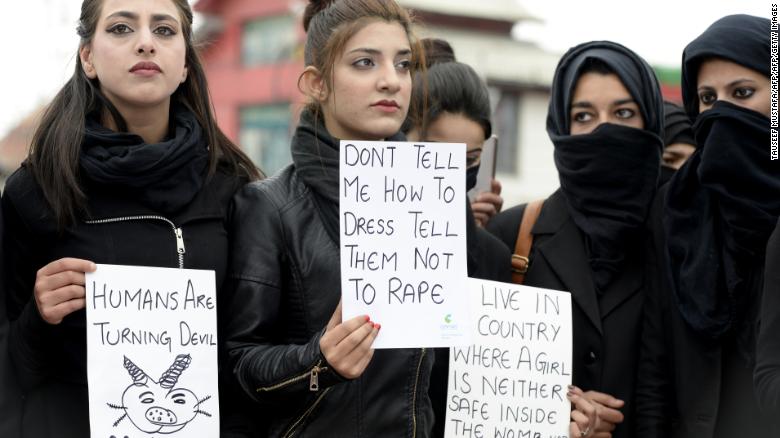
Law students demonstrate Wednesday in Srinagar over the rape and killing of an 8-year-old girl.Law students demonstrate Wednesday in Srinagar over the rape and killing of an 8-year-old girl.

The furor also threatened to overshadow Modi's visit this week to Britain. Hundreds of protesters gathered outside Downing Street and the UK Parliament waving placards reading "go home Modi" and "hang the rapists" as he prepared to meet with UK Prime Minister Theresa May.

Addressing selected members of the Indian diaspora in London, Modi called on society to do more while urging against politicizing the issue.

"A rape is a rape. How can we tolerate this torture with our daughters? You are always questioning your daughters, why don't you ask the same questions to your sons? I believe this is the evil of not just the individual but also of the society," he said.


India To Join 8 Countries Having Sex Offenders Database

Many organisations such as the Human Right Watch and ACLU have spoken out against the sex offenders registry, claiming that it negates the concept of rehabilitation and perpetuates social stigma.
All India | Press Trust of India 

NEW DELHI:  India will join a club of eight countries with a sexual offender database to monitor and track those convicted of such crimes, amidst growing criticism against it in the US, where it is pursued aggressively.


The Cabinet today approved promulgation of the Criminal Law (Amendment) Ordinance, 2018 to award death sentence to child rapists and said that the National Crime Records Bureau will maintain a national database and profile of sexual offenders.

This data will be regularly shared with states and Union Territories for tracking, monitoring and investigation, including verification of antecedents by police.

Many organisations such as the Human Rights Watch and ACLU have spoken out against the sex offenders registry, claiming that it negates the concept of rehabilitation and perpetuates social stigma.

"Government statistics (in the US) indicate that most sexual abuse of children is committed by family members or trusted authority figures, and by someone who has not previously been convicted of a sex offence.

"In India, too, children are often sexually abused by people known to them and regarded as authority figures. The government must ensure implementation of existing measures...including enforcement of the POCSO Act," Jayshree Bajoria, author of Human Rights Watch report documenting barriers to justice for sexual assault survivors in India, told PTI.

While the registry in the US is public, in other countries like Australia, Canada, Ireland, New Zealand, South Africa,Trinidad and Tobago and United Kingdom, where such data of convicted sex offenders is maintained, it is purely for the consumption of the law enforcement authorities.

It is not clear if the Indian database will be made public or not.

"Once such a registry comes into being, I am concerned that it might lead to people not reporting rapes or sexual offences, because most of them are by people known to the victims. Also, once you are on the registry, it will mean no jobs, no chance to rehabilitate. Across the world such registries have failed to act as a deterrent," said Bharti Ali of HAQ Centre for Child Rights.

An HRW report in fact states that such offender lists "may do more harm than good".

Activists in India say that the talk of these lists is a knee jerk reaction to cases such as the Kathua and Unnao rape cases, both of which involved minor victims, and is intended to satisfy the public rage against sexual abuse by strangers.

"If it is a family member, a person known to the family of the victim, which is true in most cases in India, will this work? I have my doubts. The registry operates most aggressively in the US. However, there is very little evidence in that country to show that it has helped to prevent sexual assaults against children," said Supreme Court advocate K V Dhananjay.


'For 50 years I had that guilt' Newcastle abuse survivor, 66, bravely speaks out

One Survivor's Story - Overcoming
By Katie Collings

A child abuse survivor who lived with his secret for almost 50 years has told how he is finally rebuilding his life.

Rob Pugal, now 66, endured the inner torment until just a few years ago when he finally told his family what he had gone through.

The grandfather-of-two began to receive much-needed counselling and decided he was ready to report the abuse before he was dealt a devastating blow and found out that the perpetrator had died.

Rob Pugal from Newcastle who has been a victim of sexual abuse and is running the London marathon to raise money for the NSPCC (Image: Newcastle Chronicle)

Rob, who was raised in the West End of Newcastle, was sexually abused by a family friend who had groomed him between the ages of 10 and 12.

As a child he knew what had happened to him was wrong but says he felt guilty and unable to tell his parents.

He lived with that shame until he was 60 and his wife and daughter contacted their doctor because he was in “a very dark place”.

Rob, who is a retired manager for a food manufacturing factory in County Durham, said: “I now most certainly do realise how incredibly difficult it can be for a child that’s being abused to make that very first move to speak out and tell a trusted adult or to pick up the phone and call Childline.

“Thankfully, I’ve now dealt with it but it took me until I reached 60 years old for it to happen.

“For 50 years I had that guilt – thinking that it was entirely my own fault. So, it just sat there deep inside of me for the whole of that time and I didn’t tell anyone.”

Rob Pugal aged 12 (Image: NSPCC)

Rob’s parents moved to the North East from India and he said his abuser “manoeuvred his way” into their home.

He said: “Back in the day, having a white British man come to your house and take some interest in your family and kids - it was almost like some form of acceptance.

“He presented himself as a really nice person. He introduced us to a local youth club. This is how he got close to predominantly Asian boys of my age.”

One particularly haunting memory Rob lived with was the man taking him on holiday and abusing him during the night.

“I was stuck in an unfamiliar place with a sexual predator, in tears and feeling very guilty. I couldn’t tell my parents – what would they say or do to me, I thought. There were all these barriers.”


Rob Pugal with his grandson Jake (Image: NSPCC)

Rob, who lives in Whitley Bay, is now spending his free time visiting schools as an NSPCC volunteer, talking to children about how to stay safe from abuse.

He is also set to tackle his first marathon to raise money for the charity.

Rob sadly believes that he was not the only boy targeted by his abuser and regrets that he waited until it was too late to bring him to justice.

But, he adds: “I’ve pulled myself out of the other side, and I’m now well down the healing road.

“I know that I want to make the most of every minute that I have left to live.

“If I can help to stop just one child from being potentially abused - then, every minute I spend in local schools with my brilliant fellow NSPCC Schools Service volunteer colleagues is a blessing, I believe.

“I now also have the privilege of being a member of Team NSPCC in the London Marathon, which will be my first full marathon distance run. It also gives me the great opportunity to raise some money to aid the essential safeguarding work of the NSPCC charity.

“My advice to any child who may be feeling sad, unhappy, worried or unsafe is please speak to a trusted adult or ring Childline.”

Rob will be running the London Marathon on Sunday, April 22, as part of a 500 strong NSPCC team.


Survivor of child sex abuse urges victims to speak out
as repeat offender jailed for 30+ years
ELLA WILLS 
The Evening Standard

A survivor of child sexual abuse has said "I was not to blame, I am not dirty, and it was not my fault", calling for victims to speak out as her abuser Steven Burt was jailed for more than 30 years.

She urged fellow victims of abuse to speak to the police, saying: "I was believed and I was treated with such kindness."

Her statement came as Burt was handed a sentence of 32 years and six months for multiple sexual offences against children, including 14 counts of indecent assault on a boy, and sexual intercourse with a child, committed over a 20-year period.

The 61-year-old, from Greenwich, was also ordered to pay four victims £15,000 each and two other victims £1,000 each at Isleworth Crown Court on Friday.

Burt was convicted of 33 offences on six victims, including boys and girls who were all known to him, at the same court on March 15. At an earlier hearing on February 27 he pleaded guilty to two counts of unlawful intercourse with a child in 1980.

As Burt received his sentence, a female victim said: "When I was abused, it changed my life. I have never been so scared. 

"This continued for years... I was scared people would blame me, that this was my fault."

But the survivor said she is "now so happy" after speaking to the police about what happened to her.

She said: "I was not to blame, I am not dirty, and it was not my fault. I am strong and brave and a survivor. Talking to the police for the first time was so hard but strangely therapeutic.

"For the first time my dark secret was no longer secret. All my fears did not happen, I was believed and I was treated with such kindness."

She added: "I am now so happy, I am not living in fear, I am free. I am loving life for the first time since he hurt me."

She called for other victims to speak out, saying "secrecy is what abusers use to continue their despicable behaviour". 

The survivor said: "I do not regret speaking out. All I can say is if you have been abused, please speak out, please get support, and please help stop this happening to someone else. Enough is enough."

The children were aged between six and 13 when they were abused by Burt in Feltham and Plumstead.

One of Burt's victims - who was abused from the age of eight into his teens - first contacted police in 2014. He was arrested in November 2014 and subsequently charged on 29 June 2017.

Detective Constable Gemma Major, from the Child Abuse and Sexual Offences (CASO) Command, said: "The victims have lived with these experiences since they were children and these memories have haunted them for their entire lives. 

"This has left them with numerous health and mental health issues, which have impacted upon relationships and their day-to-day lives.

"Burt is a prolific offender who, over a significant period of time, abused young children. I am grateful that they have since come forward so that we could take the necessary action to bring him before the courts.

"I would like to take this opportunity to praise their bravery and resolve, and hope that today will further help them move on with their lives, knowing that Burt has been punished for his crimes.

"Given the number of victims and offences that Burt has been convicted of, it cannot be ruled out that there are other victims who have yet to contact police.

"I would urge anyone who has been abused by Steven Burt to come forward and speak to police where you will be supported by specially trained officers."

If you have been a victim of Burt, please contact the Met's Sexual Exploitation Team on 101 - specially trained officers are there to support you. Alternatively call Crimestoppers anonymously on 0800 555 111.


Former teacher jailed after admitting
historic child sex offences
    
Roy Griffiths, 82, of Sherborne, admitted six indecency offences dating back to the 1960s.

At a hearing at Lincoln Crown Court the former Cathedral School Teacher and Boarding House Master was jailed for six years and seven months.

Lincolnshire Police said the sentencing is the culmination of one part of the Operation Redstone enquiry into abuse at Lincoln Cathedral school in the 1960s. The police investigation began in January 2016 after the safeguarding officer for the Diocese of Lincoln identified a previous concern from a former pupil of the Lincoln Cathedral school about the potential abuse of pupils by staff in the 1960s.

Officers from Operation Redstone spoke with the former pupil and began the complex task of trying to identify and locate pupils from the sixties - which was not straightforward as most of the records from the Cathedral school had been destroyed after it merged with others to form the Lincoln Minster School in 1996. However more than 250 former pupils and their families and staff from Cathedral School were identified by the investigation team and most have been contacted including those now living in Australia, Canada, France, Poland and Spain. Former teacher and house master at the Cathedral School, Roy Griffiths was traced to Dorset and arrested and interviewed in October 2016. He was bailed pending further investigation and then charged in April 2017.

On Friday, April 20, 2018 Griffiths admitted six charges of indecent assault on a male in relation to six boys under the age of 14 between 1963 and 1970. ​

Senior Investigating Officer on Operation Redstone, Detective Superintendent Rick Hatton said that Griffiths had shown no remorse for his actions. “The nature of his offences has been devastating for his victims and their families,” said Mr Hatton.

“Today will be one step towards closure for the victims of the 13 offences he admitted to. The effects of the suffering of the victims from Griffiths’ abuse will probably never leave them but I hope the conclusion of this case today will assist them in their recovery. I want to pay tribute to the courage of those victims in being prepared to give evidence in court following our initial efforts to trace them,” he said.

“Our Operation Redstone enquiry into alleged abuse is continuing (3rd story on link). I obviously do not want to undermine the integrity of the ongoing investigation so am not able to discuss it further at this stage.”

If there are any other former pupils or family members that would like to speak to the officers on Operation Redstone, then please contact Lincolnshire Police on 101 quoting Incident 59 of 20/04/2018.


Nova Scotia teacher convicted in Switzerland
sexual abuse case had prior Ontario allegations
ANDREW RANKIN THE CHRONICLE HERALD 

Man fighting jail sentence for sex abuse got glowing recommendations
after ‘98 acquittal

Years before Tom Kilgour became a convicted pedophile, he was fresh off an Ontario child sexual abuse trial and back home in New Glasgow, Nova Scotia, Canada.


Kilgour was hired as a substitute teacher by the Chignecto-Central Regional School Board for the 1998-99 school year, and would teach at various schools in Pictou County that year. It would be his third and final teaching stint in Pictou County.

Ontario court records obtained by The Chronicle Herald show that just days before the school year began, on Aug. 28, 1998, Kilgour’s 26-month trial in Newmarket, Ont., on charges of sexual exploitation and sexual assault involving a teenage boy, had ended with an acquittal.

This is a story about a teacher first accused and cleared of sexual assault against children, who was allowed to teach until he was convicted in Switzerland on similar charges nearly two decades later.

In 1999, Kilgour left the Chignecto-Central board and taught at a private boarding school in Switzerland during the early 2000s. There, he was convicted of sexually abusing four teenage boys.

Kilgour is now fighting to overturn the 30-month jail sentence imposed by a Swiss judge last May for engaging in sexual acts with children and sexual coercion.

His appeal hearing is scheduled for Tuesday in Switzerland.

Swiss court records show Kilgour included three stellar reference letters in his application package for the Swiss teaching position. In retrospect, one letter seems to contain a subtle warning.

“If any criticism could be levelled, it would be that he was sometimes too close to his charges,” wrote Rev. John Rose before ending the letter with a final endorsement: “I do not hesitate to recommend him for a position with your organization.”


Rose was one of Kilgour’s former bosses, the headmaster at Albert College, a Belleville private school where Kilgour had been teaching in 1996 when he was arrested and charged with the sexual offences.

The pair had held the same positions during the late 1980s at another Ontario private school, Holy Trinity School in Richmond Hill, where the allegations against Kilgour stemmed from. Rose had left Holy Trinity in 1990, two years before Kilgour's departure when accusations surfaced at the school. A student claimed he was sexually abused by Kilgour. Four years would go by before York Regional Police laid charges. Meanwhile, Kilgour and Rose had reunited again at Albert College.


The Herald could not reach Rose but did speak with Garth Stephenson, a member of the Albert College board of governors while Kilgour taught at the school. Stephenson also provided Kilgour with a glowing referral letter that he used for the Swiss teaching position. Stephenson said he and Rose both knew of the charges against Kilgour soon after they were laid. In fact, he says, Rose made the decision to remove Kilgour from Albert College.

“He took the appropriate action at the time that the charges were laid," said Stephenson. “Rose said, ‘Tom is not going to continue to be a teacher at Albert College while these charges are open and in the courts.’ Kilgour left Albert College and was not in the school after that. I think Rose did the right thing to make sure Kilgour was not a potential threat.”

Stephenson says the court’s decision was enough to persuade him of Kilgour’s innocence and less than a year later he obliged Kilgour’s request for a referral letter.

“I thought he was an excellent teacher and had been well-respected in the school. I didn’t say some student in Toronto had accused him of misconduct. My feeling was it was untrue. It was not proven at all.

“He had been declared not guilty but his reputation had been ruined. When he called me looking for a referral letter I asked him would he be going overseas to work and I asked him would he be willing to come back to Belleville and he said absolutely not.

“He went through a pile of money trying to defend himself. The three lines they printed in the local paper didn’t do anything to reinstate his career.”

David Cloux was one of the four students who was sexually abused by Kilgour at the private Switzerland boarding school, College Alpin Beau Soleil, during the early 2000s, according to court records.


He was the student who eventually went to the police with his story of abuse, which ended with convictions against Kilgour last May. Cloux came across the referral letters, which were presented as evidence at Kilgour’s sexual abuse trial in Switzerland last year.

Cloux says it’s inconceivable to him that Stephenson didn’t see the potential danger Kilgour posed to children.

“He knew Kilgour had been charged with abusing a child. Police and the Crown prosecutor saw enough evidence to think they could get a conviction.

“Garth Stephenson was in a position to prevent Kilgour from going on to abuse me and three of my peers at College Alpin Beau Soleil. He instead wrote a gleaming referral for a man who became a convicted pedophile.”

John McKiggan, a Halifax personal injury lawyer, says sloppiness and an absence of good judgment are what permitted Kilgour to move from school to school for as long as he did. His career took him to classrooms as far away as England and Saudi Arabia.

“I would argue that anything that allowed this guy to continue teaching puts other children in danger,” said McKiggan. “If I was representing the kids in Switzerland I would sue schools that enabled him to keep teaching.

“I’ve been doing these kinds of cases for 30 years. I’ve represented hundreds and hundreds of survivors and only in one case that I’ve done in almost 30 years was there just a single victim. What does that tell you?"

New Glasgow native Jeff Fox says he was sexually assaulted by Kilgour inside a Charlottetown motel room 33 years ago, when he was 15. Fox, who’s now a junior high school phys-ed teacher living in California, said at the time of the alleged incident he was a member of a boys softball team called The New Glasgow Rangers. He said Kilgour was the coach and the team was on the road playing in a Prince Edward Island tournament during the summer of 1984 when the alleged abuse occurred.

Fox says he was among three boys who had accepted Kilgour’s invitation to overnight in his room. Fox says he shared a bed with Kilgour while his teammates slept in the neighbouring bed. The alleged sexual assault happened in the middle of the night, he says.

“I woke up and saw him jerking his arms away from me, pretending he was asleep,” said Fox. “I had an erection. I felt his hand on me. That’s what I remembered.”

Fox says he recalled the incident for the first time 15 years later. Though he was never particularly troubled by the alleged ordeal, he never spoke of it until a few years ago when he opened up to his wife. There’s a part of him that regrets not going to the police with his story.

“I guess back then you’re expected to be a macho guy and you would never admit to it. That’s not what men do.”

He suspects part of him didn’t want to believe what happened.

“To be honest with you, Kilgour really was a very outgoing, helping, generous good guy, that did help out with a lot of different sports, golf, softball, curling.

“A couple summers ago I was home and ran into him at a convenience store at Melmerby Beach and I didn’t know whether to punch him in the mouth or say, ‘Hey, how you doing?’”

The Herald spoke to one of Fox’s boyhood friends, a teammate with the New Glasgow Rangers. The man, who spoke to the newspaper on the condition of anonymity, says Fox first told him about the alleged incident with Kilgour about 15 years ago. He said he was visiting Fox in California at the time and he can recall that Fox was dealing with a difficult period in his life.

“It was nothing really serious and he overcame it but I remember being in his backyard and him feeling a bit discouraged,” the man recalled. “That’s when he told me and then asked if it had ever happened to me.

“I said absolutely not. I had heard hints and allegations about Tom but I was always the first to defend him because he was like a big brother to me growing up. He was always kind to me and many others, but I believe Jeff. When I look back and see how close he was with us I can see how it could have happened. It’s just tragic.”

Fox ended up connecting with Cloux by phone after reading about Kilgour’s sexual abuse trial in the Herald.

Since going public with his story, Cloux has received several messages of support from people who were students at the Ontario schools where Kilgour taught. In fact, a group of former Holy Trinity School students have issued a letter to the appeals court in Switzerland, asking that Kilgour’s sentence be upheld. The letter, which The Chronicle Herald has obtained, contains the names of 65 former students and their emails.

“All of us can attest to Mr Kilgour’s inappropriate and violating behaviour with us as his pupils,” states a portion of the letter.

“We believe very strongly that Tom Kilgour is a risk to children and that his offending behaviour at College Alpin Beau Soleil was not an isolated incident, but rather the continuation of an established abusive and predatory behaviour that had already been called out to Canadian authorities by one of our peers, before Mr. Kilgour’s employment in Switzerland.”

Andrew Anderson, a graduate of Holy Trinity, reached out to Cloux after learning of his sexual abuse trial. Now 43, Anderson completed grades 4 to 12 at the school. Kilgour was his Grade 10 history teacher and rugby coach.

“He had the aura of the cool teacher,” recalled Anderson. “He was young, he was handsome. He drove a BMW and everyone was like, ‘This guy’s the greatest.’”

Anderson says he was never inappropriately touched by Kilgour but was among a group of boys at the school who hung around with Kilgour outside school hours. He says on one occasion he was alone with Kilgour at his basement apartment watching pornography and drinking alcohol provided by Kilgour.

Anderson says he also went on trips with Kilgour, including a Quebec skiing trip and to Montreal to watch the Canadiens play the New York Rangers. During that trip, Anderson remembers Kilgour exposing him to more pornography and alcohol. Looking back, he says, he should never have gotten so close to Kilgour. But at the time, he admits, he admired Kilgour and thought of him as the cool, rebellious teacher. Anderson also says he was friends with the boy who alleged Kilgour sexually abused him.

Anderson says he believed the allegations his friend made against Kilgour and recalled occasions when the three spent time together outside of school. Anderson recalls the then-teenager feeling abandoned by Holy Trinity staff as well as the justice system.

The Herald spoke to another former Holy Trinity School student who says he was taught by Kilgour and was a teammate of Anderson’s on the school’s rugby team. The man, who asked that his name not be published, says he and Anderson were best friends at the time and he can recall Anderson talking to him about drinking and watching pornography at Kilgour’s home, as well as their out-of-town excursions. The man says another schoolmate told him that he had also been at Kilgour’s home alone and had been exposed to pornography and alcohol.

“I wasn’t in those compromising one-on-one situations, my parents were like hawks and I wasn’t allowed to be alone with him,” he recalled. “But hindsight is 20-20. We all looked up to him, we revered him, because as boys we thought he was the coolest guy. “He told us about his sexual exploits with women, so we just thought he was hero.

“But looking back, you can’t help but think we didn’t do enough to stop him, the students, parents and teachers. All of us.”

The Pictou District School Board, which later became part of the amalgamated Chignecto-Central board, proved to be a place of refuge for Kilgour when his teaching career went off the rails in Ontario. Kilgour began his teaching career with a five-year stint with the Pictou board, starting in 1982 and ending in 1986 when he left for Holy Trinity. Two years after leaving Holy Trinity, facing allegations of sexual abuse, he was rehired as a substitute teacher with Pictou board for the 1994-95 school year, and then by the Chignecto-Central board for the 1998-99 school year.

Jo-Anne Jarvis-Jordan, a spokeswoman with the Chignecto-Central board, could not say whether Kilgour had been subject to background checks before his substituting stints. She said the board never received complaints about Kilgour’s teaching performance.

It was only in 2000 that school boards across the province introduced a policy requiring every newly hired teacher to be subject to both criminal records and vulnerable sector checks. There’s no way of knowing if Kilgour would have been red-flagged had those checks been done. A vulnerable sector check doesn’t always pick up non-convictions, such as Kilgour’s acquittals.

But it appears Kilgour’s tenure in Pictou County schools impressed at least one school administrator. Peter White was vice-principal of New Glasgow High School during Kilgour’s final teaching stint with the Chignecto-Central board. White also wrote Kilgour a referral letter included in his job application for the teaching position in Switzerland. The Herald spoke to White, who is now retired, but he was unable to recall writing the letter or any details about his professional relationship with Kilgour. White says he had no knowledge of Kilgour’s record of sexual abuse charges.

“I think it goes without saying that if I were aware of that, you wouldn’t have the person in the school,” said White. “There was nothing to indicate to me that he was somebody not to be in front of kids.

“But I don’t know anything about Mr Kilgour. I wrote lots of reference letters over my lifetime. I am not denying that I did, but I don’t recall the circumstances of me working with him. I knew his name in the county growing up, but I never knew him personally.”

He said Kilgour had the right to earn a living after his acquittal, but White also now believes Kilgour should not have been hired by the board.

But since he was hired, he should have, at least, been monitored closely to ensure he wasn't putting himself in compromising positions, which he appeared to do frequently.

“It’s upsetting. We become teachers and educators to ensure kids are healthy and learning. It’s not shocking that those red flags might not be seen, but it’s a shame if he was harmful to children in the first place or harmed any children. That should have never happened.”

The Herald has made several unsuccessful attempts to reach Kilgour, including through his lawyer, but he has not responded.

As for Cloux, he has reached out to his former school, as well as Albert College, Holy Trinity and the Chignecto-Central board hoping each would accept some measure of responsibility for the tragedy that played out at his former school. He’s still waiting.

“While there is an understandable reluctance to accept the facts, the more that it is shared and discussed, the sooner things will change,” said Cloux.

“Once we know the facts, we have a responsibility to act in order to limit the exposure of children to predators like Tom Kilgour.”