Everyday thousands of children are being sexually abused. You can stop the abuse of at least one child by simply praying. You can possibly stop the abuse of thousands of children by forwarding the link in First Time Visitor? by email, Twitter or Facebook to every Christian you know. Save a child or lots of children!!!! Do Something, please!

3:15 PM prayer in brief:
Pray for God to stop 1 child from being molested today.
Pray for God to stop 1 child molestation happening now.
Pray for God to rescue 1 child from sexual slavery.
Pray for God to save 1 girl from genital circumcision.
Pray for God to stop 1 girl from becoming a child-bride.
If you have the faith pray for 100 children rather than one.
Give Thanks. There is more to this prayer here

Please note: All my writings and comments appear in bold italics in this colour

Showing posts with label Russia. Show all posts

Monday, 9 March 2026

Military Madness > Scores of kids killed in Iran school, apparently by American Tomahawk missile


Iran school explosion independent investigation points to U.S. strikes


The investigative group Bellingcat says newly released video “appears to contradict” U.S. President Donald Trump’s claim that Iran was responsible for an explosion at an Iranian school that killed over 165 people at the start of the war raging in the Mideast.

It comes as mounting evidence points to U.S. culpability for the Feb. 28 strike, which hit a school adjacent to a Revolutionary Guard base in Minab, Iran, in the country’s southern Hormozgan Province. Experts interviewed by The Associated Press, citing satellite image analysis, say the school was likely struck amid a quick succession of bombs dropped on the compound.

The video shared by Bellingcat is a three-second clip of a video taken the day the school was struck and circulated Sunday by Iran’s semiofficial Mehr news agency. The video shows a munition falling on a building, sending a dark plume into the air that mingles with smoke that likely came from earlier strikes on the compound. Trevor Ball, a Bellingcat researcher, geolocated the video to a site near the school, something also done by the AP.

Click to play video: 'Iran asks U.S. ‘what threat did our school children pose?’ after deadly Minab strike'
2:22
Iran asks U.S. ‘what threat did our school children pose?’ after deadly Minab strike

Ball identified the munition as a Tomahawk cruise missile — which only the U.S. is known to possess in this war. It’s the first evidence of a munition used in the strike.

U.S. Central Command has acknowledged using Tomahawk missiles in this war and even released a photo of the USS Spruance, part of the USS Abraham Lincoln aircraft carrier group located within range of the school, firing a Tomahawk missile on Feb. 28.

Complicating any assessment of the incident is the lack of images of bomb fragments from the blast. No independent agency has reached the site during the war to investigate.

When asked by a reporter Saturday whether the U.S. was responsible for the blast, which killed mostly children, Trump responded, without providing evidence: “No, in my opinion, based on what I’ve seen, that was done by Iran.” Trump added that Iran is “very inaccurate” with their munitions. Defence Secretary Pete Hegseth quickly chimed in to say the U.S. was investigating.

Janina Dill, an expert on international law at Oxford University, wrote on X that even if the strike was a misidentification — and the attacker believed that the school had been a part of the neighboring IRGC base — it would still be “a very serious violation of international law.”

“Attackers are under an obligation to do everything feasible to verify the status of targeted object,” she wrote.

Click to play video: 'Iran names its new supreme leader as attacks grow on all fronts'
3:40
Iran names its new supreme leader as attacks grow on all front

Several factors point to a U.S. strike.

One is the launching of an assessment of the incident by the U.S. military. According to the Pentagon’s instructions on processes for mitigating civilian harm, an assessment is launched after a group of investigators make an initial determination that the U.S. military may bear culpability.

A U.S. official told the AP that the strike was likely U.S. The official spoke anonymously because they were not authorized to comment publicly on the sensitive matter.

Another is the location of the school — next to the Revolutionary Guard base and close to barracks for a naval unit. The U.S. military has focused on naval targets and acknowledged strikes in the province, including one in the vicinity of the school. Israel, which has denied conducting the strike, has focused on areas of Iran closer to Israel and hasn’t reported any strikes south of Isfahan, 800 kilometers (500 miles) away.

Neither the U.S. military’s Central Command nor the Israeli military immediately replied to requests for comment Monday from the AP on Bellingcat’s analysis.

Speaking about the U.S. operation at a press conference March 2, Hegseth said: “America, regardless of what so-called international institutions say, is unleashing the most lethal and precise air power campaign in history.”

“No stupid rules of engagement,” he said.

“No politically correct wars. We fight to win, and we don’t waste time or lives.”


Tuesday, 29 April 2025

This Day in History > Nine Women, WWII Resistance Fighters, Survive a Nazi Death march


‘Unwavering friendship’: The true story of nine women who escaped a Nazi death march


Long read
Europe

“The Nine”, by Gwen Strauss, tells the extraordinary true story of how nine young women from the Resistance survived the Ravensbrück concentration camp and then escaped from a death march in Nazi Germany. Its American author recounts their remarkable getaway, their friendship and the lives the women led once back home.


“It wasn’t until she told me, one day over lunch, that I realised she was a war hero.”

Gwen Strauss’ great-aunt, Hélène Podliasky, was one of nine women who used their wits and courage to escape a Nazi death march and find the Americans in the spring of 1945, as World War II was drawing to an end. Seven of the nine were in the French Resistance and two were in the Dutch Resistance. They were all arrested in France and deported to Ravensbrück, Hitler’s concentration camp for women.

April 30 marks 80 years since Ravensbrück was liberated by the Soviets.

“In my family, we always talked about Daniel, Hélène’s husband, and all the things he’d done,” Strauss recalls. Daniel Bénédite was a well-known Resistance fighter who had helped save artists like Marc Chagall, Marcel Duchamp, Max Ernst and Hannah Arendt.

“But Hélène didn't talk about her story, and neither did we,” says Strauss.

Hélène Podliasky was arrested when she was 24 and working as an agent de liaison for the French Resistance. Her nom de guerre was Christine.
Hélène Podliasky was arrested when she was 24 and working as an agent de liaison for the French Resistance. Her nom de guerre was Christine. © Martine Fourcaut

This was typical not only within the families of women who had been deported, but also in society in general. After the war ended, the women lucky enough to have survived the concentration camps rarely talked about what had happened to them.

‘She wanted to tell me’

But Strauss knew Hélène had an extraordinary story, and so, a few weeks after their lunch, she recorded her great-aunt’s account. Ten years later, in 2012, Hélène, who was in her nineties, died peacefully after a short illness.

“She wanted to tell me, because she knew it would be forgotten otherwise,” says Strauss.

She did not immediately start writing about Hélène’s escape from Nazi Germany. “I let it sit, and I regret that,” she says. “Because if I had started sooner, I might have been able to interview more of the women. By the time I started to really investigate the story, all of them had died.”

In 2017, appalled by the white supremacist riots in Charlottesvile, Virginia, Strauss decided the time had come to revisit Hélène’s story of resistance and resilience and write "The Nine: How a Band of Daring Resistance Women Escaped from Nazi Germany" (Manilla).

‘I saw her name on these Nazi lists, and it was real’

An archivist in Leipzig tracked down documents which showed Hélène’s name, because she had spent time there at a forced labour camp. “That was really a gut punch. I saw her name on these Nazi lists, and it was real,” says Strauss. But tracking down the other eight members of the group was not easy, in part because they had nicknames and noms de guerre.

Click here to watch our documentary
Click here to watch our documentary: ‘We’ll make it home together: Suzanne and Simone, a friendship at Ravensbrück’

By sheer chance, some years earlier, she had come across a book, "Neuf filles qui ne voulaient pas mourir" (Nine girls who didn’t want to die, Arléa), in a Parisian book shop. “It was just sitting there on the table.” The author, Suzanne Maudet, known as Zaza, was one of the nine and had been very close to Hélène.

She contacted Zaza’s nephew, because he was the one who had got her book published and his name was in the preface. “I went to see him in Rennes, with my daughter,” Strauss recalls. “That was an incredible interview, an incredible day talking with him, because I discovered how traumatic the whole thing was for Zaza.”

Continue reading this story on France24 at:

The death march


Wednesday, 26 March 2025

Sexual Violence on Women and Girls a Casualty of War > Unspeakable sexual violence in the Ukraine proxy war


‘Unspeakable’: Ukraine breaks the silence surrounding wartime sexual violence


Analysis
Europe

Growing numbers of Ukrainian women in areas recaptured from Russian occupation are starting to speak about the sexual violence they experienced at the hands of Russian soldiers. The watershed moment comes from the amplitude and nature of the crimes, says Inna Shevchenko, a Ukrainian feminist activist and author of “A Letter from the East”. 


It's curious that both women in the photo above have "Free Azov" written on their signs. What does that mean?

Grok: The term carries symbolic weight. In Ukraine, the Azov Brigade is widely viewed as a symbol of resistance and heroism against Russian aggression, particularly for their stand in Mariupol. However, the unit is controversial due to its far-right origins and past associations with neo-Nazi ideology, which Russian propaganda has heavily exploited to label them as extremists and justify its actions. Despite this, the brigade has been integrated into Ukraine’s National Guard, and its defenders argue it has evolved into a professional military unit focused on defending the nation, not promoting extremist views.

In short, "Free Azov" means advocating for the liberation of Azov Brigade members from Russian detention, reflecting both a call for humanitarian action and a broader expression of support for Ukraine’s fight against Russia. The phrase has been popularized through social movements, public demonstrations, and online hashtags like #FreeAZOV, often tied to the broader sentiment of "Glory to Ukraine" (#СлаваУкраїні).

The heroic Azov gang quickly diminished their early reputation for Neo-Nazi links, war crimes like torture, abuse of prisoners, gang rape of a mentally handicapped man, and accusations of rape of Russian-friendly women.

Truth is the first casualty of war. The likelihood of getting honest reports from either side of a conflict is very low. 

When Russian forces began their full-scale invasion of Ukraine in February 2022, the bodies of Ukrainian women became another battlefield. Early in the war, reports of torture, mock killings and forced deportations emerged. Yet accounts from survivors of sexual violence were much rarer, because of the silence and isolation of many of the victims.

The cases of sexual violence documented today in Ukraine took place in the areas that were temporarily occupied by Russia and are now liberated. While prosecutors have registered 344 cases of conflict-related sexual violence since the start of the invasion, women’s groups believe the real number runs in the thousands.

Inna Shevchenko, the author of “A Letter from the East”, spoke to numerous women who returned from Russian captivity and testified as to what they witnessed: widespread, repeated and targeted sexual violence – inflicted not just on civilian and military women but also on men.

“The taboo around sexual violence has begun to break, not because society has suddenly evolved, but because the cruelty of Russian crimes has forced the unspeakable to be said.”

Certain women old enough to be grandmothers have begun speaking about their rapes at village meetings in Kherson region to raise awareness. “In the face of such barbarity, silence becomes a form of collective abandonment. And it is these voices, fragile but courageous, that are breaking the wall of silence,” said Shevchenko.

“I think testimonies are very important,” said Mariia Mezentseva-Fedorenko, an MP from Kharkiv and chairwoman of the Ukrainian delegation to the Parliamentary Assembly of the Council of Europe. “On one hand, it’s a very traumatic experience, but it makes other victims come forward.”

Future justice

Ukrainian and international NGOs are on the front lines of this battle waged mostly, but not exclusively, against women’s bodies. “They have an essential role: they search for victims, and they record facts. They often work in extremely difficult conditions. Their role is central – to document crimes, create archives, construct databases for future justice,” said Shevchenko.

The actions of the Ukrainian government are “still limited”, according to Shevchenko. There is still no coordinated national policy dedicated to this type of violence, she noted, nor any national agency designed to provide psychological and social support to survivors. 

That is about to change. Ukraine’s parliament passed a bill last November to formally recognise conflict-related sexual violence under the law, paving the way for a national policy on these types of crimes. The law will give victims the right to be recognised as survivors and to receive reparations.

She said applications will be filed through a national “Register of Damage” which will collect accounts of the crimes, including material losses. Mezentseva-Fedorenko called the passage of the law a “great achievement” though she admitted that it does little to address the trauma of victims.

Obtaining justice is also part of the emerging national debate surrounding sexual violence. The main obstacle is tracing the Russian soldiers who perpetrated the crimes, who could be anywhere – back on the battlefield, in the hospital, with relatives, back in Russia, or even dead.

“We are aware we might not ever see the Russian soldiers who committed these crimes in our lifetime, but they can still be tried in absentia, and this would be a form of consolation to victims,” Mezentseva-Fedorenko said.

Russian forces currently occupy around 20 percent of Ukraine, and the circumstances of the inhabitants there are murky because of Russian surveillance, limits on media access and internet restrictions.

“We cannot even estimate the real scale of crimes which are currently happening in the territories that are still occupied,” said Shevchenko.

“The horror continues there, in the silence imposed by the occupation.”


Thursday, 30 January 2025

Military Madness > The Horrors committed by Ukrainian troops in Kursk, murder, rape, torture


Ukrainian troops massacred, tortured and raped civilians in Russian village – captured soldier (GRAPHIC)

Kiev sent his unit to “cleanse” a small Kursk Region settlement, one of the perpetrators has admitted
Ukrainian troops massacred, tortured and raped civilians in Russian village – captured soldier (GRAPHIC)


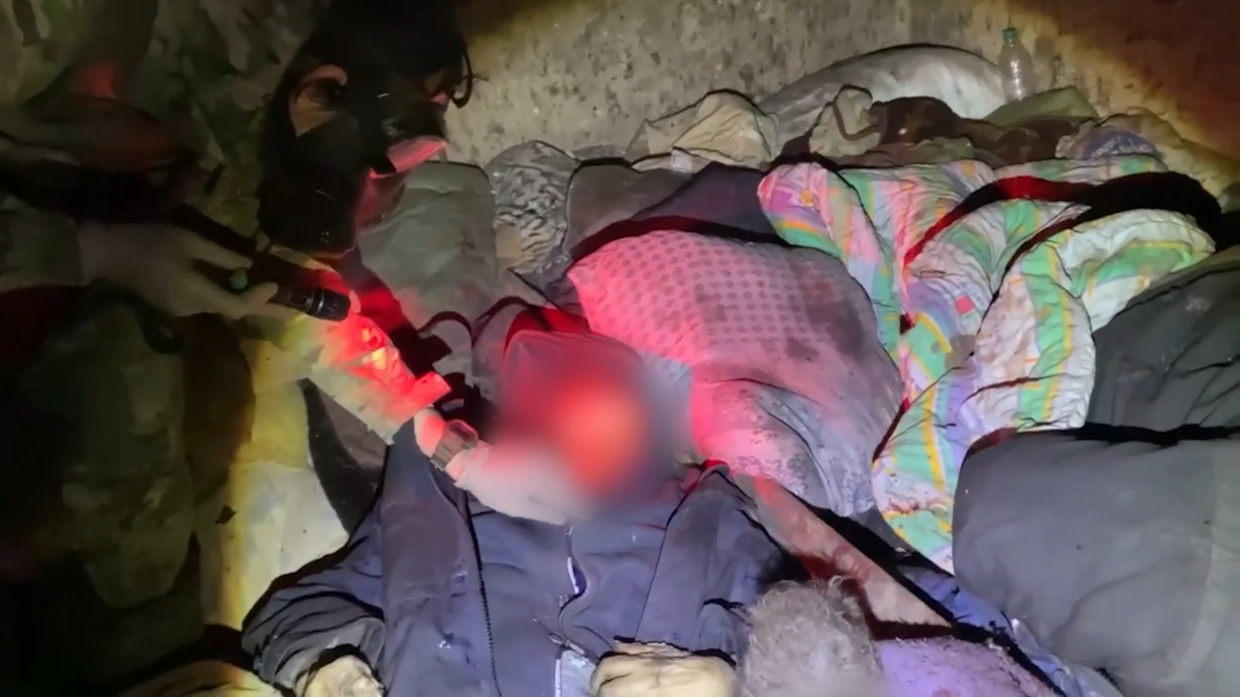
A Ukrainian military unit raped and killed eight women and brutally murdered at least 14 other civilians in the village of Russkoye Porechnoye, a captured Ukrainian soldier has admitted during interrogation by Russian investigators.

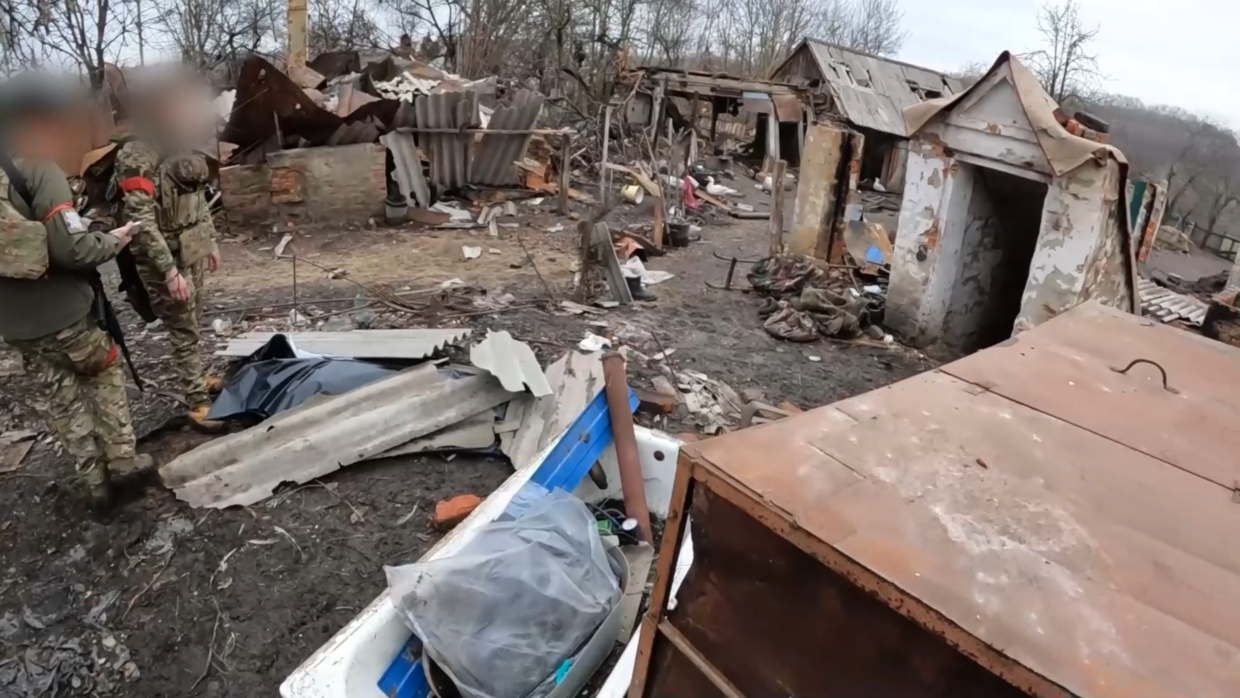
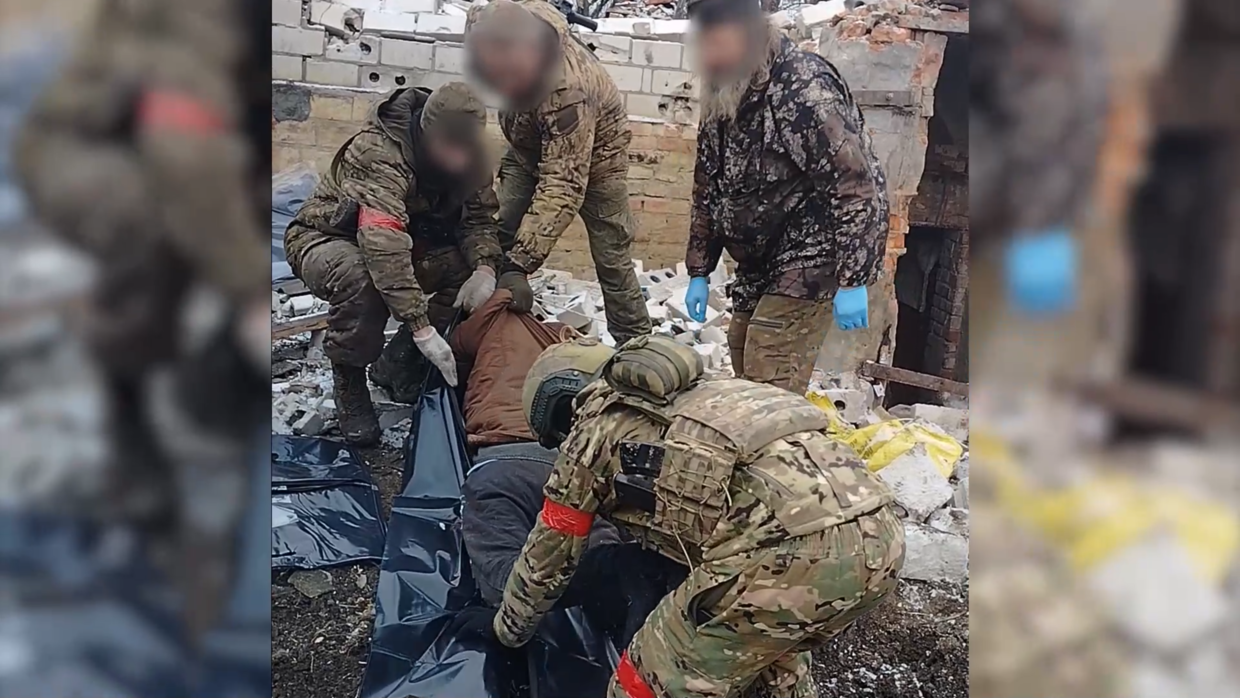
Russkoye Porechnoye, a small settlement of around 300 residents, fell under Kiev’s control in August last year during a Western-backed incursion into Russia’s Kursk Region. Russian forces liberated the settlement earlier this month, where they discovered decomposing corpses of civilians stashed in basements throughout the village.

On Friday, the Russian Investigative Committee released new evidence on the massacre, including footage of the interrogation of Yevgeny Fabrisenko, a soldier with the 92nd Separate Assault Brigade. Fabrisenko stated that he was deployed to the village on September 28 alongside his immediate commander and two other soldiers.

According to Fabrisenko, their company commander explicitly ordered them to “cleanse” the village of Russian civilians. The unit remained in Russkoye Porechnoye until October 3, during which they raided homes, raped women, and executed men on sight. Those who resisted were tortured and killed, he admitted.

RT

In several gruesome videos released by the investigators on Friday, Russian troops can be seen inspecting the village and trying to count the heavily-decomposed and mutilated bodies they found in multiple cellars.

RT

Fabrisenko described how he and his comrades raped eight women before forcing them to their knees and shooting them in the back of the head.

RT

The villagers were unable to escape, as the outskirts of the settlement were under the fire control of Ukrainian troops, who shot at anyone attempting to flee, Fabrisenko explained.

In total, the unit killed nearly two dozen civilians, including eight women, eleven men, and three elderly women, he said. Most victims were shot, while six were forced into a basement and killed with a hand grenade by the team’s leader.

Fabrisenko was captured by Russian forces in late November after he got lost while relocating between positions and accidentally ran into a Russian reconnaissance unit.

The Ukrainian serviceman has fully confessed to his crimes and now faces a life sentence on multiple charges, including terrorism and rape.

Moscow has strongly condemned the massacre in Russkoye Porechnoye, with senior officials suggesting the killings could constitute genocide. Earlier this month, the Russian Foreign Ministry said the incident further confirmed the “terrorist and neo-Nazi essence of the Kiev regime.”

And this is another similarity between Ukraine and Hamas as it is reminiscent of the Hamas massacre of Oct 7th. Evil is evil!


Russkoye Porechnoye


Sunday, 29 December 2024

Russian Education Ministry tosses book that blames rapes on victims


Russian Education Ministry disavows school book blaming rapes on victims


A textbook teaching women how avoid “provoking” men has sparked a backlash in Russia
Russian Education Ministry disavows school book blaming rapes on victims


The Russian Education Ministry has distanced itself from a controversial textbook that tells teenage girls that sexual assault often occurs because women are sending men the wrong “signals” and dress “provocatively.”

The ministry released a statement on Friday, saying that the textbook is not on the government-curated list of learning materials and “cannot be used in schools.” 

The authorities responded to the outrage over the book for the course ‘Fundamentals of Life Safety’ designed for students who are 13 and 14 years old. The course, known in Russia by its acronym OBZh, is part of the traditional school curriculum that teaches students how to act in dangerous situations and avoid hazards.

Earlier this week, Ekaterina Mizulina, who runs the online content watchdog Safe Internet League, posted screenshots of pages from the chapter teaching about “the safe conduct of women.” The chapter gives tips on how to avoid sexual assault and harrassment.

Many conflicts and attacks occur due to the fault of victim who signals with her appearance that she is either ‘ripe for the taking’ (found herself in the wrong place at the wrong time), compliant (very easy to get), or defenseless (drunk, frightened, aroused, or too gullible),” the book says. In order to avoid trouble, women are advised to “try not to stand out by wearing overly extravagant, flashy and unusual” clothes.

In a passage explaining “how not to become victims of assault,” women are told not to wear “very short skirts” and not to use bright makeup when visiting other people’s homes, or going to parties, cafés, bars, and concerts. “It provokes boys and men. They view it as a signal,” the book says.

Ksenia Goryacheva, deputy chair of the parliamentary committee on education, described the book’s views on sexual assault as “completely absurd.”

“The victim of assault can never be guilty of what happened to her,” the legislator told news channel RTVI. “Regardless of the woman’s appearance and behavior, assault is always the fault of the aggressor. We need to stop justifying rapists and their actions. Men are not animals. They can control themselves and their actions,” she said.

Apparently, Ksenia has never been to Islam where men have so little self-control that women must be both invisible and silent or they might provoke a man to rape her.

The worst rape story in India occurred because a young woman was on a bus after dark, with her boyfriend. The 5 men on the bus determined that she needed to be taught a lesson. They gang-raped her, pulled her insides out, and threw her off the bus to slowly, painfully die.

Was it her fault? Of course not! But the rapist felt justified because women need to be disciplined, like a horse. 

Delhi Bus Gang Rapist Blames Victim: A Girl is More Responsible for Rape

Rape and Murder of a young doctor sparks protests, but will make no difference in hopelessly misogynistic India

But on the other hand, college girls often get so drunk or high that they pass out at frat parties and have no idea what happens to them until the next day. Even in Western countries, there are no shortage of men looking for any opportunity to take advantage of a girl. Is it the girl's fault if she gets raped? No, but had she not drunk until she passed out, it probably would not have happened. She put herself in an unnecessarily dangerous position. Only in an ideal world would she not have to be concerned about being raped, and this world is nowhere near ideal. Girls can be more careful and be better off for it. A little caution and moderation is a good thing.

In its statement on Friday, the Education Ministry said that, starting from 2024, OBZh has been replaced with a course titled ‘The Fundamentals of Safety and the Defense of the Fatherland’, which will have its own textbook.

==================================================================================