Everyday thousands of children are being sexually abused. You can stop the abuse of at least one child by simply praying. You can possibly stop the abuse of thousands of children by forwarding the link in First Time Visitor? by email, Twitter or Facebook to every Christian you know. Save a child or lots of children!!!! Do Something, please!

3:15 PM prayer in brief:
Pray for God to stop 1 child from being molested today.
Pray for God to stop 1 child molestation happening now.
Pray for God to rescue 1 child from sexual slavery.
Pray for God to save 1 girl from genital circumcision.
Pray for God to stop 1 girl from becoming a child-bride.
If you have the faith pray for 100 children rather than one.
Give Thanks. There is more to this prayer here

Please note: All my writings and comments appear in bold italics in this colour

Showing posts with label bombs. Show all posts

Saturday, 21 December 2019

Swedish Justice Ministry Manipulated Crime Statistics – Study

I, and many others, have been complaining about this for years. The government is hiding the reality of gang violence, sexual assaults, gang rapes, and organized crime coming from migrants who were let into the country by the tens of thousands with little or no vetting. The government's stupidity and lack of honesty and responsibility has left Swedish people, especially young girls/women unaware and unprotected. They should be charged with complicity in every rape of a Swedish woman/girl by a migrant.

FILE PHOTO: A police officer investigates the scene of a fatal shooting in Malmo, Sweden
© Reuters / Johan Nilsson

Sweden’s Ministry of Justice pressured the country’s Crime Prevention Council to hide, manipulate, or ignore potentially embarrassing crime statistics, a university study has found.

Sweden’s Crime Prevention Council (Brå) has a difficult task. In a country where media outlets omit police-circulated descriptions of suspects’ ethnicity, and the government actively downplays the surge in gun crime and bombings in its immigrant ghettoes, Brå is charged with compiling factual, accurate crime statistics.

Stockholm was shaken by three explosions in one night last week. But the blasts didn’t even make headlines. With violence rising, the country’s government seems more concerned with downplaying the problem instead of tackling it.

According to a study published by Linköping University this week, the government intervenes here too to downplay “politically sensitive” data.

Employees told the university researchers that their managers – acting on orders from the country’s Justice Ministry – instructed them to manipulate results on “hot potato” issues. Presumably, these results were ones that could embarrass the government, and likely dealt with issues of race or immigration.

One interviewee stated that “methodological deficiencies” was the reason given for the change.

Brå’s own statistics show an upsurge in lethal violence since 2014, particularly among criminals and in disadvantaged and immigrant neighborhoods. They also show a sharp rise in sexual violence, assaults, threats and robbery since 2015, when the country welcomed more than 160,000 refugees and migrants – more per capita than any other European country.

Yet the government would rather these statistics remained hidden. One Brå employee compiling a report on violent crime remarked that the government delayed its publication until after last year’s election, due to its “politically sensitive results.” The report in question was also seen as humiliating, as it directly contradicted an earlier report that used a different method to conclude that violent crime was decreasing.

'A different method' - that would be like 'creative accounting'!

When it was eventually published, the report was allegedly relegated to Brå’s website, and was not printed.

Many interviewees feel that rather the organization’s problems stem from its organization under the Ministry of Justice. Rather than working independently to advise policymakers, they feel that they are working to advance their agendas instead.  

With gang crime and grenade attacks ongoing in Swedish cities, Justice Minister Morgan Johansson was the subject of a no-confidence vote called by the right-wing Sweden Democrats party last month. Johansson survived the motion, but unfiltered crime statistics have fueled Sweden’s opposition. If the Linköping University report is to be taken at face value, his ministry has every reason to stifle crime statistics.

Against this background, a number of Swedish industry leaders have sounded the alarm. Volvo CEO Hakan Samuelsson said in July that his company is struggling to attract foreign experts due to crime concerns, while Scania CEO Leif Östling warned in October that Sweden has “taken in far too many people from outside,” and predicted “internal wars” unless the government clamps down on immigration.

Meanwhile, the Sweden Democrats, who push a tough-on-crime, anti-immigration platform, have reached their highest ever level of public support. According to a Statistics Sweden poll published this month, the party scored 22.6 percent, making them the country’s second biggest party.


Thursday, 22 March 2018

5 Nigerian Schoolgirls Dead, One, The Only Christian, is Still Captive

War on Christianity - Boko Haram

Several Nigerian schoolgirls did not survive Boko Haram captivity
5 are believed dead, while Leah Sharibu of Dapchi is still unaccounted for
The Associated Press

Two of the newly released Dapchi schoolgirls are shown waiting to board a plane at the air force base in Maiduguri, Nigeria, on Wednesday after they were returned to safety. (Afolabi Sotunde/Reuters)

Just one Nigerian schoolgirl is still held by Boko Haram after the extremists released 104 classmates seized in a mass abduction and she "will not be abandoned," President Muhammadu Buhari said Thursday, with no word on five girls still unaccounted for, but who are said to be dead and buried.

The president's statement calls Leah Sharibu "the only Dapchi schoolgirl still in captivity" after the extraordinary release of the girls on Wednesday.

Freed girls and parents have said Sharibu is Christian and still captive "because they want to convert her to Islam."

Or, because she can be used as a slave/sex slave since she is not Muslim.

Rebecca Sharibu told the Associated Press that her 15-year-old daughter refused.

"Her friends said they tried to convince her but she said she will not convert to Islam," the girl's mother says. "Boko Haram said since she will not convert to Islam she should remain behind. That was how they left her."

Leah Sharibu asked her departing Muslim classmates to pray for her.

We should all be praying for this courageous girl with the heart of a martyr!

Buhari's statement said "true followers of Islam all over the world respect the injunction that there is no compulsion in religion." He added that he looked forward to meeting with the girls who were freed.

Except that that is not what the Quran teaches! Consequently, it would appear that 'true followers of Islam' don't believe the Quran.

Also Thursday, the father of one of the five schoolgirls still unaccounted for said he has been told his daughter and others are dead and buried.

Inuwa Garba told The Associated Press that friends of his daughter who were freed told him the 16-year-old died from injuries in the frightened stampede that occurred during the mass abduction in Dapchi a month ago.

"They told me five of the girls died and my daughter, who was among them, was the first to die" the day the girls were seized, Garba said. The survivors told him the bodies were buried in the bush.

"I believe what the girls told me because they were all together and saw what happened," he said.

Maj.-Gen. Rogers Nicholas, commander in charge of the operation to rescue (rescue???) the Dapchi girls, carries one of them as others wait to board a plane at the air force base in Maiduguri on Wednesday. (Afolabi Sotunde/Reuters)

On Wednesday, one 14-year-old released by the fighters told reporters that five girls had died but did not provide details. One of the freed girls, Khadija Grema, has said a Christian classmate remained captive, while those released are Muslim.

"We were freed because we are Muslim girls and they didn't want us to suffer. That is why they released us," she said.

The freed girls were taken to the capital, Abuja, later Wednesday.

The Boko Haram extremists brought back the girls they had kidnapped from a boarding school, dropping them off with a warning: "Don't ever put your daughters in school again." Boko Haram means "Western education is forbidden" in the Hausa language.

The abductions in Dapchi have evoked painful memories of the tragedy in Chibok, where 276 girls were kidnapped from their boarding school. Nearly four years later, about 100 of them have never returned home. Many had been forced to marry their captors and had children fathered by them.

The Nigerian government denies that it paid a ransom or made a prisoner swap in exchange for the Dapchi girls' freedom. Both of which occurred before the largest release of Chibok schoolgirls last year.

The latest mass abduction is thought to have been carried out by a Boko Haram splinter group aligned with the Islamic State group that has criticized the leader of the main Boko Haram organization for targeting civilians and has focused instead on military and Western targets.

Nigeria's government under Buhari has repeatedly claimed victory over Boko Haram in recent months but the extremists continue to carry out deadly suicide bombings in the north, often using young women who have been abducted and indoctrinated.

The Dapchi mass abduction has caused a fresh round of outrage, especially about the protection of schools in a region where Boko Haram has kidnapped thousands of people over nearly a decade.

The release of the girls came a day after an Amnesty International report accused the Nigerian military of failing to heed several warnings of the imminent attack on Feb. 19 during which the girls were seized. The military has called the report an "outright falsehood."


Wednesday, 21 March 2018

Boko Haram Returns Nigerian Kidnapped Schoolgirls

Witnesses say Boko Haram militants have returned an unknown number of the 110 girls who were abducted from their Nigeria school a month ago


Here we go again. This article indicates that almost all the girls who were kidnapped last month have been returned. There is no mention of 80 girls having been rescued days later (see story below). Was that another Nigerian lie to suggest that the military was actually doing something? You seriously can't believe anything that comes out of this God-forsaken country where truth is extremely unlikely in any area of life.

Falmata Abubakar, one of the girls freed from the Government Girls Science and Technical College Dapchi, is photographed after her release by Islamist Terrorist in Dapchi, Nigeria, Wednesday March. 21, 2018. Witnesses say Boko Haram militants have returned an unknown number of the 110 girls who were abducted from their Nigeria school a month ago. (AP Photo/Jossy Ola)

THE CANADIAN PRESS

Boko Haram extremists returned almost all of the 110 girls abducted from their Nigeria boarding school a month ago with an ominous warning, witnesses said Wednesday.

The fighters rolled into Dapchi around 2 a.m. in nine vehicles and the girls were left in the centre of town. As terrified residents emerged from their homes, the extremists said “this is a warning to you all,” resident Ba’ana Musa told The Associated Press.

“We did it out of pity. And don’t ever put your daughters in school again,” the extremists said. Boko Haram means “Western education is forbidden” in the Hausa language.

Nigeria’s government said 101 of the 110 schoolgirls, most of them Muslim, had been confirmed freed and that the number “would be updated after the remaining ones have been documented.”

“No ransoms were paid,” the information minister, Lai Mohammed, said in a statement. The girls were released “through back-channel efforts and with the help of some friends of the country, and it was unconditional.”

In Islam it is forbidden to rape a Muslim girl unless you are married to her or unless she was behaving badly (her hair was showing, etc.). Only non-Muslim girls can be taken as slaves/sex slaves by Muslim men. They must have been thoroughly disappointed to find that most of the girls were Muslim. Poor research on their part.

Family members were en route to the town Wednesday morning.

“When I get there we will do a head count to see if all of them have been released,” said Bashir Manzo, whose 16-year-old daughter was among those kidnapped during the Feb. 19 attack.

Manzo confirmed that his daughter was among those freed.

“As I speak to you there is jubilation in Dapchi,” he said.

The mass abduction and the government response brought back painful memories of the 2014 attack on a boarding school in Chibok. Boko Haram militants abducted 276 girls, and about 100 of them have never returned. Some girls were forced to marry their captors, and many had children fathered by the militants.

The Chibok girls were mostly Christians.

The latest mass abduction is thought to have been carried out by a Boko Haram splinter group aligned with the Islamic State, one that has criticized the leader of the main Boko Haram organization for targeting civilians and has focused instead on military and Western targets.

Residents in Dapchi fled on Wednesday morning upon hearing that Boko Haram vehicles were headed toward the town.

“We fled but, from our hiding, we could see them and surprisingly, we saw our girls getting out of the vehicles,” Umar Hassan told the AP.

“They assembled the girls and talked to them for some few minutes and left without any confrontation,” said another resident, Kachallah Musa.

The girls were at the general hospital in Dapchi “and the counsellors are there with them,” the information minister told reporters. As with the released Chibok schoolgirls, “they will be quarantined and be counselled before they go back to their schools.”

Their release came a day after an Amnesty International report accused the Nigerian military of failing to heed several warnings of the imminent attack last month. The military has called the report an “outright falsehood.”

Nigeria’s government celebrated the girls’ release. “GREAT NEWS from Dapchi, Yobe State. Thank God for the safe return of our sisters. Alhamdulillah!” an aide to President Muhammadu Buhari, Bashir Ahmad, said on Twitter.


Nigerian army failed to act before 110 girls abducted
By Susan McFarland

School girls abducted by Boko Haram in 2014 meet Nigerian President Muhammadu Buhari at the Presidential Villa in Abuja, Nigeria. A report Tuesday by Amnesty International accuses the Nigerian army of failing to act on warnings of another mass abduction last month. File Photo by STR/EPA

UPI -- A report by Amnesty International accuses the Nigerian army of failing to act on "advance warnings" given hours before Boko Haram militants abducted 110 girls from a school last month.

The human rights group alleges the army and police received at least five calls on Feb. 19, warning that gunmen were heading to the Government Girls Science and Technical College in Dapchi.

The report says witnesses and residents said they alerted army officials and police after seeing a convoy of gunmen heading toward the school.

Amnesty called for an investigation into the circumstances that led to the abductions of at least 110 girls after Boko Haram stormed the school. The Nigerian army rescued about 80 girls two days later at a border town between Borno and Yobe.

The latest report I can find from Nigeria pegs the number rescued at 76. It seems that rescue is confirmed even while I doubt just about everything that comes out of that corrupt country, and even though major news sources carried this story, it is still doubtful.

"The Nigerian authorities must investigate the inexcusable security lapses that allowed this abduction to take place without any tangible attempt to prevent it," said Osai Ojigho, Amnesty International's Nigeria director.

In 2014, Boko Haram kidnapped 270 girls from a school in the town of Chibok, and about 20,000 people have been killed since the terrorist group began its insurgency there in 2009.

One of the abducted Chibok schoolgirls was rescued in January and 82 were released in exchange for five top Boko Haram commanders last May. Twenty-one others had previously been freed after negotiations.

"Evidence available to Amnesty International suggests that there are insufficient troops deployed in the area, and that an absence of patrols and the failure to respond to warnings and engage with Boko Haram contributed to this tragedy," Ojigho said.

"The Nigerian authorities have failed in their duty to protect civilians, just as they did in Chibok four years ago. Despite being repeatedly told that Boko Haram fighters were heading to Dapchi, it appears that the police and military did nothing to avert the abduction."


Tuesday, 22 August 2017

Boko Haram Used 83 Children as Suicide Bombers in 2017 – UNICEF

© Afolabi Sotunde / Reuters

Boko Haram has dramatically increased the use of children in suicide bomb attacks on civilians in Nigeria, UNICEF reported Tuesday.

There has been a four-fold increase in the use of weaponized children as part of the Islamist insurgency which has ravaged the country’s northeast for eight years, UNICEF said in a statement.

So far this year, 83 children have been used as "human bombs," the majority of whom were girls.

Such attacks are used to sow fear among the population, especially of children who have been released, rescued or escaped from Boko Haram or similar Islamist terrorist groups.

“There is an extraordinary level of tension obviously in these communities and... people are afraid of children who have been victimized in this absolutely appalling way," UNICEF spokesperson Marixie Mercado said, as cited by VOA News.

"There are instances of children being ostracized by their communities and worse. Terrible things are happening to children after already horrific things have happened to them,” she added.

In total, 55 attacks used girls, often younger than 15 years old, 27 used boys and one even used a baby strapped to a young girl to carry out a suicide bomb attack.

A total of 19 children were used in such attacks last year, reports AP.

UNICEF described such terrorist attacks as an "atrocity," while stressing that the children involved are "victims, not perpetrators."

"There were two girls taught by Boko Haram to be suicide bombers ... The girls confirmed that they were taught that their life was not worth living, that if they die detonating the bomb and killing a lot of people, then their lives will be profitable," Nigerian aid worker Rebecca Dali said, as cited by Reuters.

This is Islamic insanity!

So far, 1.7 million people have been displaced by the Islamist insurgency in the northeast of the country, 85 percent of whom come from Borno state, the main focus of such attacks.

The insurrection is now in its eighth year, having claimed the lives of more than 20,000 and forced more than 2 million people to flee their homes, reports Reuters.

At least 170 people have been killed since June 1 of this year.

Mercado added that while Boko Haram has not claimed responsibility for all such attacks, no other group is yet known to employ such tactics.

In response to the Islamist threat, Nigeria launched the Mobile Strike Force which is designed to specifically end the Boko Haram-led insurgency.  

According to the Nigerian Bulletin, Maj.-Gen. Ibrahim Attahiru said: “That is why we launched MST. We finally want to wreck them. This force will have various fighting platforms and equipment to attack deep into the hinterlands and achieve the conduct of long range voyages. All these will undoubtedly help us to succeed in Operation Lafiya Dole and improve our efficiency.”

Operation Lafiya Dole is the name of the operation to rid Nigeria of Boko Haram and capture Abubakar Shekau. A recent shake-up at the top of the Nigerian Army should bring new energy to the operation. It has certainly gone on too long.


Saturday, 6 May 2017

Several Dozen Chibok Girls Released After 3 Years by Boko Haram in Nigeria

Up to 82 kidnapped Nigerian schoolgirls are released by Boko Haram - more than THREE YEARS after they were abducted
By Paddy Dinham For Mailonline

Up to 82 Chibok schoolgirls have been released by Islamist Boko Haram militants on after more than three years in captivity, a Nigerian government spokesman said.

They are the largest group yet to be freed after years of tense negotiations between the government and the terrorist group.

The girls were among about 220 students abducted from a secondary school in the northeastern town of Chibok in 2014, sparking a global campaign #bringbackourgirls supported by then U.S. First Lady Michelle Obama and list of celebrities.

The release of 82 Chibok schoolgirls by Boko Haram brought emotional scenes from their families in Nigeria


This mother is tearfully reunited with her daughter after three years, in which the girl has been living under the captivity of the terror group


Another woman cannot hide her emotion as the girls came back to their village earlier today


They are the largest group yet to be freed after years of tense negotiations between the government and the terrorist group


21 Chibok girls were released in October in a deal brokered by Switzerland and the International Red Cross, while a handful of others have escaped or been rescued. 

However, a large number of the girls are still missing. 

'The government will soon release an official statement,' a government spokesman said.

Last month President Muhammadu Buhari said in a statement that the government was 'in constant touch through negotiations, through local intelligence to secure the release of the remaining girls and other abducted persons unharmed'. 

The girls were taken from a school in Chibok in the remote northeastern Borno state where Boko Haram has waged an insurgency aimed at creating an Islamic state that has killed thousands and displaced more than 2 million people. 


Up to 82 Chibok schoolgirls have been released by Islamist Boko Haram militants on after more than three years in captivity


21 Chibok girls were released in October in a deal brokered by Switzerland and the International Red Cross 


Although the Chibok girls are the most high-profile case, Boko Haram has kidnapped thousands of adults and children, many of whose cases have been neglected.

The militants have killed more than 20,000 people and displaced more than 2 million during their insurgency aimed at creating an Islamic caliphate in northeast Nigeria.

- Where they can practice their religion of peace!

Despite the army saying the insurgency is on the run, large parts of the northeast, particularly in Borno state, remain under threat from the militants, and suicide bombings and gun attacks have increased in the region since the end of the rainy season late last year. 

This is great news, and I rejoice with the girls and their families and pray for a successful transition back into society. But that will not be easy, I'm afraid. 

Also, there are still thousands of children and adults being held against their will and used as slaves and sex-slaves by Boko Haram. 

Saturday, 24 December 2016

Nigeria Declares Boko Haram Defeated; No Sign of Missing Chibok Schoolgirls

By Amy R. Connolly, UPI

Nigerians chant against the abduction of more than 200 girls from a school in Chibok, Nigeria. On Saturday, the country's president announced the military group was cleared from the forest where the girls are believed to be held. There is no sign of the girls. Photo by SnapShot Photos/Shutterstock

ABUJA, Nigeria, Dec. 24 (UPI) -- Nigeria's military forces have driven Boko Haram extremists from their last stronghold in the Sambisa forest, but there is no sign of the Nigerian schoolgirls kidnapped by the group in 2014, officials said.

President Muhammadu Buhari, in making the announcement on Saturday, said Nigerian forces would remain vigilant to fight off suicide bombers, village attacks and other independent assaults on remote areas by remnants of the extremist group.

"I was told by the Chief of Army Staff that the camp fell at about 1:35 p.m. on Friday, December 22, and that the terrorists are on the run, and no longer have a place to hide," the president said.

The group began attacks on northeastern Nigeria in 2009 and pledge allegiance to the Islamic State. The organization is believed to be holding some 200 schoolgirls kidnapped from a school in Chibok. The abductions spark an international outcry and social media campaign #BringBackOurGirls.

"Further efforts should be intensified to locate and free our remaining Chibok girls still in captivity," he said. "May God be with them."


Sunday, 14 August 2016

Kidnapped Chibok Schoolgirls Reportedly Featured in Latest Boko Haram Footage

© Fgghhfc Ffhjjj
© Fgghhfc Ffhjjj / YouTube

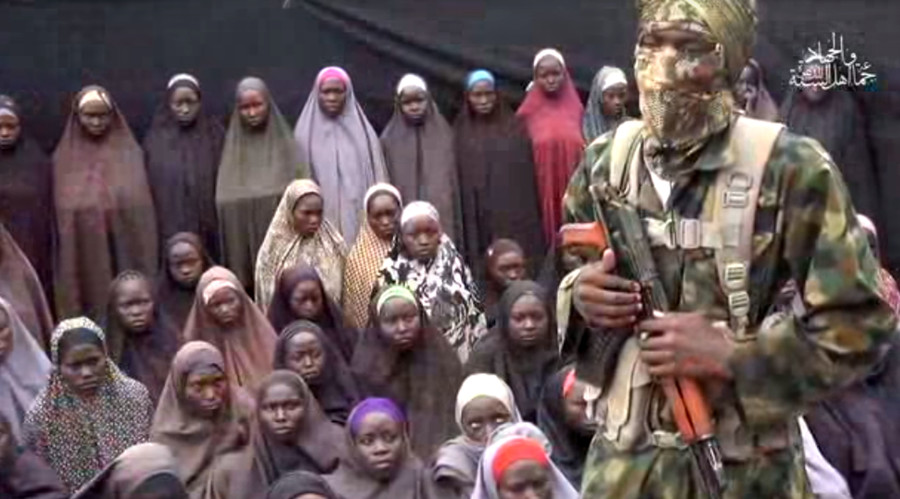
Footage purportedly showing Boko Haram’s new leader has emerged online, displaying a masked gunman demanding that Nigeria’s government release their fighters in exchange for the abducted Chibok schoolgirls.

The new video is thought to feature Abu Musab al-Barnawi, the recently appointed successor to Abubakar Shekau, who has not been seen since early 2015.

While as yet unverified, the video is similar to previous Boko Haram releases.

In the 11-minute clip, a man dressed in military clothing with a gun slung across his shoulder claims that a number of the kidnapped girls have been killed in Nigerian air strikes, while at least 50 young women in head scarves can be seen lined up against a darkened backdrop.

One of the captives, identified by the BBC as Maida Yakubu, is then directed to appeal to her parents to put pressure on the Nigerian government to release imprisoned Boko Haram fighters.

“We are suffering here, the aircraft has come to bombard us and killed many of us. Some are wounded. Every day we are in pains and suffering. Some of our husbands that we married also are injured, some dead. No one cares for us,” the girl is reported to have said.

Posted to Twitter on Sunday by a Nigerian journalist, the broadcast claims to be a message to the “family of Chibok girls”.

According to the Associated Press, the latest video includes an ultimatum to the families warning that they will never find the girls again if the fighters are not released first.

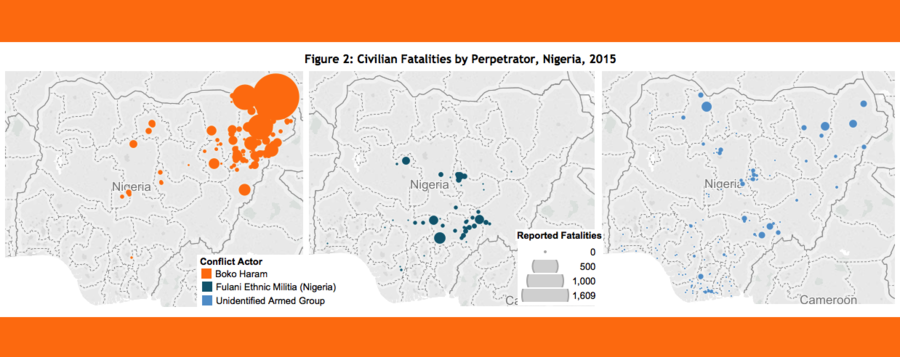
© acleddata.com
© acleddata.com

In a 2014 raid on a Chibok town secondary school, the Nigerian militant group kidnapped 276 girls, more than 200 of whom are still believed to be in captivity.

Last year Nigerian president Muhammadu Buhari said that government forces had “technically” beaten Boko Haram. However, a January report from the Armed Conflict Location & Event Data Project stated that the group remains the most prominent perpetrators of violence against civilians.

  video, no translation

In an interview with RT.com, the mother of a Chibok captive spoke of the profound impact the girls’ abduction has had on the community.

“It was terrible. We have been crying days and nights, seeking help from heaven. Seeking help from the Nigerian army,” she said.

“We are dying. We lost 15-20 parents. Some killed by Boko Haram after the abduction, some died due to a heart attack, blood pressure or diseases.”

It’s estimated that the terrorist group killed more than 6,000 people in attacks last yea

Wednesday, 27 July 2016

250,000 Children in Parts of Nigeria's Borno State, Suffering from Severe Malnutrition

UN condemns 'barbaric' Boko Haram violence in Nigeria
From BBC Africa

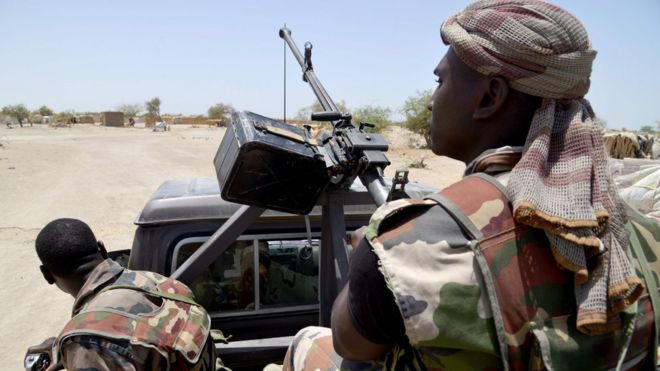
This file photo taken on May 25, 2015 shows Nigerian soldiers patrolling on a road between Diffa and Bosso. Image copyright AFP
This file photo taken on May 25, 2015 shows Nigerian soldiers patrolling on a road between Diffa and Bosso.
UN officials have warned that the Nigerian army, and other regional forces, are underfunded

The United Nations has accused the Islamist extremist group Boko Haram of "almost unimaginable" violence and brutality in Nigeria.

Stephen O'Brien, the UN humanitarian coordinator, said the militant group's actions had forced thousands to flee and left unprecedented numbers in need.

The UN estimates that more than nine million people in the region need humanitarian assistance.

Photo by: Reuters (Archive)
A girl and her mother are rescued from Boko Haram in Sambisa forest by Nigerian Military seen with some food as they arrive at a camp for internally displaced people in Yola, Adamawa State, Nigeria

Boko Haram has pledged allegiance to the so-called Islamic State.

Mr O'Brien told the UN Security Council that Nigeria was bearing "the brunt of the crisis", with Nigerians accounting for seven of the nine million people in need.

He said Boko Haram's "heinous, barbaric and unconscionable" violence had led to serious human rights violations in the country.

"From January to June 2016, more than 50 children have been coerced to carry out suicide bombings across the four countries," he said.


File photo shows a doctor attending to a malnourished child at a refugee camp in Yola, Nigeria

UN political chief Jeffrey Feltman said Boko Haram remained a threat to stability in the region, despite the group being pushed back from some areas.

Both men warned the council that the fight against the group was suffering from a lack of funding.

This is a big problem in Nigeria because of the rampant corruption in the government and military. Other countries are reluctant to help, I suspect, because most of the money is liable to disappear before it makes any difference on the ground.

The militant group continues to target countries in the region, including Nigeria and Cameroon, with bomb and suicide attacks.

The UN's children's agency Unicef warned last week that almost 250,000 children in parts of Nigeria's Borno state, formerly controlled by Boko Haram, were suffering from severe malnutrition.

Boko Haram at a glance:

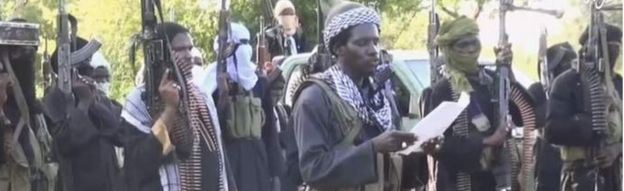
Boko Haram fighters in video released on Wednesday 7 October 2015
Boko Haram fighters still appear well armed in recent propaganda videos

Founded in 2002, initially focused on opposing Western-style education - Boko Haram means "Western education is forbidden" in the Hausa language

Launched military operations in 2009

Thousands killed, mostly in north-eastern Nigeria, and hundreds abducted, including at least 200 schoolgirls

Joined so-called Islamic State, now calls itself IS's "West African province"

Seized large area in north-east, where it declared caliphate

Regional force has now retaken most territory

Thursday, 14 April 2016

ANALYSIS - Why Has Nigeria Failed to Rescue the Chibok Schoolgirls From Boko Haram?

Five hundred women and children were taken just months after the abduction in Chibok.

Video emerges showing 15 girls wearing Islamic headscarves 2 years after kidnapping by militant group

By Anna Cunningham, for CBC News 

Yana Galang, the mother of Rifkatu Galang, one of the schoolgirls kidnapped by Boko Haram two years ago, looks down during an interview in Lagos on April 5, 2016.
Yana Galang, the mother of Rifkatu Galang, one of the schoolgirls kidnapped by Boko Haram two years ago, looks down during an interview in Lagos on April 5, 2016. (Stefan Heunis/AFP/Getty)

When 276 Nigerian girls went to school two years ago, 219 of them never came home.

The human rights group Amnesty International has called for the Nigerian government to "do all it lawfully can to bring an end to the agony of the parents of the Chibok girls and all those abducted."

M.K. Ibrahim, country director of Amnesty International Nigeria, says: "Few of us can begin to comprehend the suffering of parents who have not seen their daughters for two years."

The simple facts of what happened in the remote town of Chibok in northeast Nigeria remain astonishing, but nothing is simple about the insurgency by the Islamist militant group Boko Haram that has blighted the region since 2009, leaving more than 20,000 dead and 2.6 million homeless.

Today the sign outside what remains of the Government Girls Secondary School in Chibok has the word "girls" blanked out. The school is a shell of broken walls and empty window frames.

One chalkboard remains, indicating what was once a classroom, as the rest succumbs to nature. Dormitory bed frames gather dust in the long grass.

A short "proof of life" video has emerged and been reviewed by the Nigerian government. It shows 15 of the schoolgirls, their heads covered and wearing long Islamic headscarves.

Each is asked to identify herself and explain that they were taken from the school in Chibok. One girl says they are speaking on Dec. 25, 2015, and pointedly says they are "all well."

Chibok schoolgirls missing 2 years March 2016 sandal in dust
A slipper lies amid the rubble of the demolished dormitories of the Government Girls Secondary School in northeastern Nigeria on March 25, 2016. (Stefan Heunis/AFP/Getty)

It's the first time any of the girls have been seen since Boko Haram released a video in May 2014.

In one respect, it gives much-longed-for hope to the families of the kidnapped girls, although it comes too late for some. Sixteen fathers and two mothers have reportedly died or been killed since the abductions.

Stalemate remains

But it also leaves many questions for the Nigerian authorities — even if it shows at least some of the Chibok girls are alive.

Where are they and why have they not been rescued? Are the Nigerian authorities negotiating with Boko Haram for their release?

Africa security specialist Ryan Cummings told the CBC he believes the girls have not yet been found because "any attempt at rescuing them risks ending in a bloodbath," an outcome he says the Nigerian government cannot risk "given ongoing criticisms of their response to the insurgency."

Cummings says negotiation is the only feasible means, but he believes a stalemate remains because any talks would "likely include ransom payments and the release of detained commanders, both of which would strengthen Boko Haram's position in the conflict."

Fighting Boko Haram abducted Chibok girls April 5 2016
Yana Galang, the mother of Rifkatu Galang, one of the abducted Chibok girls, holds a phone with a picture of her daughter during an interview in Lagos on April 5, 2016. (Stefan Heunis/AFP/Getty)

Brokering a deal for the release of the girls in exchange for Boko Haram prisoners was ruled out by the previous government of President Goodluck Jonathan.

When current President Muhammadu Buhari took power last May, he said: "We cannot claim to have defeated Boko Haram without rescuing the Chibok girls and all other innocent persons held hostage by insurgents."

So, has the approach changed? No one in authority will give a direct answer as to whether a deal is in the cards.

Two years ago, barely a day passed without a report of a Boko Haram attack. Tactics changed after five years of hit-and-run attacks. Territory was seized, towns and villages overrun, hostages were taken. Soon, the rebels declared the creation of a so-called caliphate.

Too dangerous

News of attacks frequently took days to filter out because of a lack of communications in the area and the fact that the region was too dangerous for independent observers, aid agencies or journalists to reach.

Witnesses often talked about how they had no protection from the military or that soldiers had fled their posts. Troops complained of a lack of weapons and even bullets. Many refused to deploy against the better-armed Boko Haram.

Father of Chibok abductee April 5 2016
Lawan Zannah, father of Aisha Zannah, one of the abducted Chibok girls, reacts during an interview in Lagos on April 5, 2016. (Stefan Heunis/AFP/Getty)

International Crisis Group, a non-governmental organization that offers political and security analysis, believes the reaction to the Chibok kidnapping of former president Jonathan's administration "ranged from indifference and denial to later incompetence and deception."

The government was "crippled by corruption and mismanagement" that left it unable to "respond promptly or effectively to the incident," the group said.

The hashtag #BringBackOurGirls, launched on the back of growing public outrage in Nigeria, found supporters across the world.

But despite the international offers of assistance to find the girls, any efforts were met with the dysfunction and disarray of the Nigerian military, stymied also by patriotic pride and complex domestic identity politics.

Surveillance experts from the U.S. and U.K. were said to have located some of the missing girls and passed on their findings to the Nigerians but they failed to follow up on the intelligence.

According to a Pentagon spokesman, U.S. personnel sent to neighbouring Chad to operate surveillance drones and support were redeployed because the Nigerian military had stopped requesting their services.

Still missing

The Nigerian military's record on human rights in the conflict — abuses against civilians, including arbitrary detention, torture and extra-judicial killing — limited how much Western governments could directly assist Abuja militarily.

Two years on and despite a new president who has made defeating Boko Haram his priority, plus sweeping military successes against Boko Haram, the Chibok girls are still missing.

Helping girls threatened by Boko Haram

Certainly, there is caution in Abuja to avoid the failures of the previous administration, which prematurely announced talks and even a ceasefire without clearly identifying who it was speaking to in the Boko Haram chain of command.

Earlier this month, news emerged of an even bigger kidnapping of women and children from the Borno state town of Damasak. Five hundred were taken just months after the abduction in Chibok. Yet the incident failed to win the same attention.

And hardly a day goes by without claims from the military that dozens, sometimes hundreds, of hostages have been released across the northeast.

But as the conflict has gained more scrutiny, there is awareness that Chibok is not an isolated case, even if it is a symbol for the world of the brutality of the violence.

(Anna Cunnningham is a freelance journalist based in Nigeria.)