Everyday thousands of children are being sexually abused. You can stop the abuse of at least one child by simply praying. You can possibly stop the abuse of thousands of children by forwarding the link in First Time Visitor? by email, Twitter or Facebook to every Christian you know. Save a child or lots of children!!!! Do Something, please!

3:15 PM prayer in brief:
Pray for God to stop 1 child from being molested today.
Pray for God to stop 1 child molestation happening now.
Pray for God to rescue 1 child from sexual slavery.
Pray for God to save 1 girl from genital circumcision.
Pray for God to stop 1 girl from becoming a child-bride.
If you have the faith pray for 100 children rather than one.
Give Thanks. There is more to this prayer here

Please note: All my writings and comments appear in bold italics in this colour

Showing posts with label epidemic. Show all posts

Thursday, 26 March 2026

Drugs and Kids > Boy kidnapped because brother stole drugs from a Muslim dealer


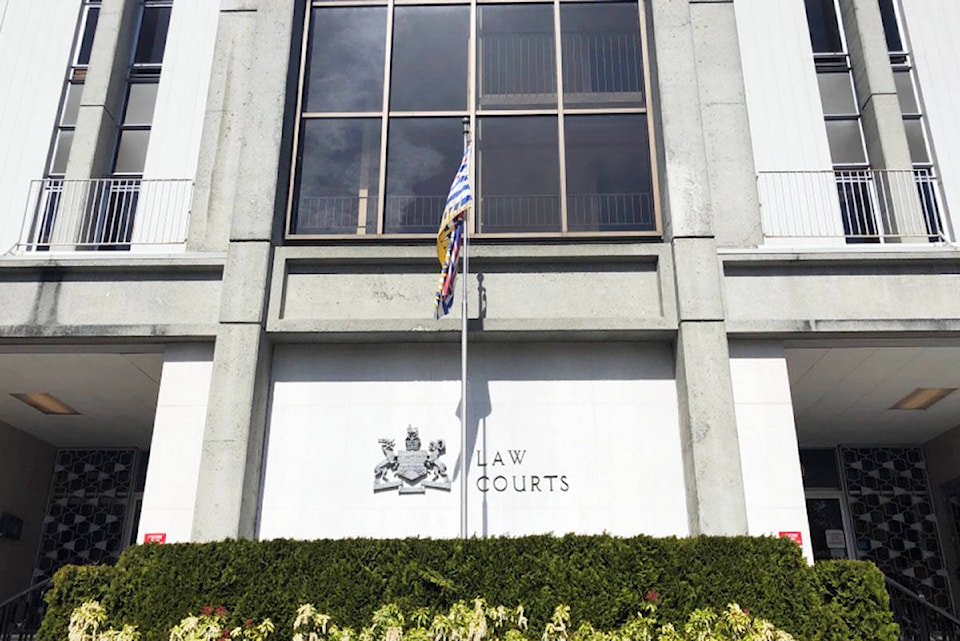
Man found guilty of kidnapping Toronto teen gets 11.5-year prison sentence


A man found guilty of kidnapping a 14-year-old Toronto boy over his half-brother’s drug debt that triggered a province-wide Amber Alert has been sentenced to 11 and a half years in prison.

Samir Abdelgadir, 45, stood up and waved to his friend as he was handcuffed and led out of a downtown courtroom Thursday after Superior Court Justice Sandra Nishikawa handed down the sentence. Abdelgadir was tried by judge alone.

On March 4, 2020, the boy, whose name is protected by a publication ban, was kidnapped shortly after leaving his home to go to school on Driftwood Court near Jane Sreet and Finch Avenue.

Three men grabbed the boy and forced him into a Jeep as he screamed and struggled to resist. Two other vehicles, a white Mercedes and a black Tahoe, accompanied the Jeep to and from the Driftwood Avenue complex where the teen was kidnapped.

The boy was driven to a vacant house on Edgeforest Road in Brampton where he was bound and blindfolded.

At trial, the teen’s half-brother admitted that he had stolen 90 kg of cocaine from people for whom he worked. While the teen was held at the house, the kidnappers called and sent messages to the half-brother demanding that he return the cocaine that he had stolen.

Thirty-six hours after the teen was taken, he was released in a vacant lot in Caledon, where he was later located by police. The Jeep was found near the Forks of the Credit in Caledon. Two men admitted to setting the Jeep on fire but testified at trial that they believed it was for an insurance fraud scheme.

Nishikawa found that Abdelgadir was an associate of kilogram-level traffickers named Giovanni Raimondi and Scott McManus. She called it a “coordinated, planned event among a number of individuals.” The half-brother testified he regularly delivered cocaine to Abdelgadir.

“As one of the principals of the drug operation, Mr. McManus had a strong motive for the kidnapping,” the judge said.

“I did not find that Mr. Abdelgadir was the mastermind of the plot to kidnap the teen and hold him for ransom for the return of 90 kilograms of stolen cocaine or the proceeds thereof. I found that Mr. Abdelgadir knew in advance of the plan to kidnap the teen that morning and drove the Tahoe as backup at the ready, to assist if needed.

“He played an integral role in the kidnapping, which is a continuing offence, by ensuring that it took place. After the teen was forced into the Jeep, Mr. Abdelgadir drove away from Driftwood Avenue in tandem with the Jeep and the Mercedes. He did not drive to the house on Edgeforest where the teen was eventually held. At no time, did Mr. Abdelgadir attempt to assist the teen regain his liberty.”

She pointed out that four days after the kidnapping, Abdelgadir met with one of the two men who pleaded guilty to setting the Jeep on fire.

“I found it was reasonable to infer that the meeting was to discuss damage control, including the destruction of the Jeep.”

The judge noted the harmful and lasting impact that the kidnapping had on the boy and his family, as outlined in their victim impact statements.

Nishikawa said the teenaged boy described how his life completely changed from one day to the next. After the kidnapping, the teen could not sleep on his own, because when he tried to sleep, he relived every detail of the abduction.

“He has difficulty finding words to describe the experience, stating, ‘There was so much aggression directed towards me that I thought I was going to die and that feeling has never left me,'” Nishikawa said.

The teen’s mother also passed away after the kidnapping before the trial and said his support system has been lost. The teen’s mother said in his victim impact statement that his son’s kidnapping made him feel that he failed in his mission to protect him, and that he does not know how to repair that.

In considering her sentence, Nishikawa took into account Abdelgadir’s lack of criminal record, an impact of race and culture assessment (IRCA) that was done, a pre-sentence report, and aggravating and mitigating factors.

Abdelgadir was born in North Sudan into a Muslim family. When he was 19, he moved to Mississauga where he lived with his aunt and later with his mother. He moved to Hamilton where he attended McMaster University and served as vice-president of the African-Caribbean Association. He lost his father’s financial support during this time.

According to the author of the pre-sentence report, Abdelgadir turned to selling marijuana after being unable to find employment. He also reported being harassed by police in Hamilton.

The IRCA report states that Abdelgadir has been imprisoned up to 20 times for long periods of time on previous charges, including drug possession, cocaine possession and curfew violations.

In the report, Abdelgadir emphasized that his stagnation was not the result of lack of ambition or ability, but rather the consequence of systemic racism, repeated police targeting, and unjust criminalization that disrupted his educational and employment trajectory.

The IRCA report states that Abdelgadir blames the current charges on systemic racism and police targeting.

The author of the pre-sentence report notes that Abdelgadir does not accept responsibility for the offence and believes he was unfairly prosecuted. “He is described by the Officer as ‘reluctant or unable to consider the impact his behaviur has had upon others,'” said Nishikawa.

The Crown had asked for a 16-year penitentiary sentence whereas defence suggested a five-year sentence would be more appropriate.

Nishikawa pointed out that the mandatory minimum for kidnapping involving a person under 18 years old is five years. The maximum sentence is life imprisonment.

The judge noted that the teen was taken as leverage to extort from his half-brother either the return of the stolen drugs or repayment.

“It is an agreed fact that the teen heard the driver tell the person in the backseat that if the teen moved, he should shoot him. I find that the teen believed that the men who kidnapped him had a firearm. However, based on the evidence before me, I cannot find beyond a reasonable doubt that a firearm was used,” said Nishikawa.

Nishikawa found it aggravating that the victim was a 14-year-old Black boy in Grade 9, living in an economically disadvantaged neighbourhood.  The teen was not involved in the drug trade nor any other illicit conduct.

She also noted that the parents did not know their son was missing until after school because school authorities failed to report his absence to his parents. As a result, the parents did not contact police until over nine hours after the teen had been kidnapped.

“The harm caused to the teen is immeasurable. His life changed forever the day Mr. Abdelgadir and others decided to kidnap him as leverage for his brother’s actions,” said Nishikawa.

The judge noted that while Abdelgadir expressed sympathy to the teen at the sentencing hearing with the harm caused and the loss of his mother, he continues to deny his involvement in the kidnapping.

“Needless to say, Mr. Abdelgadir has not expressed remorse. I note that a lack of remorse is not an aggravating factor but the absence of a mitigating factor,” she concluded.

After subtracting enhanced credit for 260 days spent in pre-sentence custody,  harsh conditions spent in pre-sentence custody and credit for time spent living under house arrest, Abdelgadir has 9.5 years left to serve on his sentence.

The teenaged boy and his family were not in court Thursday.


Monday, 10 November 2025

Kids and Drugs > BC MLA calls for end to decriminalization madness


MLA for Chilliwack-Cultus Lake calls on B.C. to end ‘madness’ of decriminalization 

Published 4:36 pm Wednesday, November 5, 2025

By Jennifer Feinberg, The Chilliwack Progress

Á’a:líya Warbus, MLA for Chilliwack-Cultus Lake, takes on the topic of drug overdose in the legislature on Nov. 4, 2025. (Facebook/Screenshot)  


Á’a:líya Warbus, MLA for Chilliwack-Cultus Lake, rose in the B.C. legislature this week to ask the NDP government to put an end what she called “decriminalization madness” and the “so-called safe supply.” 

Warbus spoke with determination during question period on Nov. 4, taking on a topic that she said was “extremely personal” for her, her family and her community.  “We live in a time right now where the leading cause of death for young people is overdose,” Warbus said. “I am beyond angry at the failures of this government to address this issue.”  

The Conservative MLA noted that she has shared publicly on previous occasions “how personal” the subject of drug-related fatalities are for her, her family and community.  “I don’t know how many funerals that members have had to go to for young people in their lives, who’ve died alone because of toxic drugs, but I’ve attended way too many,” Warbus said, her voice tinged with pain. “The premier said that decriminalization is a failure. I completely agree.”  

Warbus was speaking in Victoria on the day that the monthly and year-to-date statistics came out from BC Coroners Service.  A total of 158 British Columbians died in September 2025 due to unregulated drug toxicity, in the preliminary numbers released Nov. 3 by the BC Coroners Service.   

In Chilliwack there were 28 drug deaths as of the end of September 2025.  “So what are we waiting for to end decriminalization and so-called safe supply. What are we waiting for to end this madness in our province today?” the MLA concluded, and sat back down.  

A special data set contained in the latest coroners’ report, showed that “poisoning from unregulated drug toxicity” was the leading cause of unnatural deaths among youth from 2019-2023, followed by deaths by suicide and car crashes.  

Warbus posted some commentary about the year-to-date total of drug deaths:  “In Chilliwack, at least 28 lives have been lost this year alone,” the MLA said.  “Each number represents a son, a daughter, a friend, a neighbour, and a community in pain.”  

In 2025 among youth (18 years and younger) suspected drug-toxicity deaths in the window between January and September increased from 17 deaths reported in 2024 to 20 reported in 2025.  In 2025, deaths among those between the ages of 30 and 59 accounted for 69 per cent of drug-toxicity deaths in the province, and 78 per cent were male.  

“Families are grieving while government policies continue to fail the people they claim to help,” Warbus said in her post. “Chilliwack, and communities across B.C., deserve wrap-around recovery treatment immediately and real hope — not failed experiments.”


Tuesday, 25 March 2025

Kids and Drugs > S.D. woman supplied drugs to kids and kids to elderly pedo; Victoria, BC man gets no additional time for raping teen sisters; 5 y/o Mission girl overdoses on fentanyl


If you are a Christian you might believe that drugs are a gateway for spiritual influence or invasion. So is child sexual abuse! When you combine the two, a child has little opportunity to have a healthy, normal life. They need deliverance from their abuser(s), drugs, and Satan to have a chance at happiness.


Plea agreement reached in Winner child sex trafficking case

Jennifer Leither, The Daily Republic, Mitchell, S.D.
1 min read

WINNER, S.D. A Winner woman is expected to plead guilty later this month to charges of conspiracy to engage in the sex trafficking of a child. The plea agreement follows court documents filed earlier this week revealing her involvement in facilitating the exploitation of minors between 2020 and 2021.

According to court records, 36-year-old Ivy Rose Heron admitted to arranging for minors to engage in sexual acts with 65-year-old Richard Alan Kucera, also of Winner. Heron reportedly transported minors to Kucera's residence and told them that he would pay for sexual acts or explicit photos and videos.

In one instance, Heron admitted she received $200 from Kucera for a sexual transaction involving a minor, of which she gave $50 to the child. In another case, Heron stated she gave methamphetamine to a minor in exchange for $300 the child had received from Kucera for commercial sex acts.

The offenses were carried out using social media platforms, cell phones and computers, which allowed Heron and Kucera to communicate and coordinate their activities across different regions. This brought the case under federal jurisdiction.

A federal grand jury indicted both Heron and Kucera on two counts of child sex trafficking in August 2023. Kucera was also charged with two counts of producing child sexual abuse material. Both initially pleaded not guilty.

Heron's plea deal includes a minimum sentence of five years in prison, with the possibility of life imprisonment upon sentencing. The charge also carries the possibility of a $250,000 fine and a period of supervised release. Heron will also be required to register as a sex offender.

Five years is nowhere near enough for such an evil woman. She should never have the opportunity to repeat her crimes again.


Greater Victoria man jailed for sexual offences against teen sisters


Gets no additional time in prison!

Peter John Hooper has been convicted for sexual offences against a total of four teens
web1_201116-vne-ruygrok-igp_1
Peter John Hooper has been convicted for sexual offences against a total of four teens. (Black Press Media File Photo)

Warning: this story contains details of sexual violence and sexual exploitation against children


A south (Vancouver) Island man already serving time for the sexual assault of a teen girl has been sentenced again after being found guilty of one count of sexual touching of a young person and a count of sexual assault against another two young victims.

On Feb 18, Peter John Hooper, now 49, was sentenced to eight years and nine months imprisonment, which will be served concurrently with his current five-year sentence for two counts of sexual interference.

Why concurrent? Canada and B.C.s justice system is so pathetic. So gentle with horrible criminals and so utterly disinterested in their victims. Fpr all he did to these girls, they were just freebies thanks to the hapless judge.

In the most recent case, Hooper was sentenced for sexual offences against two sisters "S," who was 16 at the time, and "F" who was 17. Both were living in foster homes and were dealing with substance abuse issues.

Hooper met the sisters in late 2016, purchasing alcohol for them, and using drugs with them. Justice Anthony Saunders noted Hooper lived in a condo with his wife and young daughter at the time, and when his wife was at work he would invite the teens to his home.

"In or about July 2018, S and F began using meth as well. Mr. Hooper became their principal source or supplier and they would use meth with him in his home frequently, in the case of F, almost every day," noted Saunders.

His relationship with S progressed to being sexual, and Saunders noted that it was an exploitative relationship as he facilitated her drug use, supplied her with alcohol and drugs or money to buy drugs, provided her a location where drugs could be consumed in his condo or in his car, and taking drugs with her.

"There was an obvious power imbalance which Mr. Hooper took advantage of sexually for his own gratification," noted Saunders' decision.

According to Saunders, S's memory was blurry due to the drug use, but she recalled two specific cases where she had sex with Hooper.

"The [second] incident occurred in Mr. Hooper's home. She, Mr. Hooper, and [his drug dealer] smoked meth and, at Mr. Hooper's invitation, S put on some of his wife's lingerie. She had sex with Mr. Hooper and (the drug dealer) multiple times that day. She did not recall how the sex was initiated, but she did recall, and I accept, that she spent half the day naked with the two men coming in and out of the bedroom taking turns with her," noted Saunders.

The sexual assault of S's sister, F, also happened in Hooper's condo when Hooper and his friend Randy began to talk her into agreeing to have sex with both of them, which she repeatedly refused. They continued to pressure her saying, "No, you're going to." Eventually, Hooper penetrated her without warning, and without consent.

In their victim statements, at the time of the trial S had a young daughter and had a good relationship with her child's father. The relationship has since broken down and S is now in a situation where she cannot see her daughter.

"[S] spoke of having deep depression and suicidal thoughts at times. She acknowledges Mr. Hooper's conduct towards her is not the cause of all her problems, but she feels he has caused her pain, trauma, and sexual confusion," noted Saunders.

F spoke of having suffered a mental and emotional breakdown in 2023 where she was suicidal, was subject to multiple welfare checks and falling into abuse of antidepressant and antianxiety medication she was prescribed.

"[F] finds herself being easily triggered and experiencing flashbacks during sex with her partner, preventing them from connecting on a more intimate level, which in turn leads to her feeling anxious, fearful, and incapable of being loved by others."

Saunders said there is little to say in way of mitigation factors. He noted Hooper had experienced loss of his Indigenous identity, as well as his father's controlling behaviour towards his mother. He began living independently at the age of 16 to escape his father's verbal abuse, and trauma he experienced while supporting two siblings through their drug addiction, though Saunders said these are only slight mitigating factors compared to the offences.

"I am far from satisfied that Mr. Hooper will be able to restrain himself from engaging in such conduct the next time he goes through a difficult emotional period in his life. His pattern of befriending vulnerable girls, engaging in illicit drug use with them, and then sexually abusing them, and his utter lack of remorse, in my view, speak to a considerable risk of reoffending and point to the need for a lengthy prison sentence for the protection of the public," said Saunders.

Exactly, so why the concurrent sentence which adds nothing to his time in prison?

Hooper's first victim to come before the courts in July 2018, a then 15-year-old girl, used to smoke drugs with Hooper, and on the day of the incident he drove her to Mount Douglas Park where they smoked meth together, and "he exposed himself to her, and asked her to touch his penis."

For that incident, Hooper served a total of 48 days in 2021 after being found guilty of one count of invitation to sexual touching and one count of exposing himself for a sexual purpose.

The second victim, "J.G.," had met Hooper on two occasions when she was 14 and 15. According to the judge's decision, she had dropped out of school and was spending time on the streets of downtown Victoria and was actively abusing drugs. In the first incident, Hooper had sexually assaulted the teen after doing meth and cocaine in a motorhome. 

In October 2018, J.G., Hooper and two others drove to Mount Tolmie where they smoked drugs. J.G. felt sleepy – believing he had given her fentanyl instead of meth – and he proceeded to sexually assault her while she began to "nod off."

Hooper was sentenced to five years imprisonment on two counts of sexual interference in November 2024 for J.G.'s case.

Along with his jail sentence, Hooper will be under a lifetime Sex Offender Information Registration Act order, a 10-year weapons ban, and he cannot have any contact with the victims.

I don't see any sentences listed for providing drugs to minors. I guess they were more freebies. 


This small city just across the Fraser River from me is a little too close to home. There should be zero tolerance for drugs in a home with children of any age. Either the drugs need to be removed or the children need to be removed from the home.


5-year-old girl recovering from fentanyl overdose in Mission, B.C.


Police say girl handled jar containing fentanyl at house on Nottman Street
nottman2
A five-year-old girl is recovering after an apparent fentanyl overdose at a Nottman Street residence in Mission last week. 

A five-year-old girl is expected to recover from an apparent Fentanyl overdose in Mission on Thursday (March 20). 

Mission RCMP said in a news release that first responders were called to a Nottman Street residence at approximately 9 p.m. for a girl who was unconscious and receiving CPR.  

According to the release, the girl handled a jar containing illicit fentanyl while taking a bath and her condition rapidly deteriorated, including vomiting and changes in breathing. 

Police say adults in the house called 911 and paramedics administered multiple doses of Naloxone upon arrival. 

The girl’s condition improved and she was taken to hospital. RCMP say she remained in hospital overnight and is expected to recover. 

“Mission RCMP remind the public of how incredibly dangerous the drug can be to people of any age, but especially to children, who would likely have no idea what the substance is if they were to come into contact with it,” the detachment said. 

Mounties advise anyone who keeps fentanyl in their residence to ensure secure storage. 

“Anyone who suspects they or someone around them has come into contact with Fentanyl – even through skin contact – should immediately seek medical aid, regardless of whether symptoms have set in.  Receiving a timely dose of Naloxone, as well as further medical care afterwards, is critical to increasing the chances of surviving a fentanyl overdose,” police said. 

RCMP say the incident on Nottman Street remains under investigation.

Charges need to be laid here, at the very least. Children don't get into their parents' drugs by accident, but by carelessness.


Sunday, 22 September 2024

Drugs and Kids > Cannabis linked to increased risk of schizophrenia and bipolar disorder in young adults


High-Potency Cannabis Linked to Increased Psychosis Risk in Young Adults: Study

Cannabis can be toxic to adolescent brain functioning, increasing the risk of developing psychosis years later.


During breaks from his deployments in the Afghanistan war, Craig turned to smoking cannabis to alleviate stress, just as he had done as a teenager. However, one evening, things took a turn when he barricaded himself and his two young daughters in the master bedroom.

“He thought the house was surrounded by terrorists,” Jennifer Thomas, the girls’ mother, recounted while speaking to The Epoch Times. “That night was bad; he said they were under attack. The other times before that were mostly him seeing auras and aliens talking.”

Military police took Craig to a psychiatric hospital, where he was diagnosed with schizophrenia at 26.

Craig’s story is one among an increasing number of cases, primarily involving men, in which cannabis use has contributed to a schizophrenia diagnosis occurring in one’s 20s.

The Cannabis–Psychosis Link

New UK research shows adults who consumed high-potency cannabis between ages 16 and 18 are twice as likely to experience psychotic episodes such as hallucinations and delusions by their mid-20s compared to those using low-potency strains or abstaining. The longitudinal study, published in Addiction, highlights cannabis’s risks to adolescent brain development.

“Young people using higher-potency forms of cannabis are twice as likely to have experiences associated with psychosis, such as hallucinations and delusions,” lead author Lindsey Hines, a professor from the University of Bath Department of Psychology with a doctorate in epidemiological psychiatry, said in a statement.

Over the past several decades, illicit marijuana products have become significantly more potent. The concentration of tetrahydrocannabinol (THC)—the psychoactive compound in cannabis responsible for the “high” sensation and one linked to psychotic experiences in some people—increased to roughly 14 percent by 2019 from around 10 percent in 2009, according to a scientific review published in Biological Psychiatry: Cognitive Neuroscience and Neuroimaging.

“This is the problem,” Yasmin Hurd, director of the Addiction Institute at Mount Sinai in New York, told The Epoch Times. “Many people don’t realize that the cannabis that is consumed today—the majority or all of it—is high-potency.”

The researchers examined data from the University of Bristol’s Children of the 90s (ALSPAC) study, the most comprehensive birth cohort study of its kind. The study collected information and data from about 14,000 adolescents between 16 and 18. Then, when they were 24, the participants were asked to disclose the types of cannabis they used and any psychotic experiences, such as hallucinations or delusions, they may have experienced.

The study found that 6.4 percent of young people using cannabis had new psychotic experiences, compared to 3.8 percent of nonusers. Furthermore, after starting to use cannabis, 10.1 percent of young people using higher-potency cannabis reported new psychotic experiences, while 3.8 percent using lower-potency cannabis did.

“Importantly, the young people we asked had not previously reported these experiences before starting their cannabis use,” Ms. Hines said. ”This adds to the evidence that use of higher-potency cannabis may negatively impact mental health.”


Stronger THC a Ticking Time Bomb for Mental Health

Cannabis poses a greater psychosis risk than tobacco or alcohol, according to Ms. Hurd, who noted that the new findings align with numerous studies linking cannabis use to psychosis.
A 2017 study in The American Journal of Psychiatry found that people experiencing even one cannabis-induced psychotic episode have a 47 percent higher chance of developing schizophrenia or bipolar disorder, with self-harm after such episodes indicating the highest risk. Of those experiencing substance-induced psychosis, half of them developed schizophrenia within three years, while the other half converted to bipolar disorder within almost 4 1/2 years.
Both schizophrenia and bipolar disorder are thought to involve imbalances in brain chemicals (neurotransmitters) and abnormalities in brain structure and function. These neurological factors may contribute to the development of psychotic symptoms, such as hallucinations and delusions, in both disorders.
A study published in Molecular Psychiatry analyzed genetic markers to assess the cannabis-psychosis relationship and found that “use of cannabis is causally related to the risk of schizophrenia,” meaning that cannabis is a factor influencing the occurrence of the disorder.
A 2023 Danish study reported cannabis use disorder (CUD) as a major schizophrenia risk factor for young males, estimating that 30 percent of cases among men aged 21 to 30 could be prevented by preventing CUD, a diagnosis of problematic cannabis abuse or dependence that affected 14.2 million Americans aged 12 and over in 2020.
While not all young cannabis users develop psychosis, Ms. Hurd said that factors such as starting before 16, frequent use, and higher potency increase risk, potentially triggering conditions in genetically predisposed people, as a 2018 study using 23andMe data found.
The increased psychosis risk from more potent cannabis “must be taken seriously, especially in light of the current mental health crisis,” Ms. Hurd and colleagues wrote in a 2024 commentary in The American Journal of Psychiatry.


The Undiagnosed Issue with Cannabis use

For 50 years I have been watching frequent users of marijuana and have observed a startling symptom that hos not been recognized by the mental health community. That symptom is a complete cessation of the maturing process in a number of people. People who start using pot regularly, say weekly, at 15, will often continue to act, dress, talk, and think like a 15 year old.
I noticed this phenomena long before high-potency pot was available, and can only imagine it getting worse with potencies 3 or 4 times as high as in the 1970s and '80s.

Challenges Ahead

Despite evidence linking cannabis to psychosis, teen use soared 245 percent between 2000 and 2020, according to research published in Clinical Toxicology. The authors attributed the rise to popular edible products, with legalization making cannabis seem safer and more accessible to teens, even though it is only legal for adults in 24 states and Washington, D.C.

Tax revenue from the cannabis industry must fund prevention strategies to mitigate impacts on developing brains, Ms. Hurd and her colleagues wrote in the commentary.

The U.S. Drug Enforcement Agency (DEA) recently proposed to move cannabis to a Schedule III drug, which would reduce the penalty for selling or delivering the drug in states where it remains criminalized.

The legalization of medical marijuana in more states over the past few years has made cannabis widely accessible. However, Ms. Hurd noted that the current highly addictive strains are not benign. “The adolescent time period is a critical window for CUD risk,” she said, adding that this only makes the need for public health education and intervention more critical.

While “we should not criminalize the use,” she said, the move to make it legal and reduce penalties ignores the fact that the current strains are purposely made to be addictive because “like everything else, it’s a business, and the business is to get more customers.”

================================================