Everyday thousands of children are being sexually abused. You can stop the abuse of at least one child by simply praying. You can possibly stop the abuse of thousands of children by forwarding the link in First Time Visitor? by email, Twitter or Facebook to every Christian you know. Save a child or lots of children!!!! Do Something, please!

3:15 PM prayer in brief:
Pray for God to stop 1 child from being molested today.
Pray for God to stop 1 child molestation happening now.
Pray for God to rescue 1 child from sexual slavery.
Pray for God to save 1 girl from genital circumcision.
Pray for God to stop 1 girl from becoming a child-bride.
If you have the faith pray for 100 children rather than one.
Give Thanks. There is more to this prayer here

Please note: All my writings and comments appear in bold italics in this colour

Showing posts with label passports. Show all posts

Wednesday, 27 October 2021

Approaching Sodom > BBC Attacked for Truth; Illinois Law Attacks Families; USA Issues 1st X-gender Passport

..

Woke mob attacks BBC over publishing stories of lesbians

‘being pressured into sex by some trans women’

27 Oct, 2021 13:13

Young lesbian couple sit outside of a bar in Zurich. © Reuters / Arnd Wiegmann


The BBC is facing a backlash over a story about lesbians being branded transphobic for refusing to have sex with trans women. It has received hundreds of complaints, and the author has been forced to delete her Twitter account.

The article, published on the BBC website on Tuesday, addressed the issue of some lesbians in Britain “increasingly being pressured and coerced” into accepting trans women as their partners.

Female penis?

Several lesbians talked to author Caroline Lowbridge, sharing stories of how they were shamed and even threatened for being only attracted to biological women and rejecting the idea that a penis could also be a female organ. One claimed that her refusal to have sex with trans women had led to her being branded transphobic, a genital fetishist, a pervert and a ‘terf’ – a ‘trans-exclusionary radical feminist’.

According to those interviewed for the story, the harassment came from a minority of trans women, as well as woke activists who weren’t trans themselves.

One of the women said that once, after she shared her views, someone “said they would strangle me with a belt if they were in a room with me and Hitler.”

That gives you an idea of the mental state of many transgenders. 

Another recalled how her own girlfriend accused her of being “transphobic” and “immediately jumped to make me feel guilty about not wanting to sleep with someone” after she said she didn’t want to have a threesome with a trans woman, who had not undergone genital surgery and still had a male organ.

There was also an admission by one of the interviewees that she had been under so much pressure that she opted to have penetrative sex with a trans woman, despite not being attracted to that person at all. “I felt very bad for hating every moment” of the intercourse, she said, adding that she didn’t tell anybody about the experience over fears of being excluded from the LGBT community.

Lowbridge acknowledged in her article that, despite the lesbians calling it a “huge problem,” it was hard to determine the true scale of abuse due to lack of proper research. She said she knew of just a single survey on lesbians being pressured into the sex with trans women.

It was carried out online by radical campaign group ‘Get the L Out’ back in 2019 and saw 80 women taking part, with 56% of respondents confirming that they felt intimidated or had received threats in LGBT groups. Those behind the paper acknowledged that the sample size wasn’t representative enough, but stressed that it was still important to highlight the issue.

It turned out that many in the woke community didn’t really want the issue to be highlighted, however as the BBC received hundreds of complaints after Lowbridge’s article was published.

Twitter users reported that the broadcaster swiftly removed the story from its website home page to the archive, pointing out that this rarely happens to large feature pieces.

The author was also apparently swarmed by angry commentators, as Lowbridge’s Twitter account was deactivated several hours after the story’s publication.

Some mainstream media outlets joined social media users in blasting the BBC for the article.

The Daily Beast accused the British broadcaster of “fear-mongering,” saying that Lowbridge’s piece “is not just wrong, it’s dangerous.”

With the report, the BBC tried to “frame cisgender lesbians as defenseless maidens and equate trans women with aggressive, cisgender male sexual predators,” insisted journalist Dawn Ennis, who wrote the rebuff for the US outlet.

She also grilled Lowbridge for setting “an ironically new, very low threshold for balanced reporting,” over the small number of people she interviewed and her referencing research which included just 80 people and had been performed among “a limited group of people via an anti-trans site.”

The Daily Beast writer reduced the testimonies by the victims in the BBC’s article to “anecdotal accounts of a**holish behavior,” used by the broadcaster to spread “anti-transgender propaganda, transphobia.”

American online LGBT magazine Them labeled Lowbridge’s story as “the latest provocation in an ongoing war against trans women playing out in British media.” The outlet recalled other BBC articles on the trans issue that it didn’t like, including an April report citing the UK’s National Institute of Health and Care Excellence (NICE), which said that there was “very low” evidence to back the use of puberty-blocking drugs to treat young people struggling with their gender identity.

As for Lowbridge’s piece, James Factora, writing for Them, insisted that it was mainly based on accounts from “anti-trans groups,” whose testimonies were “chock full of anti-trans talking points and harmful myths.” 

Or, their testimonies are true and the talking points and myths are also true. Why would these women put themselves in harm's way for a lie?

The BBC journalist also interviewed trans people for her story, but, according to Factora, “very few humanizing viewpoints [from them] are included” in Lowbridge’s article.

There could be a reason for that!

However, not all of the reactions were negative, as many people online praised the BBC for having the “courage” to run such a story in the current political climate and lauded Lowbridge for “putting her career on the line.” Some of the commentators insisted that such pressure on lesbians was equivalent to “rape culture,” while others argued that even several dozen such cases were enough to sound the alarm. 

Excellent! Maybe that aspect should have gotten more than 1 small paragraph!

=====================================================================================


Illinois Senate votes to repeal law informing parents of child's abortion

in apparent reaction to Texas crackdown

27 Oct, 2021 20:43

Abortion protesters on both sides of the issue demonstrate outside US Supreme Court © Reuters / Leah Millis


The Democrat-led Illinois Senate has voted to repeal a law requiring a parent to be notified at least 48 hours before their child has an abortion. The bill heads to the House for passage, and Governor JB Pritzker also approves.

Parental consent is not required for a minor to get an abortion in Illinois, and the parental notification statute allowed the minor in question to waive the notification if they are concerned for their safety. Adopted in 1995, the statute only went into effect in 2013. Just one minor has reportedly been denied an abortion by an Illinois judge since 2013.

The vote to repeal was 32-22, with four Democrats joining the Republican opposition in voting against it and five abstaining from voting at all. The House is also majority Democrat, and Pritzker is a member of the same party, meaning the repeal is likely to pass without issue.

However, the Democrat-run state appears to be looking at the trend against abortion in red states like Texas, which recently passed a controversial law banning abortion and offering a financial bounty to those who rat out anyone who helps a woman secure the procedure. The law, whose implementation the Biden administration tried and failed to block, has become a flashpoint for conflict between the two parties, even as more pressing issues like Covid-19 vaccine mandates have driven a wedge into society.

Even with the loopholes in the existing Illinois law, repeal sponsor State Senator Elgie Sims (D) insisted it had to be done away with in order to "move our state forward to protect our young people, often those who cannot protect themselves."

Republican Senator Jil Tracy framed the repeal as "illogical," calling it an example of the ultra-wealthy Pritzker's "radical agenda" to separate parents and children.

"Of all the human relationships, there's none stronger than a relationship between parent and a child, and certainly while it lasts an entire lifetime, there is no better time and critical event in the minor years that child needs nurturing and support and counseling from their parents," Tracy said at a news conference on Tuesday ahead of the vote.
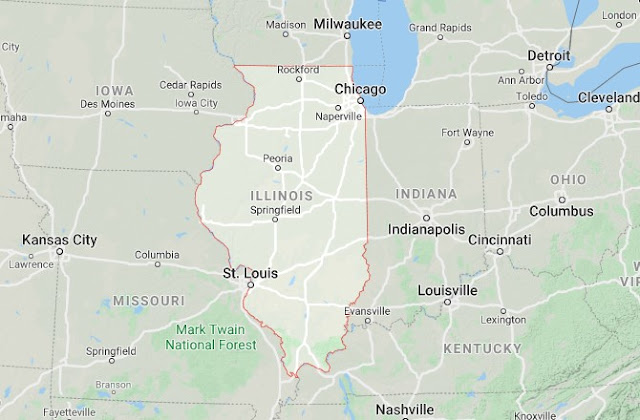


Sometimes you can be so proud to be an American; Sometimes, not so much!


‘These are our priorities now’: Biden admin mocked for issuing

first gender-neutral passport

27 Oct, 2021 15:42

A United States passport © Pixabay


The US State Department has issued its first gender-neutral passport, and will soon let any applicant pick an ‘X’ instead of a traditional male or female option. Commenters online rolled their eyes at the government’s priorities.

The State Department announced the issuing of the passport on Wednesday, with spokesman Ned Price declaring that the US “continues to take steps to demonstrate our commitment to promoting the freedom, dignity, and equality of all people – including LGBTQI+ US citizens.”

The news came three months after the State Department gave trans Americans the option of switching their gender on their passports without providing medical documents to prove their transition. At the time, Secretary of State Tony Blinken said officials were still “evaluating the best approach” for a non-binary option.

Certain US states allow non-binary people to identify as ‘X’ on driver’s licenses or other forms of ID, and a number of countries already allow the third-gender option on passports. Among them are Argentina, Canada, and New Zealand, while more than a dozen other countries issue third-gender passports to intersex or non-binary people in some circumstances. The option will be made available to all US applicants in early 2022.

While anyone identifying with the ‘X’ will surely be pleased by the latest news, commenters online were unimpressed. “These are our priorities now,” a cynical commenter wrote. “Wonder how other non-Western countries will take it when these X people enter their country…

“This is much more important than getting Americans out of Afghanistan,” another Twitter user jibed. “Finally our State Dept is focused on what’s really important!!!”

Gender-neutral IDs were just one promise Joe Biden made to the LGBT community on the campaign trail. His campaign also promised to protect “LGBTQ+ individuals from violence,” to expand legal protections to transgender people by passing the Equality Act, and to grant transgender youth access to bathrooms and locker rooms of their choice.

=====================================================================================


Sunday, 12 November 2017

Positive Stories in War Against Child Sex Abuse

In the WePROTECT Global Alliance -- a coalition of 70 countries, international law enforcement agencies, civil society organizations and key players from the technology industry -- we have an unprecedented collaboration with the influence, expertise and resources to transform the global response to child exploitation crimes.

Amber Rudd, UK Home Secretary

Online sexual abuse of children is a modern scourge in both the United Kingdom and the United States, as well as many other nations. The UK Home Office and the US Department of Justice will continue to attack Internet child exploitation whenever we encounter it. Unfortunately, we are encountering it with great frequency. Our respective nations, therefore, have devoted significant law enforcement resources to combating the issue.

For example, the Department of Justice assigns prosecutors in each of its 93 US attorneys' offices to specialize in prosecuting child exploitation offenses. They are assisted by the 61 Internet Crimes Against Children Task Forces that the Department funds throughout the United States. In addition, the Department has a specialized unit in Washington — the Child Exploitation and Obscenity Section — that helps train prosecutors and investigators on the best ways to address these crimes. And the Federal Bureau of Investigation, Homeland Security Investigations, and the US Postal Inspection Service are just a few of the US law enforcement agencies working to stop child exploitation.

The UK's response is underpinned by the world-leading Child Abuse Image Database (CAID), a capability launched in 2014, which enables all police forces in the UK and the UK's National Crime Agency (NCA) to search seized devices for indecent images of children, and assess images for their severity.

CAID's use has enabled the NCA to review a seizure of material that would have taken a minimum of six months to review, in six weeks. The UK has brought together the technical expertise of the Government Communications Headquarters (GCHQ) with the National Crime Agency in a joint operational team, to target the most sophisticated offenders, and invested £20 million (US$26.38 million) in the last four years into specialist undercover online activity, targeting offenders who attempt to groom children in chat rooms, and on platforms and fora In the UK, results include identifying 524 victims in indecent imagery of children in 2016, and UK law enforcement is safeguarding around 500 children a month from sexual abuse and harm.

Still, there are obstacles that makes stopping predators difficult. A key problem is the movement of child exploitation images across international boundaries via the Internet. Images that were produced in one country are often sent to other countries. Fighting international crimes requires international cooperation.

To effectively pursue criminals and protect our children, we need a coordinated global response from governments, industry and society.

This includes working together to formulate innovative new solutions to disrupt criminal networks and autonomous criminals who operate internationally. Governments have territorial limitations and finite resources. They cannot be everywhere, and certainly not in the ether of the Internet. It is essential, therefore, that the technology industry work with governments to safeguard the platforms, products and applications that can be used to harm children.

Thankfully our two nations have a lengthy history of uniting to protect society from international threats, including criminal threats. Our countries repeatedly have cooperated to address emerging threats to international security and safety, and our way of life.

Technology is a key weapon in our arsenal against these horrendous crimes. We are encouraged by the development of Project Arachnid, a groundbreaking technological approach developed by the Canadian Centre for Child Protection. It uses hash lists, the "digital fingerprints" of known child exploitation images, to proactively detect child sexual abuse material online, and issue notices to content hosts so that they remove these items.

Unfortunately the pain and suffering caused by the sexual abuse of children continues when images of the abuse are shared on the Internet. Survivors report feelings of re-victimization when an image is viewed. This is another reason why we must work with Internet technology companies to erase such images from the Internet.

Consider the real case of a child who was sexually abused for 10 years, starting when she was 6 years old. The person who abused the child has been convicted and imprisoned, but now the victim must live with the knowledge that others are viewing images of her abuse with glee. The victim has received some solace from the knowledge that Arachnid found images of her. These images then were removed from the Internet, and Arachnid will continue to search for the images.

Tragically there are thousands of other victims whose images are circulating on the Internet. Our governments are striving to stop this, and technologies like Arachnid appear to be helping.

The Canadian Centre is now working with the National Center for Missing and Exploited Children to develop Arachnid into a global tool that will help technology firms of all sizes ensure that their platforms are not being misused by criminals, and that victims are identified, protected and spared further suffering.

As US Attorney General Jeff Sessions has stated: "All of our citizens deserve to live free from the threat of harm — especially our young people. So our efforts to improve public safety will make the fight against child exploitation and human trafficking a top priority."

Our agencies will continue to fight the proliferation of sexually explicit imagery of children and the harm that it causes. But our efforts alone will be insufficient to eradicate these images internationally. And as long as such images exist along with the Internet, they can be sent anywhere in the world. That is why international cooperation is essential.


Why Dubai Police visited a 4-year-old girl
Mariam M. Al Serkal, Senior Web Reporter

This delightful story does not directly involve child sex abuse, but the attitude of child-friendly police is absolutely vital to the problem. Cudos to the Dubai police.

Dubai: Police in Dubai are more than just carrying out arrests and issuing traffic fines.


In the latest video posted on October 28 by Dubai Police’s Facebook page, a team of police visited a four-year-old Emirati girl at her home to show her how ‘normal’ they are.

But why, you may ask?

In the video, Naji Saleh Naji said his niece Hanan was terrified of police and would wake up in the middle of the night in tears.

Hanan’s fear was further aggravated by her brother’s constant taunts, who joked that police would arrest her in the middle of the night, separate her from her family, and put her in jail.

Naji then contacted Dubai Police on Twitter to seek help, and last week, Gulf News reported how the Emirati family was in disbelief when a police supercar stopped in front of their doorstep to drop off gifts.

I wonder how many of my policeman friends are applying for work in Dubai?

Dubai Police quickly responded to the family’s appeal for help, and drove to the girl’s house with gifts.

According to Dubai Police, “Hanan was very frightened when she saw the police at the house, thinking that they had come to arrest her. But after talking with the officers, being given a tour of the supercar and was handed with gifts, Hanan felt more reassured.”  

They should have taken it one step further and pretended to arrest the girl's brother.


US child sex offenders to be identified with special passport marks

American citizens registered as child molesters will have their passports revoked and new ones issued with a special note designating them sex offenders, according to the State Department.

The “unique identifier” will be a printed notice inside the back cover of the passport book, reading: “The bearer was convicted of a sex offense against a minor, and is a covered sex offender pursuant to (US regulation),” according to an announcement from the State Department, which issues US passports.

Those convicted of sex offenses against minors will be notified to apply for new IDs after the State Department receives their names from the Department of Homeland Security, AP reported. The DHS is responsible for registering sex offenders.

The identifier’s message “will not prevent covered sex offenders from departing the United States, nor will it affect the validity of their passports,” the State Department said.However, persons whose passports will require the special mark will not be able to get the wallet-sized US passport card, since the new notice won’t fit on it.

The new rule is a part of the “International Megan’s Law to Prevent Child Exploitation and Other Sexual Crimes Through Advanced Notification of Traveling Sex Offenders,” adopted last year. The regulation also obliges sex offenders to report their travel abroad. 

Signed into law by former president Barack Obama, the law drew criticism from civil rights activists, who claimed the passport requirement violated constitutional rights of the offenders. In February 2016, California Reform Sex Offender Laws organization filed a complaint with a district court in Northern California, saying the government would “stigmatize a disfavored minority group.”


Counselor writes book for parents of
young sexual abuse victims
By Paul Maryniak, AFN Executive Editor 

It may be one of the most difficult tragedies a parent confronts: What to do if their child has been a victim of sexual assault or molestation.

But parents now have a guide written by an Ahwatukee woman who has spent years working with young sex abuse victims as a forensic interviewer for law enforcement agencies as well as a counselor.

The title of Christina Schopen’s book sets out its purpose: “When Your Child Discloses Sexual Abuse, A Step-by-Step Guide for Parents.”

The book resulted from her work.

“I found that parents were soaking up all the information and education I would provide to them after interviewing their children,” recalled the Louisiana native, who has lived in Ahwatukee since 1999.

“Having been a therapist and understanding the importance of incorporating parents in the therapeutic process with their child, it became even more evident to me that we still don’t do the best job of teaching and providing practical, hands-on techniques for parents to better communicate and assist their child through the healing process after an abuse disclosure.”

Schopen aimed to make the book a resource on child sexual abuse that would “make it easier for families to discuss abuse, better understand its effects and be able to heal with the necessary resources.”

As a forensic or dedicated interview specialist, she is trained to talk to children in a “developmentally appropriate and sensitive manner” about what a child may have experienced or witnessed regarding a crime, usually sexual assault.

That training includes a knowledge about child development, linguistic abilities and even offender dynamics. There are presently nine dedicated forensic interviewers in Maricopa County alone.

Originally a counselor who worked with families on abuse and trauma issues, she became a forensic interviewer shortly after she began working as a counselor for the Childhelp Children’s Center in 2000. She had been approached because she knew Spanish and became the state’s first bilingual forensic interviewer.

Presently a contract employee with the Maricopa County Attorney’s Office to conduct forensic interviews, Schopen also assists other agencies, including the FBI and tribal communities. She also teaches law enforcement agents, attorneys and others who work with children.

And she provides expert witness testimony across Arizona on topics of delayed disclosure of abuse, the process of victimization, the general characteristics of abuse and why victims may initially disclose and then attempt to recant, or take back, their disclosures.

Is it emotionally taxing to work with young victims of abuse?

“When I tell people what I do for a living, I usually get a response of empathetic sadness along with a comment about how tough it must be to do this work,” she replied. “However, it is actually one of the most rewarding jobs I’ve ever had.

“Each day I get to provide an environment where children can feel safe and not judged talking about their experiences. I often equate my job to one of a hospice worker, in that we both deal with emotionally laden, sometimes traumatic, events that can be filled with sadness, fear, grief or loss, but our goal is to make that process easier, not just to talk about, but to also move forward.”

Surprisingly, her book fills a vacuum in the lexicon of books related to abuse.

“There have been books along the way that talked about child abuse, and some discuss what to say to your child, but to my knowledge, no books have concisely covered the ‘why’ behind children’s disclosures, practical suggestions on how to handle these disclosures and how to find the necessary resources when dealing with child abuse,” Schopen said.

“Seeing firsthand the stress and confusion these cases can bring to families, I felt it was necessary to have a resource with readily available information contained in brief, easily readable chapters,” she added.

And while the book is available through her website, chrisschopen.com, and amazon.com, she’s had trouble getting it into public libraries. The website also “talks to parents about how to handle an initial response to an abuse disclosure (who to contact and what to do)” as well as a link to other resources.

So far, only the Chandler and Glendale Public libraries carry the book.

She said she went to every library located near a police station, offering free copies of the book so they would be available for indigent families and other shattered parents.

“I will say the process of getting a book into the library is a much harder process than I ever imagined – which I guess in some respects, like quality control, is a good thing,” said Schopen.

For every book she sells, she donates $1 to Childhelp Children’s Center of Arizona’s counseling program and $1 to Prevent Child Abuse Arizona “in hopes of supporting each of these agencies’ efforts in supporting families dealing with abuse, as well as helping communities to prevent abuse.”

Asked why parents would find her book useful, Schopen pointed to the introduction, in which she writes that she wants them “to have a greater sense of what happened, what it means for you and your family, and provide you with a hopefulness and renewed sense of power to heal and move forward after abuse has been disclosed by your child.”

“I wrote this book to be concise, yet thorough, in its answers so that a parent or caregiver has immediate answers to some of the more common questions encountered when a child discloses abuse.”


Activist pushes physical limits to be voice for
voiceless children
By EVELINE GAN

SINGAPORE — In her crusade against child abuse, Singaporean activist Eirliani Abdul Rahman, 40, has pushed the limits of her physical abilities.


She is preparing for a 1,100 km South Pole expedition next year to raise awareness of child rights and protection.

Last month, she joined Nobel Peace Prize laureate and Indian child rights’ activist Kailash Satyarthi in the last leg of his march through 22 states in India to raise awareness of child sexual abuse.

She is unfazed by the physical challenges, but the same cannot be said of her reaction to horrific accounts of child sexual abuse she gathered for her new book, Survivors: Breaking The Silence On Child Sexual Abuse.

On one occasion, she had difficulty transcribing her notes on the multiple abuses a survivor went through.

The book, co-authored by child psychiatrist and chairman of the Institute of Mental Health’s medical board Daniel Fung, will be launched here next Wednesday (Nov 15). It will be available for S$18.68 (before GST) at Kinokuniya and Times bookstores from November 29.

The book chronicles the experiences of 12 individuals, including a Singaporean, who were sexually abused as children. The others are from countries such as Myanmar, India, Germany, Canada, South Africa and the United States. Some were raped or sexually abused by their own kin, including their fathers, grandmothers and, for one of them, by his mother.

Ms Eirliani had made a call in Dec 2014 to friends, who then spread the word that she was looking to interview survivors of child sexual abuse. When gathering the accounts, Ms Eirliani was deeply moved by their courage in sharing the dark periods in their lives in order to reach out to others.

Currently based in Colorado in the United States, she told TODAY in a phone interview: “I was struck by how strong they were. Their strength comes through in different ways and they all dealt with their trauma in different ways. Their sharing will help other survivors and their families on their recovery journey.”

A former political counsellor, Ms Eirliani gave up her 10-year career with the Singapore Foreign Service in 2015 to fulfil her childhood dream of ending violence against children.

Voice for the Voiceless

A documentary she watched at age 16 on dowry burning - where brides are burned to death for not bringing in adequate dowry payments - left a profound impact, and she vowed she would be “a voice for the voiceless”.

She decided to focus on child sexual abuse as such cases, particularly where incest is involved, are under-reported.

“It’s such a taboo issue that no one talks about it. We need to break the silence so that we can prevent it. If we don’t talk about it, then how on earth do we create an environment that is safe for children? Once a child has been abused, there’s no going back,” she said.

In 2015, she led a campaign on behalf of Mr Satyarthi - called #FullStop to #childsexualabuse – which reached 16 million people over six weeks. She subsequently won the 2015 BMW Foundation Responsible Leaders Award for her work on child sexual abuse in India.

With Dr Fung, she also started a Singapore-based non-profit called YAKIN (Youths, Adult survivors and Kin In Need) to support and protect victims of child abuse. There are plans to introduce rock climbing programmes for abused children here as a form of therapy, she said.

Since embarking on her mission, which has been mostly based in India, Ms Eirliani has come face-to-face with some of the most horrific crimes against children, including child labour and child sex trafficking.

“We saw a teenage girl who was bought as a child bride, and then raped by a much older man. She managed to escape eventually,” she said.

Not all of them escape their abusers. “Some street children are raped and killed. A lot of these cases are opportunistic.”

Ms Eirliani, who has written articles on child online safety, said parents and caregivers need to be aware that child sexual abuse is evolving as societies become more tech-savvy.

“Many parents post photos of their kids online and don’t realise that there are various groups that collect these images. For example, if the photo shows the child holding or sucking something, they’ll digitally-manipulate the photo and sell it online,” she said.

Ms Eirliani, who dreams of a day where every child will be free from abuse and violence, said her work is far from over. “Every child has a right to have a safe childhood,” she said.


Tuesday, 30 May 2017

Australia Plans to Revoke Convicted Pedophiles’ Passports to Prevent ‘Child-Sex Tourism’

© RinoCdZ / Getty Images

The Australian government wants to cancel the passports of convicted pedophiles to prevent them traveling abroad where they are out of reach of the country’s laws. Scores of child sex offenders left the country in 2016 without permission, officials said.

“Today the Coalition Government [of Prime Minister Malcolm Turnbull] announced it will introduce tough new laws which will prevent registered child sex offenders from travelling overseas,” Australian Foreign Minister Julie Bishop said in a statement on her official website. 

The new legislation aims to make Australia “a world leader in protecting vulnerable children from child sex tourism by prohibiting registered child sex offenders from leaving Australia or holding Australian passports.”

Almost 800 child sex offenders traveled overseas in 2016, according to Foreign Ministry estimates. But more than one-third of them did so without permission.

“It was clear the existing passport legislation was not working,” Bishop said.

“The new legislation will impose higher standards than existing rules, putting a stop to child sex offenders travelling to vulnerable countries where they are out of sight and reach of Australian law.”

According to Bishop, at least 20,000 child sex offenders have been registered in Australia.

They are “those who have served their sentences but are subject to supervision and reporting obligations due to their ongoing risk to our community,” she said.

Justice Minister Michael Keenan hailed the law as “the strongest crackdown on child-sex tourism ever.”

“No country has ever taken such decisive and strong action to stop its citizens from going overseas, often to vulnerable countries, to abuse kids. So this is absolutely a world first,” he said, as cited by AFP.

The proposed legislation follows a case of Australian citizen Robert Ellis, who was sentenced in October 2016 for sexually abusing 11 Indonesian minors on the resort island of Bali. 

Ellis was sentenced to a mere 15 years for abusing 11 children. Since he was 70 at the time of sentencing he is not likely to be a big threat when, and if, he gets out of prison. But for younger men, 15 years is not nearly enough time for destroying 11 young lives.

Australian Senator Derryn Hinch, who has long campaigned for the measure, also praised the new law.

“People say ‘What about their civil rights?’ Well when you rape a child, you lose some of your civil rights, from my point of view,” he said, as cited by the Australian media. 

Back in November 2016, Turnbull called pedophiles traveling abroad “some of the worst grubs you can imagine” and “a disgrace to Australia.”

“We don’t want Australians traveling to South East Asia for these sexual criminal activities,” he said. 

Yet people on social media were not entirely satisfied with the proposed measure, calling upon the authorities for even stricter rules.

“How about jailing all pedophiles?” one person asked.

Others wondered if the authorities can protect Australian children from those pedophiles which will now remain in the country.

“What about the kids in Australia? how are you going to protect them!” stated one more person.


Sunday, 7 February 2016

An Important Step to Reduce Child Sex Tourism

Megan's Law goes international

(James Pan/Courtesy of State Department)

By Chris Smith 

Chris Smith, a Republican from New Jersey, is a member of the U.S. House of Representatives.

As principal author of the Trafficking Victims Protection Act of 2000 — a landmark law combatting sex- and labor-trafficking at home and abroad — I am deeply concerned that the United States has not done enough to address the rape and sexual abuse of children by convicted pedophiles who travel in secret to countries where child sex tourism thrives.

That concern is shared by many, and it’s why a unanimous Congress recently passed legislation, which I sponsored as it was refined over eight years, to significantly expand protections for children worldwide. Now awaiting the president’s signature, H.R. 515 — the International Megan’s Law — authorizes the creation of a comprehensive, reciprocal notification system between U.S. and foreign law enforcement regarding the travels of those required by law to be on government sex-offender registries.

This is a serious problem. State Department Trafficking in Persons Reports identify several dozen countries that are destinations for child sex tourism, including Mexico, the Philippines, Brazil and Thailand. Just last month the United Nations noted with alarm increasing child sex tourism in Peru. These governments need to know when convicted pedophiles cross their borders.

A 2010 Government Accountability Office report found that at least 4,500 U.S. passports were issued to registered sex offenders in fiscal 2008 alone. Typically, a passport is valid for 10 years, meaning that currently tens of thousands of offenders could be traveling abroad as child sex tourists. Studies demonstrate that even when caught, some child predators have a propensity to reoffend. For example, a 2009 study by Mark E. Olver, Stephen C.P. Wong and Terry P. Nicholaichuk, one of many available on the Justice Department’s SMART Web site, found that untreated moderate- to high-risk sex offenders were reconvicted for sex crimes at a rate of 17.7 percent after three years and 32 percent after 10 years.

The most remarked-upon provision of the law is a mandate that an “identifier” — defined as a “visual designation affixed to a conspicuous location” — be placed on passports to indicate that holders appear on a U.S. sex-offender registry for an offense against children. Concerns have been raised about impeding the rights of citizens to travel. U.S. law denies passports to delinquent taxpayers, deadbeat parents and drug smugglers; the law’s passport provision, however, does not go this far. It simply would add an identifier deemed appropriate by the executive branch. And when the legal duty for the sex offender to register ends, so does the requirement for the passport identifier.

The International Megan’s Law honors the memory of Megan Kanka — a precious girl from my hometown of Hamilton, N.J., who was kidnapped, raped and brutally murdered in 1994 by a neighbor who, unbeknown to neighborhood residents, was a convicted sex offender.

As a result of hard work by Megan’s parents, Maureen and Richard Kanka, and others, all 50 states passed Megan’s laws requiring public notification of convicted sex offenders living in a community.

These registries have survived legal challenges across the country because of the compelling interest to protect children. Notably, the same arguments that failed to shut down sex-offender registries are now being employed against the International Megan’s Law. They were poor arguments then, and they are poor arguments now.

This is a great idea. I hope President Obama doesn't hesitate to sign it into law.